In the dimly lit meetings of the Homebrew Computer Club in Palo Alto during the spring of 1976, world history was being written—though few realized it at the time. While most hobbyists were wrestling with the complex toggle switches and blinking LEDs of the Altair 8800, a young engineer named Steve Wozniak arrived with a wooden-cased prototype that would change everything. As we approach the 50th anniversary of Apple Computer, we look back at the machine that started it all: the Apple I.
Apple I – A Masterclass in Minimalism
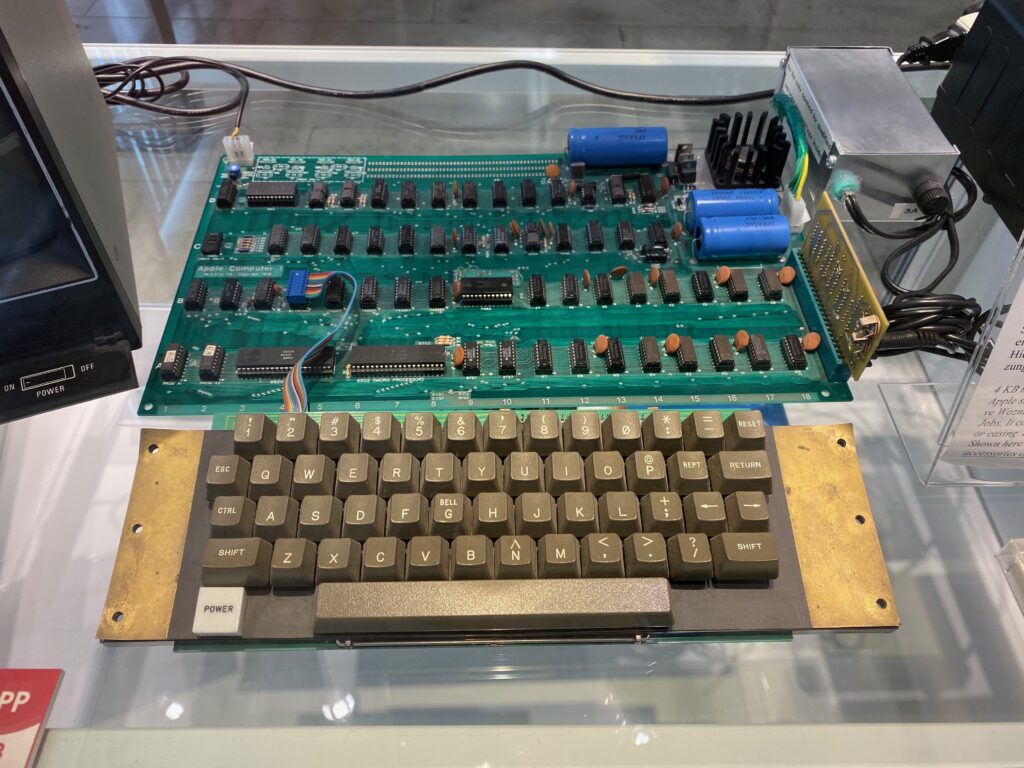
Apple I in the German Museum in Munich, Germany.
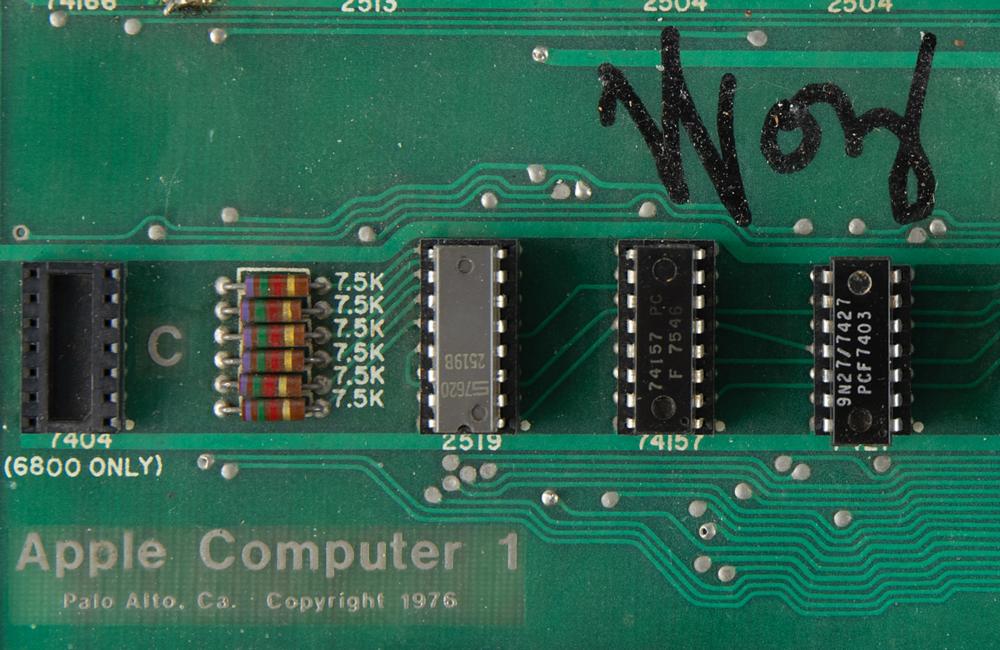
The Apple I was not a computer in the modern sense; it arrived as a naked circuit board consisting of about 60 chips. However, beneath its modest exterior lay a technical revelation. Steve Wozniak, known affectionately in engineering circles as “The Woz,” had crafted a design that was unparalleled in its efficiency.
While contemporary machines required hundreds of chips just to function, Wozniak utilized the then-affordable MOS 6502 processor (clocked at a modest 1 MHz) and combined it with a groundbreaking video terminal. This was the defining breakthrough: the Apple I was the first affordable computer that allowed a user to type on a keyboard and see the characters appear instantly on a regular television screen. It marked the shift from the cryptic language of machines to a more intuitive human interaction.
Steve Wozniak: The Reluctant Revolutionary
To understand the Apple I, one must understand Wozniak’s philosophy. He was not a businessman; he was a “hacker” in the original, purest sense of the word—a person who creates for the joy of discovery and the benefit of his peers. Wozniak famously offered his design to his employer, Hewlett-Packard, five times, only to be rejected each time.
His brilliance lay in hardware optimization. He wrote the system monitor and the BASIC interpreter by hand in machine code, often without a physical prototype to test his logic. Wozniak’s focus on accessibility—at least by 1976 standards—laid the foundation for the core Apple philosophy: technology should serve the person, not the other way around. Without Wozniak’s specific brand of engineering genius, the personal computer might have remained a niche tool for scientists for another decade.
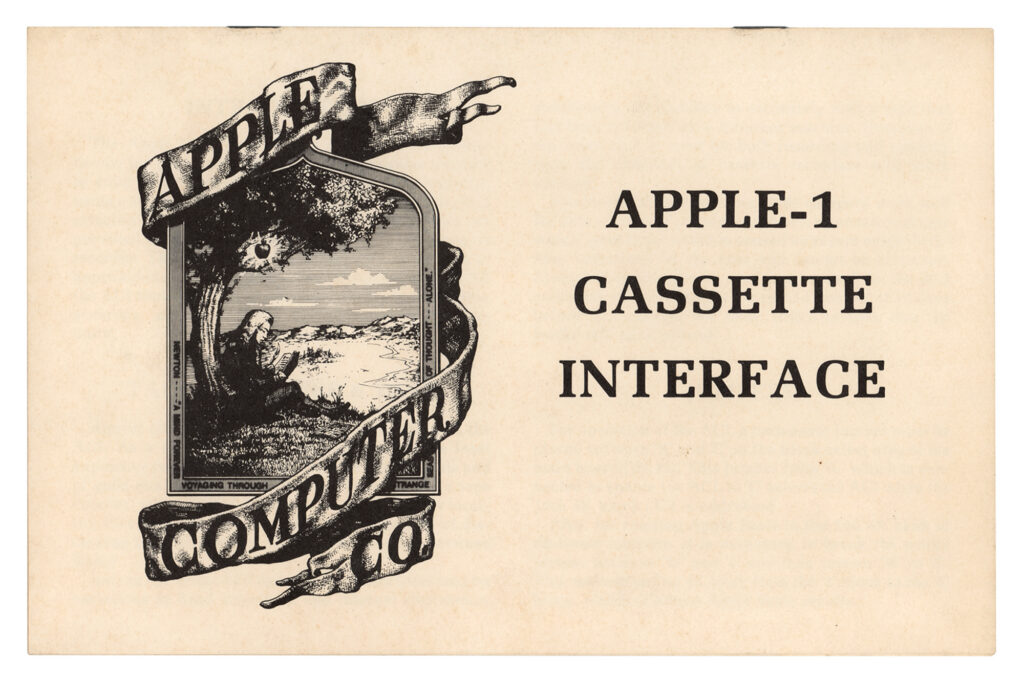
Manual Apple I Cassette Interface
Despite its minimalist design, Wozniak had the foresight to include a single expansion slot on the Apple I motherboard, which proved to be a critical architectural decision. The most significant accessory for this slot was the Apple Cassette Interface (ACI). In an era before affordable floppy disks or hard drives, users were forced to manually type in hundreds of lines of code every time they powered on the machine. The ACI card changed everything by allowing users to save and load programs using a standard, inexpensive audio cassette recorder. Wozniak’s interface was a marvel of engineering, capable of transferring data at 1,200 bits per second—roughly four times faster than the competing Altair interface. This expansion capability not only made the Apple I more practical for actual work but also foreshadowed the massive expandability that would eventually make the Apple II a global sensation.
Apple I – From the Garage to the “Byte Shop”
While Wozniak provided the soul of the machine, it was Steve Jobs who provided the ambition. Wozniak was prepared to give his circuit diagrams away for free, but Jobs saw the commercial potential. To fund the production of the first 200 units, Jobs sold his VW bus and Wozniak sold his prized HP-65 calculator.
The manufacturing of the Apple I was a far cry from the automated assembly lines of today’s Silicon Valley. It was a true “cottage industry” operation, centered in the Jobs family home on Crist Drive. Before the move to the legendary garage, many of the boards were actually assembled and tested in the spare bedroom of Steve Jobs’ sister. Steve Wozniak and Jobs, occasionally assisted by friends like Daniel Kottke and family members, hand-soldered the components onto the printed circuit boards. Each unit was a labor-intensive project; Wozniak himself performed the final quality control, meticulously checking for solder bridges and faulty chips. This artisanal approach meant that production was slow—often limited to just a few units a day—reflecting the transition from a hobbyist’s workbench to a fledgling commercial enterprise.
The legendary retail price of $666.66—chosen by Wozniak because he liked repeating digits and was oblivious to any occult connotations—marked the beginning of a new industry. Paul Terrell, owner of the “Byte Shop,” ordered the first 50 units but insisted they come fully assembled. This was a pivotal moment: the Apple I was still a “kit” in that it lacked a case, power supply, and monitor, but it was no longer a bag of loose parts. It was a product.
Historical Assessment: Apple I – The Bedrock of the Modern Era
Looking back half a century later, what is the true legacy of the Apple I? While it wasn’t the first personal computer in existence, it was the first modern PC.
The Interface Revolution: By integrating a video terminal directly onto the motherboard, the Apple I established the keyboard-and-screen paradigm that we still use today.
The Economic Blueprint: It proved that a small group of visionaries with minimal capital could disrupt established industry giants. It was the birth of the “garage startup” mythos.
The Bridge to Greatness: The Apple I served as the essential prototype for the Apple II. Every lesson Wozniak learned—from memory management to color graphics—was refined in the 1977 successor, which truly launched the mass-market computer age.
Today, fewer than 70 Apple I computers are estimated to exist worldwide. They are traded at auctions for hundreds of thousands of dollars, not merely as electronic antiques, but as relics of a moment when two young men decided to put a “dent in the universe.” Fifty years later, that dent has reshaped every aspect of human life.
Date
Auction House
Item & Key Features
Closing Price (USD)
January 2026
RR Auction
Apple-1 “Prototype Board #0”: The legendary “Celebration” board used by Steve Jobs for demonstrations.
$2,750,000
September 2024
Christie’s
Fully functional Apple-1 from original owner; includes manual and rare ACI cassette interface.
$945,000
March 2023
RR Auction
“Data Domain” Exemplar: A previously unlisted model used as a store demonstrator in 1977.
$223,520
August 2022
RR Auction
Steve Jobs’ Personal Prototype: Heavily modified and used to secure the first major Byte Shop order.
$677,196
November 2021
John Moran
“Chaffey College” Model: One of the few surviving units featuring an original Koa wood case.
$400,000
Historical sales data of the Apple I computer (2021–2026).
The Hammer That Shattered the Monolith: How 60 Seconds Defined the Apple Mythos
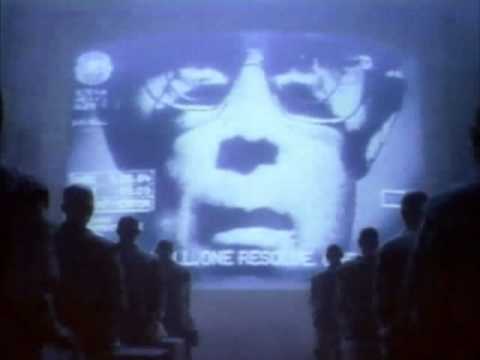
It is January 22, 1984. Inside Tampa Stadium, Super Bowl XVIII is in full swing. The Los Angeles Raiders are systematically dismantling the Washington Redskins. But during a break in the third quarter, the game becomes a footnote. For 60 seconds, nearly 100 million Americans are pulled away from the grass and grit into a dystopian nightmare—and then shown a glimpse of a digital revolution.
This wasn’t just a commercial. It was a cinematic manifesto directed by Ridley Scott, a man who had just finished reshaping science fiction with Blade Runner.
The Aesthetic of the Abyss
The spot opens on a monochrome, ash-colored world. Rows of hollow-eyed men, their heads shaved and spirits broken, march in lockstep through industrial corridors. They gather in a cold hall before a towering screen where a bespectacled “Big Brother”—a thinly veiled avatar for the then-dominant IBM—drones on about the “unification of thoughts.”
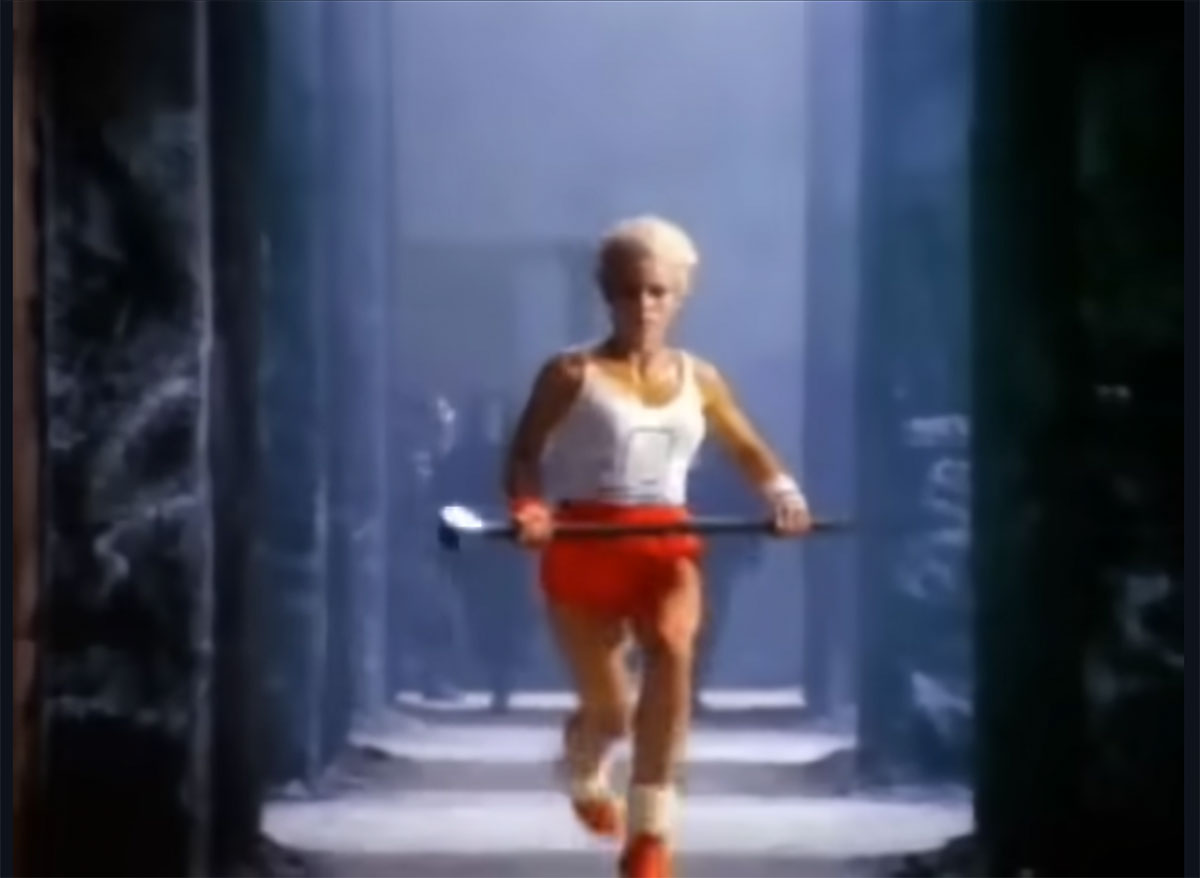
Then, a flash of color breaks the gray. A young woman (played by British athlete Anya Major) sprints toward the screen, pursued by riot police. She wears bright orange shorts and a white tank top emblazoned with a line drawing of a computer. In her hands, she swings a heavy sledgehammer with the grace of an Olympian. As she releases the hammer, it sails through the air and crashes directly into the face of the tyrant.
The screen explodes in a blinding white light. A voiceover—and a simple scroll of text—delivers the finishing blow: “On January 24th, Apple Computer will introduce Macintosh. And you’ll see why 1984 won’t be like ‘1984’.”
Corporate Cold Feet: The Board vs. The Visionaries
Today, the “1984” ad is heralded as the greatest commercial of all time. Yet, it almost never aired.
The backstory is a corporate thriller. The agency Chiat/Day had crafted the concept, and Steve Jobs was immediately electrified by it. He wanted a “thunderclap.” However, when the finished film was screened for Apple’s board of directors in December 1983, the reaction was icy silence.
Mike Markkula, Apple’s chairman and major investor, was horrified. “This is the worst ad I’ve ever seen. Who wants to fire the agency?” he reportedly asked. The board ordered CEO John Sculley to sell back the expensive Super Bowl airtime they had already purchased.
Wozniak’s Act of Rebellion
Steve Jobs, refusing to see his masterpiece buried, showed the spot to co-founder Steve Wozniak. “Woz” was so blown away that he offered to pay for half of the airtime out of his own pocket if the board refused to budge. “If Apple won’t run it, I’ll pay $400,000 and you pay $400,000,” Wozniak told Jobs.
In the end, it was a mix of chutzpah and luck: Chiat/Day claimed they couldn’t find a buyer for the 60-second slot in time. With the slot already paid for and no one to take it, Apple was forced to run the ad.
Skinheads and Discus Throws: The Making of a Legend
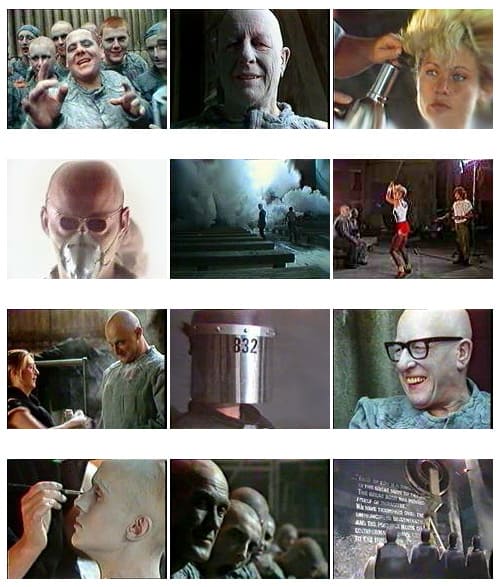
Ridley Scott’s production was grueling and authentic. Filmed at Shepperton Studios in London, Scott didn’t hire standard extras. To achieve the look of a true oppressed proletariat, he hired actual London skinheads for a pittance and the promise of a free lunch. The atmosphere on set was reportedly tense, with the extras’ rowdy behavior adding a layer of genuine grit to the film.
The choice of Anya Major for the lead role was a stroke of casting genius. Many models had auditioned, but most couldn’t even swing the hammer while running. Major was an experienced discus thrower; she had the muscle memory and the athletic form to hurl the sledgehammer with deadly precision.
The Legacy: When Advertising Became Art
The impact the next morning was unprecedented. News stations didn’t just talk about the ad; they replayed it in its entirety during their broadcasts. Apple generated over $5 million in free publicity. Overnight, the Macintosh became more than a piece of hardware; it became a symbol of individuality and freedom.
“1984” marked the moment advertising stopped merely explaining products and started creating myths. It was the birth of Apple as a lifestyle brand and Steve Jobs as the high priest of the digital counter-culture.
There is a modern irony to the story: today, critics often point at Apple’s massive market cap and closed ecosystem, suggesting the company has become the very “Big Brother” it once vowed to destroy. Regardless of the politics, the 60-second storm Ridley Scott and Steve Jobs unleashed remains a masterclass in storytelling—a hammer throw that changed the cultural trajectory of technology forever.
The commercial was rebroadcast in an updated version in 2004 on its 20th anniversary, with the heroine modified to be listening to an iPod. Viewers generally saw the Big Brother target of the Apple advertisement as being Microsoft, with the original villain, IBM, being all but forgotten.
Making of the Apple Ad 1984
Apple commercial “1984”: The Plot
The commercial opens with a dystopic, industrial setting in blue and gray tones, showing a line of people (of ambiguous gender) marching in unison through a long tunnel monitored by a string of telescreens. This is in sharp contrast to the full-color shots of the nameless runner (Anya Major). She looks like an Olympic track and field athlete, as she is carrying a large brass-headed hammer and is wearing an athletic “uniform” (bright orange athletic shorts, running shoes, a white tank top with a cubist picture of Apple’s Macintosh computer, a white sweat band on her left wrist, and a red one on her right).
As she is chased by four police officers (presumably agents of the Thought Police) wearing black uniforms, protected by riot gear, helmets with visors covering their faces, and armed with large night sticks, she races towards a large screen with the image of a Big Brother-like figure (David Graham, also seen on the telescreens earlier) giving a speech:
My friends, each of you is a single cell in the great body of the State. And today, that great body has purged itself of parasites. We have triumphed over the unprincipled dissemination of facts. The thugs and wreckers have been cast out. And the poisonous weeds of disinformation have been consigned to the dustbin of history. Let each and every cell rejoice! For today we celebrate the first, glorious anniversary of the Information Purification Directive! We have created, for the first time in all history, a garden of pure ideology. Where each worker may bloom secure from the pests purveying contradictory truths. Our Unification of Thoughts is more powerful a weapon than any fleet or army on earth. We are one people, with one will, one resolve, one cause. Our enemies shall talk themselves to death and we will bury them with their own confusion. We shall prevail!
The runner, now close to the screen, hurls the hammer towards it, right at the moment Big Brother announces, “we shall prevail!” In a flurry of light and smoke, the screen is destroyed, shocking the people watching the screen. The commercial concludes with a portentous voiceover, accompanied by scrolling black text (in Apple’s early signature “Garamond” font); the hazy, whitish-blue aftermath of the cataclysmic event serves as the background. It reads:
On January 24th, Apple Computer will introduce Macintosh. And you’ll see why 1984 won’t be like “1984.
The screen fades to black as the voiceover ends, and the rainbow Apple logo appears.
Apple commercial “1984”: The Production
Development
The commercial was created by the advertising agency Chiat/Day, Venice, with copy by Steve Hayden, art direction by Brent Thomas and creative direction by Lee Clow. Ridley Scott (whose dystopian sci-fi film, Blade Runner was released two years prior) was hired by agency producer Richard O’Neill to direct it, with a then-“unheard-of production budget of $900,000.” The actors who appeared in the commercial were paid $25 per day.
Steve Jobs and John Sculley were so enthusiastic about the final product that they “…purchased one and a half minutes of ad time for the Super Bowl, annually the most-watched television program in America. In December 1983 they screened the commercial for the Apple Board of Directors. To Jobs’ and Sculley’s surprise, the entire board hated the commercial.” However, Scully himself got “cold feet” and asked Chiat/Day to sell off the two commercial spots.
Despite the board’s dislike of the film, Steve Jobs continued to support it. Steve Wozniak watched it and offered to pay for half of the spot personally if the board refused to air it.
Of the original ninety seconds booked, Chiat/Day managed to resell thirty seconds to another advertiser, leaving the other sixty second slot.
Let’s see – an all-powerful entity blathering on about Unification of Thoughts to an army of soulless drones, only to be brought down by a plucky, Apple-esque underdog. So Big Brother, the villain from Apple’s ‘1984’ Mac ad, represented IBM, right? According to the ad’s creators, that’s not exactly the case. The original concept was to show the fight for the control of computer technology as a struggle of the few against the many, says TBWA/Chiat/Day’s Lee Clow. Apple wanted the Mac to symbolize the idea of empowerment, with the ad showcasing the Mac as a tool for combating conformity and asserting originality. What better way to do that than have a striking blonde athlete take a sledghammer to the face of that ultimate symbol of conformity, Big Brother?
However, in his 1983 Apple keynote address, Steve Jobs made the following comment before showcasing a preview of the commercial to a select audience:
It is now 1984. It appears IBM wants it all. Apple is perceived to be the only hope to offer IBM a run for its money. Dealers initially welcoming IBM with open arms now fear an IBM dominated and controlled future. They are increasing and desperately turning back to Apple as the only force that can ensure their future freedom. IBM wants it all and is aiming its guns on its last obstacle to industry control, Apple. Will Big Blue dominate the entire computer industry? The entire information age? Was George Orwell right about 1984?
Apple commercial “1984”: The Reception
Awards
* 2007: Best Super Bowl Spot (in the game’s 40-year history)
* 1999: TV Guide – Number One Greatest Commercial of All Time
* 1995: Advertising Age – Greatest Commercial
* 1984: 31st Cannes Lions International Advertising Festival – Grand Prix
Social impact
Ted Friedman, in his 2005 text, Electric Dreams: Computers in American Culture, notes the impact of the commercial:
Super Bowl viewers were overwhelmed by the startling ad. The ad garnered millions of dollars worth of free publicity, as news programs rebroadcast it that night. It was quickly hailed by many in the advertising industry as a masterwork. Advertising Age named it the 1980s Commercial of the Decade, and it continues to rank high on lists of the most influential commercials of all time […] 1984 was never broadcast again, adding to its mystique.
1984 became a signature representation of Apple computers. It was scripted as a thematic element in the 1999 docudrama, Pirates of Silicon Valley, which explores the rise of Apple and Microsoft (the film opens and closes with references to the commercial including a re-enactment of the heroine running towards the screen of Big Brother and clips of the original commercial).
“1984” became a signature representation of Apple computers. It was scripted as a thematic element in the 1999 docudrama, Pirates of Silicon Valley, which explores the rise of Apple and Microsoft (the film opens and closes with references to the commercial including a re-enactment of the heroine running towards the screen of Big Brother and clips of the original commercial). The “1984” ad was also prominent in the 20th anniversary celebration of the Macintosh in 2004, as Apple reposted a new version of the ad on its website. In this updated version, an iPod, complete with signature white earbuds, was digitally added to the heroine. Attendees were given a poster showing the heroine with iPod as a commemorative gift.
Influence in media
A commercial for the video game Half-Life 2 was based on this commercial. A parody of the commercial is seen in the Futurama episode Future Stock, promoting Planet Express. Another parody appears in The Simpsons TV show episode Mypods and Boomsticks, featuring Steve Jobs as “Big Brother” and the Comic Book Guy as the runner.
For the 20th anniversary of the Macintosh, Apple re-released the ad with the runner wearing an iPod.
Scott, Linda. “For the Rest of Us”: A Reader-Oriented Interpretation of Apple’s ‘1984’ Commercial.” The Journal of Popular Culture, Volume 25 Issue 1, Summer 1991: 67-81.
“The demo was not going well. Again. It was a late morning in the fall of 2006. Almost a year earlier, Steve Jobs had tasked about 200 of Apple’s top engineers with creating the iPhone. Yet here, in Apple’s boardroom, it was clear that the prototype was still a disaster. It wasn’t just buggy, it flat out didn’t work. The phone dropped calls constantly, the battery stopped charging before it was full, data and applications routinely became corrupted and unusable. The list of problems seemed endless. At the end of the demo, Jobs fixed the dozen or so people in the room with a level stare and said, «We don’t have a product yet.»
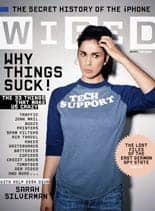
Cover Wired 02/2008
So starts Fred Vogelstein’s article in the U.S. technology magazine «Wired» (Feb. 2008) about the difficult launch of a product that would later turn the mobile phone industry upside down. Vogelstein is known for his well-researched reports and features. For example, he revealed (also for Wired) that the story of how the social network Facebook came into being was somewhat different than founder Mark Zuckerberg had repeatedly claimed.
For the «Untold Story» in Wired about the creation of the iPhone – a story that no one had told before – Fred Vogelstein interviewed countless actors and observers and was able to report on exciting details on this basis: Apple CEO Steve Jobs, for example, did not attack his employees screaming after the failed demo in the fall of 2006 – as he had done so many times before. This time, he remained completely calm. The silence made the panel even more nervous than a tantrum from Jobs. «That was one of the few times at Apple that a cold shiver went down my spine,» said one meeting attendee.
The iPhone’s back story goes back to 2002. Shortly after the unveiling of the first iPod, Apple executives were specifically looking at whether Apple should develop a (mobile) phone. Jobs realized early on that the boom in Blackberry smartphones in large companies in the USA would sooner or later spread to private customers. It was also foreseeable to him that the cell phones of the future would usually have an MP3 player built-in, so the dominance of the iPod as a mobile music player seemed threatened.
In the short term, however, Apple was not in a position to build a smartphone itself at the time. The iPod’s operating system was not made to handle complicated network operations or elaborate graphics. And no slim version of the Macintosh operating system OS X existed at the time that could have run on the phone chips available at the time.
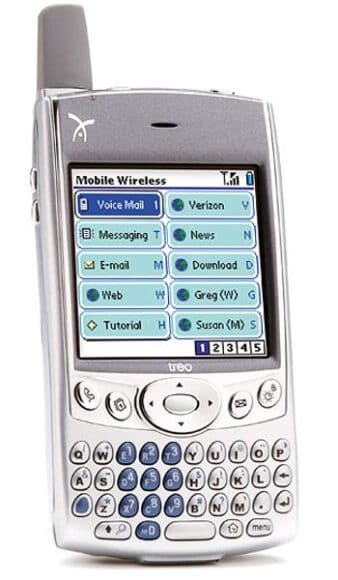
Palm Treo 600
In particular, the sales success of the Palm Treo 600, which combined the functions of a cell phone, PDA and Blackberry, encouraged Steve Jobs in his intention to become active in the market for so-called convergence devices himself. In 2004, the iPod business already contributed to 16 percent of Apple’s revenue. But new developments such as the growing popularity of 3G cell phones and WiFi phones, as well as falling memory prices, were at least potentially threatening the iPod’s leadership position. In addition, new online music platforms were constantly being established to compete with Apple’s iTunes Store.
Quick action was now necessary, even though Apple itself was not yet ready for the development of an iPhone. In the search for cooperation partners, Steve Jobs chose Motorola. The U.S. mobile phone giant was celebrating great sales successes at the time with its RAZR design cell phone. Jobs also knew Motorola CEO Ed Zander from the time when Zander had worked in the top management of Sun Microsystems. The scenario called for Apple to concentrate fully on developing the music software, while Motorola and cellular provider Cingular would take care of the hardware and complicated network technology.
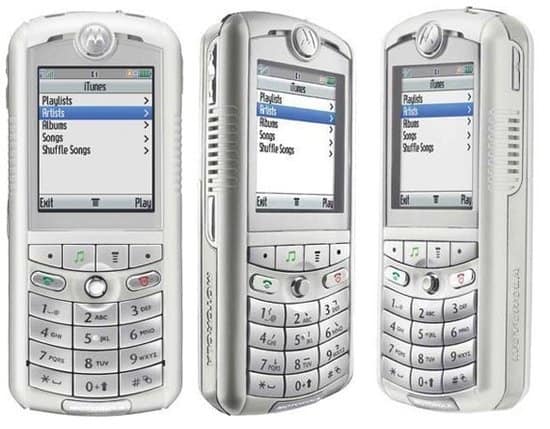
Jobs expected a worthy successor to the RAZR from Motorola, but was bitterly disappointed: Motorola didn’t present a new design gem, but only slightly modified the existing E398 model. The iTunes-compatible phone could only hold 100 songs. The music tracks could only be transferred to the cell phone via a PC. And on top of that, the ROKR E1 was extremely ugly in Steve Jobs’ eyes.
At the presentation of the Motorola ROKR E1 in September 2005, the Apple CEO made little effort to conceal his lack of enthusiasm for the first iTunes cell phone. Jobs coolly described it at the event as «an iPod shuffle on a cell phone» – and already suspected that the ROKR would be left behind by buyers. At that point, he was already pursuing completely different plans, namely to build his own music phone and to stop compromising with handset manufacturers or network operators.
Motorola ROKR E1
According to Vogelstein’s research, Jobs met with a handful of Cingular executives as early as February 2005 to discuss a partnership without Motorola. The panel included Cingular CEO Stan Sigman, who would be in charge of AT&T’s wireless business after Cingular was acquired by AT&T in December 1996. In the meeting, Steve Jobs made three things clear. Apple has the technology to build a revolutionary device. Apple is willing to enter into an exclusive agreement with a wireless provider. And – in the event that no provider takes up this business model – Apple is also prepared to enter the market itself as a virtual network provider and compete with the established carriers.
Compared to the situation in 2004, Apple had much better starting conditions for building its own smartphone at that time: As part of the secret work on an Apple tablet PC, the engineers in Cupertino had built up considerable knowledge of touchscreen technology that could also be transferred to a small device. In addition, with the ARM-11 chip, a microprocessor was finally on the market that could give a cell phone the necessary power for sophisticated smartphone and iPod applications. Furthermore, companies such as the British Virgin Group had proven that it was possible to earn money as a virtual network operator without having to operate transmission towers.
In the twelve months of negotiations with Cingular, Apple succeeded in doing nothing less than turning the established business model between cell phone producers and network operators on its head. In the era before the iPhone, providers alone determined the conditions under which services were offered in their network. The cell phones played only a minor role in this scenario and were also usually offered to consumers at absurdly low symbol prices. The subsidized cell phones were ultimately refinanced through long contract terms of the cell phone customers. This model worked quite well as long as the one-dollar or one-euro cell phones constantly attracted new customers who had not previously had a mobile communications contract. In cutthroat competition, however, low-cost cell phones were no longer enough to retain customers over the long term.
For ages, Apple’s recipe for success has included an almost paranoid secrecy associated with every new product. And with the iPhone, Steve Jobs personally made sure that the usual security precautions were once again tightened. Internally, the iPhone project was just called Purple 2 or P2. Jobs spread the development teams across the entire Apple campus in Cupertino so that no one could get an idea of the overall strength of the project team.
When Apple employees went to Cingular, they posed as Infineon employees, Wired reporter Vogelstein found out. The German chip company supplies the radio component of the iPhone. Jobs even made sure that hardly anyone within Apple got to see the overall concept of the iPhone. The hardware team had no idea what the user interface would look like until shortly before the iPhone was unveiled at MacWorld Expo in January 2007. Their dummy devices were loaded with fake software that had nothing to do with the eventual iPhone. And the software people were handed clumsy wooden boxes that ran their programs. According to Vogelstein’s research, only about 30 top people in the project were allowed to see the complete iPhone before MacWorld 2007.
The secrecy did not stop after the launch of the iPhone. Until today the details of the revenue sharing between AT&T and Apple are secret. However, analysts such as Gene Munster of Piper Jaffray, after analyzing the balance sheets, assume that Apple receives around 18 US dollars per month from AT&T for each iPhone customer. If this figure is realistic, Apple will take another $432 in commission over the course of the minimum contract period of 24 months, in addition to the hardware price of $399. It’s no wonder that cell phone manufacturers like Nokia and SonyEricsson looked to California with disbelief and envy – and providers like Vodafone now fear that the iPhone example will now set a precedent for other top cell phones.
Later, the head of Deutsche Telekom, René Obermann, found himself in a similar position to Cingular and AT&T in 2006. For Obermann, the sex appeal of the iPhone offered a unique opportunity to distract from the gray reality at T-Mobile and the entire Telekom Group. For this reason, Obermann also accepted conditions that he would otherwise not have accepted from any other cell phone manufacturer.
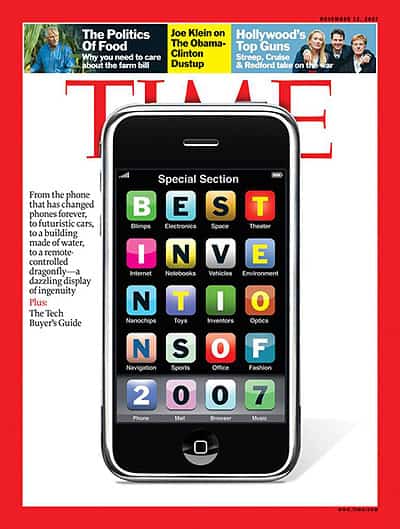
iPhone on the cover of Time Magazine
AT&T and T-Mobile wanted the iPhone in their product portfolios. Absolutely. They also respected the immense effort Apple had put into developing the iPhone. For example, Apple spent several million dollars on the purchase of equipment for antenna and network tests alone. In total, the development of the iPhone is said to have cost around 150 million dollars. At least in the U.S., the formula for business success with the iPhone worked. In the first 200 days, Apple sold four million iPhones, Apple CEO Steve Jobs announced at the MacWorld Expo. According to a study by Canalys, the iPhone already captured third place in the «smart mobile devices» category in the 4th quarter of 2007 with a market share of 6.5 percent, behind Nokia (53 percent) and Blackberry manufacturer Research In Motion (11.4 %). This means that the iPhone was able to overtake other smartphone manufacturers such as Motorola, SonyEricsson, and Windows Mobile licensees such as HTC and Samsung right from the start. However, smartphones only account for a small fraction of the mobile phone market, which is worth billions.
Market success in Germany was more modest. In the first eleven weeks, T-Mobile sold just 70,000 iPhones, while in the U.S. an average of 20,000 devices crossed the counter every day. However, there are also many iPhone buyers in Germany who do not appear in any T-Mobile statistics because they acquired their dream phone on the gray market on the Internet or on a trip to the USA. Experts believe that one in four iPhones sold in the U.S. was not registered with AT&T.
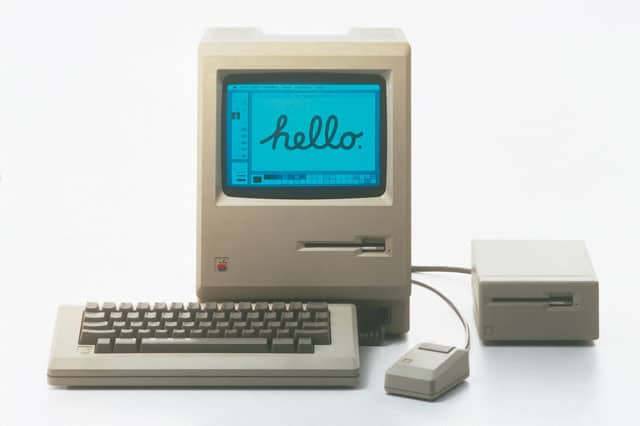
The Apple Macintosh revolutionized the entire computer industry by the year of 1984. Steve Jobs and his ingenious Macintosh team arranged for the computer to be used by the normal “person in the street” – and not only by experts.
“Insanely great” – Steve Jobs could hardly put into words his enthusiasm by the launch of the Macintosh. On the legendary annual general meeting of January 24th, 1984, in the Flint Center not far from the Apple Campus in Cupertino, the Apple co-founder initially quoted Bob Dylan’s “The Times They Are A-Changin’” in order to then polemicize against an imminent predominance of the young computer industry by IBM.
Steve Jobs’ introduction of the Apple Macintosh:
“The early 1980s. 1981 – Apple II has become the world’s most popular computer, and Apple has grown to a 300 million dollar corporation, becoming the fastest growing company in American business history. With over fifty companies vying for a share, IBM enters the personal computer market in November of 1981, with the IBM PC.
1983. Apple and IBM emerge as the industry’s strongest competitors, with each selling approximately one billion dollars worth of personal computers in 1983. The shakeout is in full swing. The first major personal computer firm goes bankrupt, with others teetering on the brink. Total industry losses for 1983 overshadow even the combined profits of Apple and IBM.
It is now 1984. It appears that IBM wants it all. Apple is perceived to be the only hope to offer IBM a run for its money. Dealers, after initially welcoming IBM with open arms, now fear an IBM dominated and controlled future and are turning back to Apple as the only force who can ensure their future freedom.
IBM wants it all, and is aiming its guns at its last obstacle to industry control, Apple. Will Big Blue dominate the entire computer industry? The entire information age? Was George Orwell right?“
The crowd, among them the complete Macintosh developer’s team, shouted back: “Nooooo!”
The introduction of the first Mac on January 24th, 1984; taken from the “Lost 1984 Videos”
There had been only two milestone products so far: the Apple II in 1977 and the IBM PC in 1981, Jobs continued. “Today (…) we are introducing the third industry milestone product, the Macintosh. Many of us have been working on Macintosh for over two years now and it has turned out insanely great.”
Steve Jobs
Taking a look at the history of the personal computer today, Steve Jobs was on the right track with his historical comparison. However, it would not be IBM that became the great dominator of the computer industry over the years, but rather, the alliance of Microsoft and Intel.
Previous to the Macintosh developer team, others had already tried to design a computer with a mouse and a graphical user interface – one year before Apple did, with its own business computer Lisa, which retailed for 10,000 dollars.
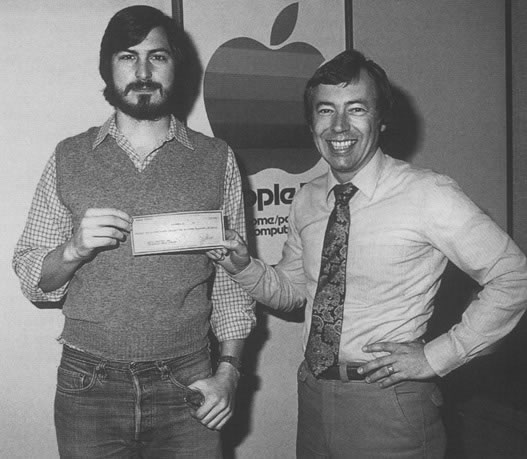
The two main Apple founders – Steve Jobs and Steve Wozniak – both came from humble backgrounds and were not endowed with commercial success. In order to afford the first pieces of the Apple I in 1976, they almost literally sold the shirts off their backs. Jobs invested the proceeds from the sale of his VW bus ($1,500 dollars). “Woz” parted with his beloved programmable calculator Hewlett-Packard 65 and deposited 250 dollars in the company’s treasury.
Ronald Wayne (Photo courtesy of Owen Linzmayer)
Ronald Gerald Wayne, the “third founder” of Apple Computer, was with the company for only a short time. He illustrated the first Apple logo and wrote the Apple I manual. While at Apple, he also wrote their partnership agreement. Wayne worked with Jobs at Atari before co-founding Apple Computer on April 1, 1976. He was given a 10% stake in Apple, but relinquished his stock for 800 dollars only two weeks later because legally, all members of a partnership are personally responsible for any debts incurred by any of the other partners.
After Apple’s IPO, Wayne’s stake could have been worth as much as US$ 1.5 billion. He claimed that he didn’t regret selling the stock as he had made “the best decision available at that time.” According to CNET, as of 1997 Wayne was working as an engineer for a defense contractor in Salinas, California.
The foundations for the commercial success were laid in 1977 by venture capitalist Arthur Rock as well as by the ex-Intel manager Mike Markkula, who invested 92,000 dollars in Apple and secured a bank loan of 250,000 dollars. Markkula was lured out of retirement by Steve Jobs, who was referred to him by Regis McKenna and venture capitalist Don Valentine.
Valentine—who after meeting the young, unkempt Jobs asked McKenna, “Why did you send me this renegade from the human race?”—was not interested in funding Apple, but mentioned Jobs’ new company to Markkula. Jobs visited him and convinced Markkula of the market for the Apple II and personal computers in general. Later Valentine asked Markkula if he could also invest in Apple.
Mike Markkula at the Apple offices April 1, 1977
In 1977, Markkula brought his business expertise along with US$250,000 ($80,000 as an equity investment in the company and $170,000 as a loan) and became employee number 3. The investment would pay off for Markkula. Before Apple went public in 1980, he owned a third of the company.
Markkula also brought in Apple’s first CEO, Michael Scott, then took the job himself from 1981 to 1983. Markkula served as chairman from 1985 until 1997, when a new board was formed after Jobs returned to the company. Wozniak, who virtually single-handedly created the first two Apple computers, credits Markkula for the success of Apple more than himself. “Steve and I get a lot of credit, but Mike Markkula was probably more responsible for our early success, and you never hear about him,” told Wozniak the Failure Magazine in July 2000.
With the initial public offering on December 12, 1980, Jobs and Wozniak became multimillionaires, as Apple Computer was now valued at 1.8 billion dollars. Jobs possessed 7.5 million stocks (217 million dollars); “Woz” was assigned four million stocks (116 million dollars). Markkula’s share of seven million stocks was worth 203 million.
“I was worth about over a million dollars when I was twenty-three and over ten million dollars when I was twenty-four, and over a hundred million dollars when I was twenty-five,” Jobs said in an interview with Robert Cringley (”Triumph of the Nerds“) in 1996. “And it wasn’t that important because I never did it for the money.”
Read next page: Steve Jobs: It’s not about the money
Larry Tesler talks about Steve Jobs’ trips to Xerox’s Palo Alto Research Center, including the one where Jobs eyed the company’s graphical user interface prototype — which ended up on Mac OS.
Introducer: Larry Tesler, I believe you took Steve on a tour of Xerox PARC and showed him some technology that became important. I wonder if you could tell us about that that tour?
Larry Tesler: Well it wasn’t the physical facility. It was a tour of the software it was part of that demonstration . Xerox was facing a lot of competition from Asian companies in copiers when their patents expired and one thing they found was that they had a very high manufacturing cost and they were really having trouble competing with these new forces in the market. At the same time they had Xerox PARC, developing very exciting technologies including the Ethernet, GUIs with windows and improved mice from what existed before.
They started worrying that they would not be able to manufacture those cheaply enough when they moved into that market. So they looked around and saw that Apple was cranking out Apple ][s for really cheap and selling lots of them and they thought, “Well, we should partner with a company like Apple and they’ll make our machines for us”. Or something like that. Xerox had some kind of idea of [that] type, so some business development peope came from the East Coast to PARC and when they got to Apple they made a deal where in exchange for various business arrangements, distribution and future discussion of manufacture and so on, Apple would sell them stock. This was a very appealing thing because it was very clear Apple was going to have a very successful IPO, […] and in exchange though, Steve Jobs required information… disclosure, everything cool going on at Xerox PARC [laughter] [voice commenting “Good bargain!”]. Nobody checked with the PARC people first but the business development people signed the deal.
So there was a number of visits [by Apple to PARC]. I was involved in a couple of them. One was [Apple] executives visiting and meeting with some of us [PARC researchers] trying to just get information out of us or an agenda for how to get the information out of us.
That was a little bit of a tense meeting but I remember at one point Steve was pacing the room trying not to be in charge of the meeting because he was not the CEO of the company – Mike Scott was – and at one point he just said “Stop! Stop! Stop! Stop! Stop this discussion! We need to tell them about the Lisa!” and all the Apple people kind of froze… “Come on! Come on, we need to tell them about the Lisa! This conversation is gonna go nowhere!”. So we got perked up, because it was us disclosing to them, not them disclosing to us, but finally they threw up their hands “OK, tell ’em about the Lisa!” so somebody told us a little about the Lisa, which at that time did not have a GUI but it was powerful enough to do the kinds of thing that they thought we were doing.
The next thing I remember was another meeting where apparently Apple people had been demoed in-between but they weren’t satisfied with the demo. They knew there was lot more than [what] we were showing them. There were a lot of people at PARC that didn’t want to show Apple everything. And in fact we all felt like we didn’t want to show them everything, but I was one of those who felt we should show them more. There were people who wanted to hold back everything we could. So they arranged a new set of demos, where more people came, Bill [Atkinson] was there, John Couch, Mike Scott, obviously Steve, Jef Raskin, [and] a couple of other people.
The room as pretty full and there were two or three of us from PARC at a time, one person sitting at the computer, getting the demonstration and the other people waiting their turn or observing. So, during that demo, Steve again got very excited. He was pacing around the room and occasionally looking at the screen. he was mostly just looking and reacting and taking it all in, trying to process it and at one point he said “You’re still not showing us everything!” And the meeting paused, there were some phone calls [made], and [then] “OK, we’re going to show you more.” [laughter]
So I gave my demo, then Dan Ingalls gave a demo for Smalltalk and they started asking us lot of questions. Bill and, Bruce Daniels was there too, he had joined Apple from MIT… those technical people just asking us questions and we were answering the questions and frankly I was amazed.
I had looked into Apple earlier, a couple of years before, because someone tried to get me to work there, and I found these people who were Homebrew Computer Club kinda hackers. Suddenly there were all these computer scientists in the room and they were asking really good questions! So I got a completely different view about what Apple was like from that meeting. But Jobs was saying “What is going on here? You’re sitting on a gold mine! Why aren’t you doing something with this technology? You could change the world!” And his buddies, who were trying to arrange the negotiation of some kind, were trying to quite him down [laughter] “Don’t be so excited!” But it was really clear to him that we [at Xerox] were never really gonna do anything with this, and by that I mean the kinds of revolutionary things that he was envisioning.
The irony was that when they left we still had shown the like only 1% of what PARC was doing but it was enough that they got really excited and decided they were going to retarget the Lisa to be something like what they had seen, in terms of GUI. They fell in love with the mouse and that changed everything. And seven months after I was working at Apple.”
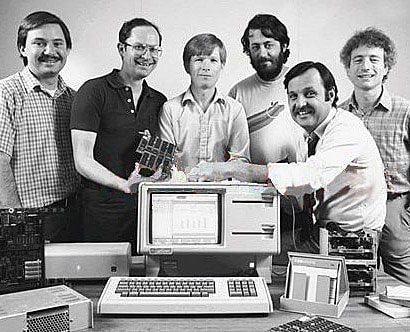
Apple Lisa team: Paul Baker, Bruce Daniels, Chris Franklin, Rich Page, John Couch, and Larry Tesler.
Screenshot of the movie “Pirates of Silicon Valley”
It is claimed again and again that in the course of the Macintosh’s development, Apple just resorted to the ideas the research laboratory Xerox PARC had hatched before. Fact or Fiction?
The myth says, Apple CEO Steve Jobs saw Xerox PARC product, such as the GUI, either on a tour or at a trade show. He then used the PARC GUI implementation without permission, to create the Apple Lisa and the original Mac OS / Macintosh GUI.
The myth entwines about a late 1979 visit to Xerox PARC by a group of Apple engineers and executives led by Steve Jobs. Alex Soojung-Kim Pang, author of “Making the Macintosh”, writes:
According to early reports, it was on this visit that Jobs discovered the mouse, windows, icons, and other technologies that had been developed at PARC. These wonders had been locked away at PARC by a staff that didn’t understand the revolutionary potential of what they had created. Jobs, in contrast, was immediately converted to the religion of the graphical user interface, and ordered them copied by Apple, starting down the track that would eventually yield the Lisa and “insanely great” Macintosh. The Apple engineers– that band of brothers, that bunch of pirates– stole the fire of the gods, and gave it to the people.
It’s a good story. Unfortunately, it’s also wrong in almost every way a story can be wrong. There are problems with chronology and timing. The testimony of a number of key figures at Apple suggests that the visit was not the revelation early accounts made it out to be. But the story also carries deeper assumptions about Apple, Xerox PARC, computer science in the late 1970s, and even the nature of invention and innovation that deserve to be examined and challenged.
Alex Soojung-Kim Pang
Let us take a closer look at what happend at Xerox PARC:
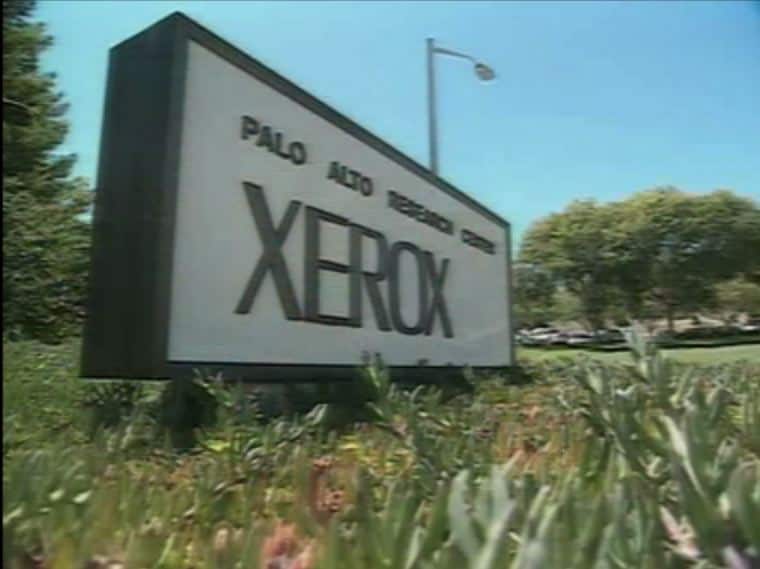
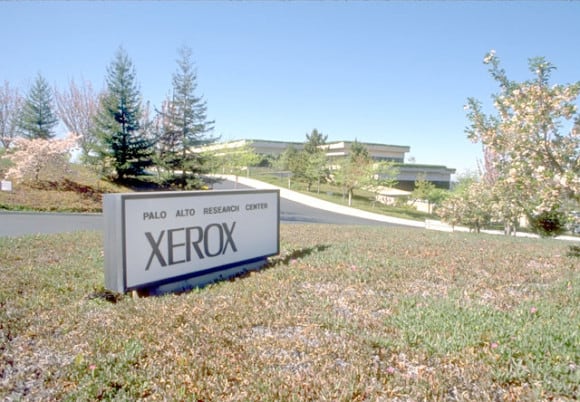
Entrance of Xerox PARC in the eighties
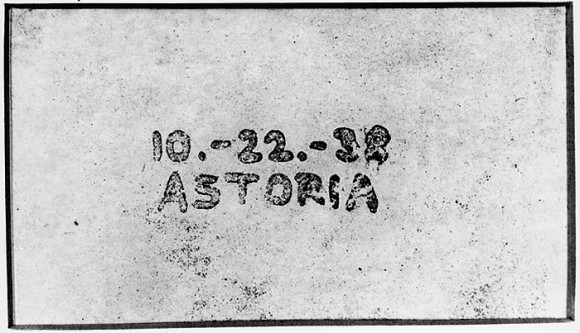
In the Untied States, the brand name “Xerox” denotes photocopying just as “Kleenex” stands for tissues or “Scotch tape” for adhesive film. After all, already in 1950, the Xerox Corp. was the world’s first company to actually transfer the “Xerography” invented by the American law student Chester Carlson into a functional product. Carlson received in 1937 a patent for a process that he called “electrophotography.” On 22 October 1938 followed the premiere in practice: With the help of a metal plate was coated with sulfur and a lamp Chester the lettering “10-22-38 Astoria” on a wax paper.
The first photocopy
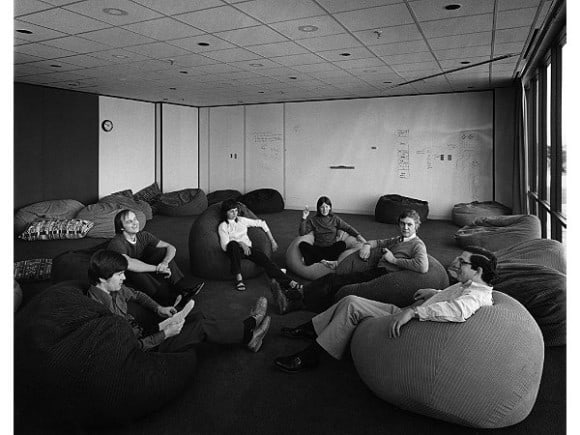
By the end of the sixties, the Xerox management sensed the threat of Japanese companies catching up on Xerox’s technological advantage. Moreover, the Xerox head worried that the “paperless office” might emerge with the following computer generations, in which the Xerox would no longer have a place. Against this background, the Xerox Palo Alto Research Center (PARC) in California was founded in 1970. John Warnock, former researcher in the Xerox PARC and later one of the two founders of Adobe Systems, remembers: “The atmosphere was electric – there was total intellectual freedom. There was no conventional wisdom; almost every idea was up for challenge and got challenged regularly.”
Larry Tessler, who later took part in developing the Macintosh and the Newton PDA at Apple, also enjoyed the liberties the PARC provided in the seventies: “The management said go create the new world. We don’t understand it. Here are people who have a lot of ideas and tremendous talent, [are] young, energetic.” The problem, however, was that the company management at the East Coast of the USA did not [care a straw for] the PARC’s research results unless they were directly involved with photocopiers.
In his TV documentation “Triumph of the Nerds” Robert Cringley is interviewing researchers at the Xerox PARC
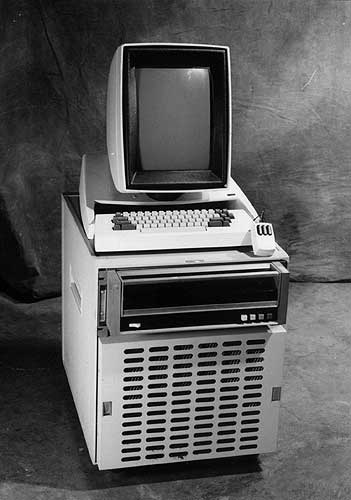
Within two years, the researchers at the PARC had designed the Alto, which was something like the first personal computer. The Alto did not feature character-oriented graphics, as did all the other computers of that time, but a bit-oriented version instead. A high quality printer could print exactly what the screen displayed.
A mouse. Removable data storage. Networking. A visual user interface. Easy-to-use graphics software. “What You See Is What You Get” (WYSIWYG) printing, with printed documents matching what users saw on screen. E-mail. Alto for the first time combined these and other now-familiar elements in one small computer.
Developed by Xerox as a research system, the Alto marked a radical leap in the evolution of how computers interact with people, leading the way to today’s computers.
By making human-computer communications more intuitive and user friendly, Alto and similar systems opened computing to wide use by non-specialists, including children.
People were able to focus on using the computer as a tool to accomplish a task rather than on learning their computer’s technical details.
However, this marvelous machine was not freely available on the market. Only small numbers were built initially, but by the late 1970s, about 1,000 were in use at various Xerox laboratories, and about another 500 in several universities. Total production was about 2,000 systems.
The revolutionary Alto would have been an expensive personal computer if put on sale commercially. Lead engineer Charles Thacker noted that the first one cost Xerox $12,000. As a product, the price tag might have been $40,000.
Commercial for the Xerox Alto (1972).
This commercial for Xerox’s Alto computer released in 1972 introduced the world to the first desktop computer with a graphical user interface. Named after Xerox PARC’s home city of Palo Alto, California, the computer introduced the world to the window-oriented mouse and keyboard interface we use today. The Alto also had a distinctive portrait screen — an idea that was well before its time.
The video showed how the computer could revolutionize your office life, with email, word processing and reminders all controlled by a cursor. It also shows the protagonist expressing his thoughts and actions out loud, as if in conversation with the Alto (which seems to be nicknamed “Fred”).
Some Apple engineers were already familiar with PARC, its work, or technologies like the mouse. Bill Atkinson had read about Smalltalk as an undergraduate. Some had worked at PARC: Jef Raskin spent time there during a sabbatical year at Stanford, and had a number of friends who were researchers there. Finally, there were even some Apple employees whose had learned about the mouse while working for Douglas Engelbart at SRI in the 1960s and early 1970s, or Tymshare in the later 1970s.