Category Archives: Ads

Apple Super Bowl Commercial 1984

“1984″ – Apple’s famous Super Bowl Spot

The most famous Super Bowl ad

The Hammer That Shattered the Monolith: How 60 Seconds Defined the Apple Mythos

It is January 22, 1984. Inside Tampa Stadium, Super Bowl XVIII is in full swing. The Los Angeles Raiders are systematically dismantling the Washington Redskins. But during a break in the third quarter, the game becomes a footnote. For 60 seconds, nearly 100 million Americans are pulled away from the grass and grit into a dystopian nightmare—and then shown a glimpse of a digital revolution.

This wasn’t just a commercial. It was a cinematic manifesto directed by Ridley Scott, a man who had just finished reshaping science fiction with Blade Runner.

The Aesthetic of the Abyss

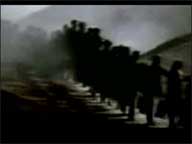
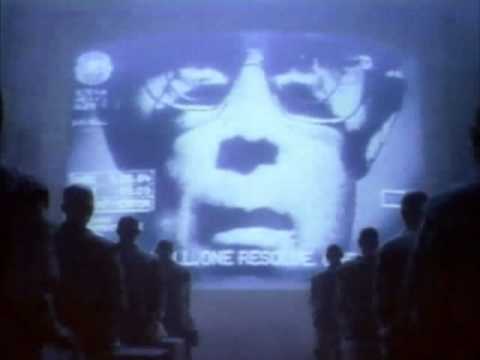
The spot opens on a monochrome, ash-colored world. Rows of hollow-eyed men, their heads shaved and spirits broken, march in lockstep through industrial corridors. They gather in a cold hall before a towering screen where a bespectacled “Big Brother”—a thinly veiled avatar for the then-dominant IBM—drones on about the “unification of thoughts.”

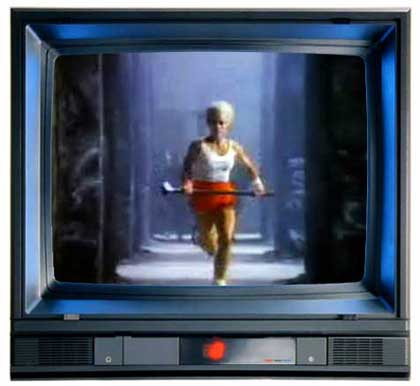
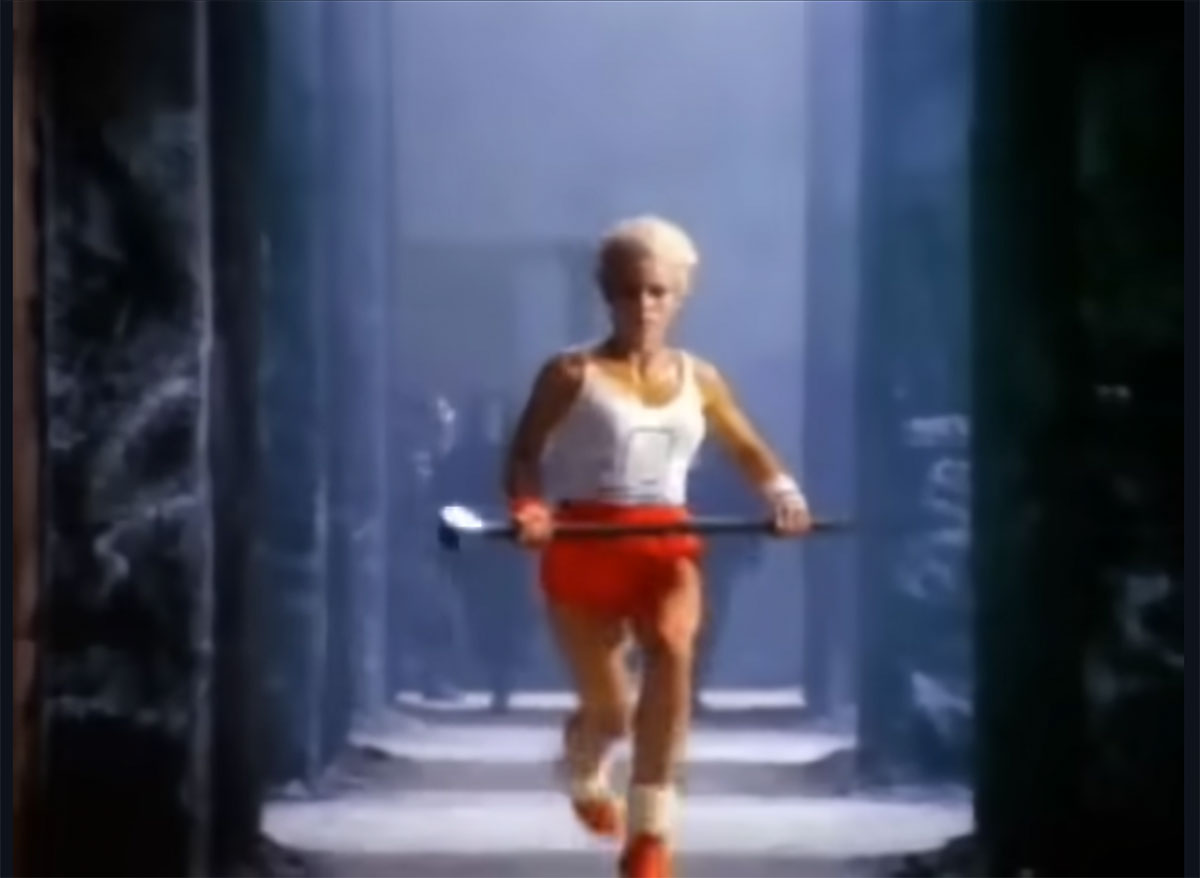
Then, a flash of color breaks the gray. A young woman (played by British athlete Anya Major) sprints toward the screen, pursued by riot police. She wears bright orange shorts and a white tank top emblazoned with a line drawing of a computer. In her hands, she swings a heavy sledgehammer with the grace of an Olympian. As she releases the hammer, it sails through the air and crashes directly into the face of the tyrant.

The screen explodes in a blinding white light. A voiceover—and a simple scroll of text—delivers the finishing blow: “On January 24th, Apple Computer will introduce Macintosh. And you’ll see why 1984 won’t be like ‘1984’.”

Corporate Cold Feet: The Board vs. The Visionaries

Today, the “1984” ad is heralded as the greatest commercial of all time. Yet, it almost never aired.

The backstory is a corporate thriller. The agency Chiat/Day had crafted the concept, and Steve Jobs was immediately electrified by it. He wanted a “thunderclap.” However, when the finished film was screened for Apple’s board of directors in December 1983, the reaction was icy silence.

Mike Markkula, Apple’s chairman and major investor, was horrified. “This is the worst ad I’ve ever seen. Who wants to fire the agency?” he reportedly asked. The board ordered CEO John Sculley to sell back the expensive Super Bowl airtime they had already purchased.

Wozniak’s Act of Rebellion

Steve Jobs, refusing to see his masterpiece buried, showed the spot to co-founder Steve Wozniak. “Woz” was so blown away that he offered to pay for half of the airtime out of his own pocket if the board refused to budge. “If Apple won’t run it, I’ll pay $400,000 and you pay $400,000,” Wozniak told Jobs.

In the end, it was a mix of chutzpah and luck: Chiat/Day claimed they couldn’t find a buyer for the 60-second slot in time. With the slot already paid for and no one to take it, Apple was forced to run the ad.

Skinheads and Discus Throws: The Making of a Legend

Ridley Scott’s production was grueling and authentic. Filmed at Shepperton Studios in London, Scott didn’t hire standard extras. To achieve the look of a true oppressed proletariat, he hired actual London skinheads for a pittance and the promise of a free lunch. The atmosphere on set was reportedly tense, with the extras’ rowdy behavior adding a layer of genuine grit to the film.

The choice of Anya Major for the lead role was a stroke of casting genius. Many models had auditioned, but most couldn’t even swing the hammer while running. Major was an experienced discus thrower; she had the muscle memory and the athletic form to hurl the sledgehammer with deadly precision.

The Legacy: When Advertising Became Art

The impact the next morning was unprecedented. News stations didn’t just talk about the ad; they replayed it in its entirety during their broadcasts. Apple generated over $5 million in free publicity. Overnight, the Macintosh became more than a piece of hardware; it became a symbol of individuality and freedom.

“1984” marked the moment advertising stopped merely explaining products and started creating myths. It was the birth of Apple as a lifestyle brand and Steve Jobs as the high priest of the digital counter-culture.

There is a modern irony to the story: today, critics often point at Apple’s massive market cap and closed ecosystem, suggesting the company has become the very “Big Brother” it once vowed to destroy. Regardless of the politics, the 60-second storm Ridley Scott and Steve Jobs unleashed remains a masterclass in storytelling—a hammer throw that changed the cultural trajectory of technology forever.

The commercial was rebroadcast in an updated version in 2004 on its 20th anniversary, with the heroine modified to be listening to an iPod. Viewers generally saw the Big Brother target of the Apple advertisement as being Microsoft, with the original villain, IBM, being all but forgotten.
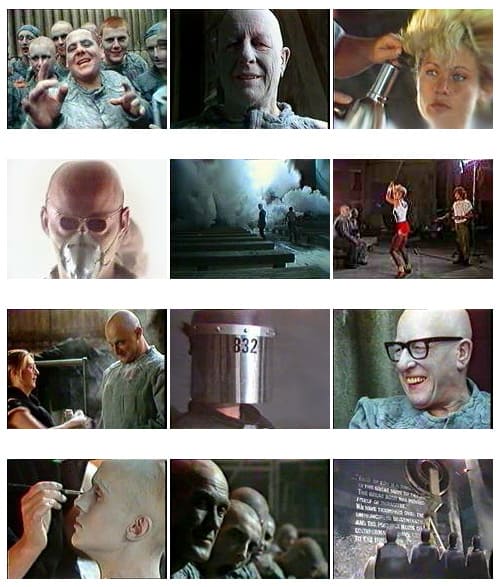
Making of the Apple Ad 1984

Apple commercial “1984”: The Plot

The commercial opens with a dystopic, industrial setting in blue and gray tones, showing a line of people (of ambiguous gender) marching in unison through a long tunnel monitored by a string of telescreens. This is in sharp contrast to the full-color shots of the nameless runner (Anya Major). She looks like an Olympic track and field athlete, as she is carrying a large brass-headed hammer and is wearing an athletic “uniform” (bright orange athletic shorts, running shoes, a white tank top with a cubist picture of Apple’s Macintosh computer, a white sweat band on her left wrist, and a red one on her right).

As she is chased by four police officers (presumably agents of the Thought Police) wearing black uniforms, protected by riot gear, helmets with visors covering their faces, and armed with large night sticks, she races towards a large screen with the image of a Big Brother-like figure (David Graham, also seen on the telescreens earlier) giving a speech:

My friends, each of you is a single cell in the great body of the State. And today, that great body has purged itself of parasites. We have triumphed over the unprincipled dissemination of facts. The thugs and wreckers have been cast out. And the poisonous weeds of disinformation have been consigned to the dustbin of history. Let each and every cell rejoice! For today we celebrate the first, glorious anniversary of the Information Purification Directive! We have created, for the first time in all history, a garden of pure ideology. Where each worker may bloom secure from the pests purveying contradictory truths. Our Unification of Thoughts is more powerful a weapon than any fleet or army on earth. We are one people, with one will, one resolve, one cause. Our enemies shall talk themselves to death and we will bury them with their own confusion. We shall prevail!

The runner, now close to the screen, hurls the hammer towards it, right at the moment Big Brother announces, “we shall prevail!” In a flurry of light and smoke, the screen is destroyed, shocking the people watching the screen.
The commercial concludes with a portentous voiceover, accompanied by scrolling black text (in Apple’s early signature “Garamond” font); the hazy, whitish-blue aftermath of the cataclysmic event serves as the background. It reads:

On January 24th, Apple Computer will introduce Macintosh. And you’ll see why 1984 won’t be like “1984.

The screen fades to black as the voiceover ends, and the rainbow Apple logo appears.

Apple commercial “1984”: The Production

Development

The commercial was created by the advertising agency Chiat/Day, Venice, with copy by Steve Hayden, art direction by Brent Thomas and creative direction by Lee Clow. Ridley Scott (whose dystopian sci-fi film, Blade Runner was released two years prior) was hired by agency producer Richard O’Neill to direct it, with a then-“unheard-of production budget of $900,000.” The actors who appeared in the commercial were paid $25 per day.

Steve Jobs and John Sculley were so enthusiastic about the final product that they “…purchased one and a half minutes of ad time for the Super Bowl, annually the most-watched television program in America. In December 1983 they screened the commercial for the Apple Board of Directors. To Jobs’ and Sculley’s surprise, the entire board hated the commercial.” However, Scully himself got “cold feet” and asked Chiat/Day to sell off the two commercial spots.

Despite the board’s dislike of the film, Steve Jobs continued to support it. Steve Wozniak watched it and offered to pay for half of the spot personally if the board refused to air it.

Of the original ninety seconds booked, Chiat/Day managed to resell thirty seconds to another advertiser, leaving the other sixty second slot.

Intended message

Adelia Cellini states in a 2004 article for MacWorld, “The Story Behind Apple’s ‘1984’ TV Commercial“:

Let’s see – an all-powerful entity blathering on about Unification of Thoughts to an army of soulless drones, only to be brought down by a plucky, Apple-esque underdog. So Big Brother, the villain from Apple’s ‘1984’ Mac ad, represented IBM, right? According to the ad’s creators, that’s not exactly the case. The original concept was to show the fight for the control of computer technology as a struggle of the few against the many, says TBWA/Chiat/Day’s Lee Clow. Apple wanted the Mac to symbolize the idea of empowerment, with the ad showcasing the Mac as a tool for combating conformity and asserting originality. What better way to do that than have a striking blonde athlete take a sledghammer to the face of that ultimate symbol of conformity, Big Brother?

However, in his 1983 Apple keynote address, Steve Jobs made the following comment before showcasing a preview of the commercial to a select audience:

It is now 1984. It appears IBM wants it all. Apple is perceived to be the only hope to offer IBM a run for its money. Dealers initially welcoming IBM with open arms now fear an IBM dominated and controlled future. They are increasing and desperately turning back to Apple as the only force that can ensure their future freedom. IBM wants it all and is aiming its guns on its last obstacle to industry control, Apple. Will Big Blue dominate the entire computer industry? The entire information age? Was George Orwell right about 1984?

Apple commercial “1984”: The Reception

Awards

* 2007: Best Super Bowl Spot (in the game’s 40-year history)

* 1999: TV Guide – Number One Greatest Commercial of All Time

* 1995: Advertising Age – Greatest Commercial

* 1984: 31st Cannes Lions International Advertising Festival – Grand Prix

Social impact

Ted Friedman, in his 2005 text, Electric Dreams: Computers in American Culture, notes the impact of the commercial:

Super Bowl viewers were overwhelmed by the startling ad. The ad garnered millions of dollars worth of free publicity, as news programs rebroadcast it that night. It was quickly hailed by many in the advertising industry as a masterwork. Advertising Age named it the 1980s Commercial of the Decade, and it continues to rank high on lists of the most influential commercials of all time […] 1984 was never broadcast again, adding to its mystique.

1984 became a signature representation of Apple computers. It was scripted as a thematic element in the 1999 docudrama, Pirates of Silicon Valley, which explores the rise of Apple and Microsoft (the film opens and closes with references to the commercial including a re-enactment of the heroine running towards the screen of Big Brother and clips of the original commercial).

“1984” became a signature representation of Apple computers. It was scripted as a thematic element in the 1999 docudrama, Pirates of Silicon Valley, which explores the rise of Apple and Microsoft (the film opens and closes with references to the commercial including a re-enactment of the heroine running towards the screen of Big Brother and clips of the original commercial). The “1984” ad was also prominent in the 20th anniversary celebration of the Macintosh in 2004, as Apple reposted a new version of the ad on its website. In this updated version, an iPod, complete with signature white earbuds, was digitally added to the heroine. Attendees were given a poster showing the heroine with iPod as a commemorative gift.

Influence in media

A commercial for the video game Half-Life 2 was based on this commercial. A parody of the commercial is seen in the Futurama episode Future Stock, promoting Planet Express. Another parody appears in The Simpsons TV show episode Mypods and Boomsticks, featuring Steve Jobs as “Big Brother” and the Comic Book Guy as the runner.

For the 20th anniversary of the Macintosh, Apple re-released the ad with the runner wearing an iPod.

Further reading

Source:

1984 (advertisement). (2012, May 13). In Wikipedia, The Free Encyclopedia. Retrieved 12:12, June 2, 2012, from http://en.wikipedia.org/w/index.php?title=1984_(advertisement)&oldid=492407781

A Look Back at Apple’s Super Ad : NPR.

This article is licenced under the GNU Free Documentation License

Apple’s 1984 spoof of ‘Ghostbusters’ goes after IBM

This is a 4-minute, uncut version of “Blue Busters”, a 1984 takeoff on ‘Ghostbusters’ that Apple produced to show at the opening of its worldwide sales staff meeting in Hawaii in October 1984. The video includes a cameo appearance by Steve Wozniak. Craig Elliott, former Apple employee now CEO and co-founder of cloud-computing startup Pertino Networks, gave access to this video.

Also shown at that meeting was another film in which Steve Jobs impersonates FDR. That film can be seen here:
https://www.mac-history.net/steve-jobs/2012-05-05/steve-jobs-acts-as-franklin-d-roosevelt-bizarre-internal-apple-promo-1984

History of the Apple Ads (1978 – 2008)

The Classics

“1984” – The famous Super Bowl Ad

“Computer for the rest of us”

Nightmare before Christmas

Office Lemmings

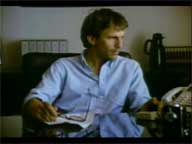
Apple Lisa (1983) with Kevin Costner

Current Campaigns

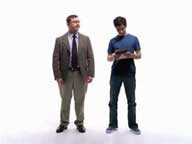
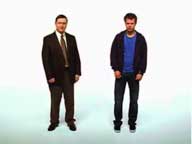
Get a Mac (2006-2009)

Switch Campaign (2002-2003)

iPhone Spots

iPod Spots

Commercials 1978 – 2000

“iMac Commercials”

Power Mac Commercials

(more to come …)

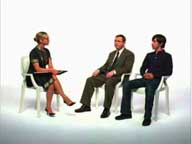
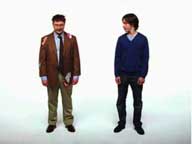
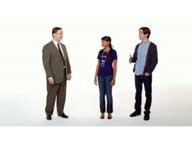
Apple Campaign "Get a Mac"

2006

Viruses

PC has caught a new virus (represented as a cold) and warns Mac to stay away from him, citing the “114,000 known viruses for PCs.” Mac states that the viruses that affect PCs don’t affect him, and PC announces that he’s going to ‘crash’ before collapsing onto the floor in a faint.


Work vs. Home
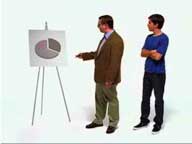
Mac describes how he enjoys doing ‘fun stuff’ such as podcasts and movies, leading PC to claim that he also does “fun stuff” such as timesheets, spreadsheets and pie charts. After Mac responds that it is difficult to capture a family vacation using a pie chart, PC rebuts by showing a pie chart representing “hangout time” and “just kicking it” with different shades of gray.

Touché
Right after PC introduces himself, the Mac character replies, “And I’m a PC too”. Mac explains to the confused PC that he can run both Mac OS X and Microsoft Windows, calling himself “the only computer you’ll ever need.” PC mutters, “Oh…touché.” The Mac character, referring to the rules of fencing, explains that one only says “touché” after he or she makes a point and someone else makes a counterpoint, but the PC character continues to misuse the word. A similar conversation occurred in Dodgeball: A True Underdog Story, a film which Justin Long (Mac) appeared in.

Out of the Box
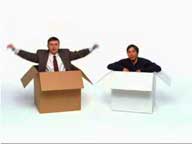
Mac (in a white box) and PC (in a brown box doing some exercises) are in boxes discussing what they will do when they are unpacked. Whereas Mac says that he can get started right away, PC is held up by the numerous activities he must complete before being useful. Mac eventually leaves to get right to work, whereas PC is forced to wait for parts that are still in other boxes.


Trust Mac
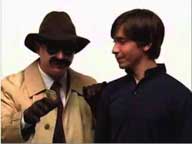
PC, in an attempt to hide from spyware, is wearing a trench coat with dark glasses and a false mustache. PC offers Mac a disguise, but Mac declines, saying he doesn’t have to worry about the normal PC spyware and viruses with Mac OS X.


Angel/Devil
Mac gives PC an iPhoto book to view. Suddenly, angel and devil versions of PC appear behind him. The angel encourages PC to compliment Mac, while the devil prods PC to destroy the book. In the end, PC says the book is good, and then turns around, feeling the air where the angel and devil versions of PC were.

Accident
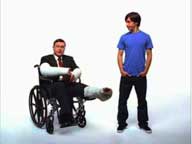
A wheelchair-bound PC, who is wearing casts on his arms, explains that he fell off his desk when someone tripped over his power cord, thus prompting Mac to point out that the MacBook’s and MacBook Pro’s magnetic power cord prevents such an occurrence.


Better Results
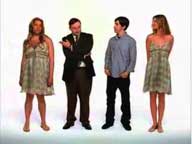
PC and Mac discuss making home movies, and show each other their efforts. Supermodel Gisele Bündchen enters, representing Mac’s movie, while PC’s movie is represented by a man with a hairy chest and a blonde wig wearing a dress similar to Bündchen’s. PC states that there’s some work in progress with his movie.

Self Pity
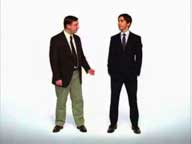
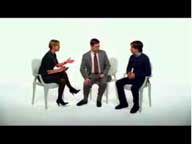
Mac, for once, is wearing a suit, and explains that he “does work stuff too” and has been running Microsoft Office for years. Upon hearing this, PC becomes despondent and collapses on the floor, begging to be left alone to depreciate.


Counselor
PC and Mac visit a counselor to resolve their differences. However, while Mac finds it easy to compliment PC (“you are a wizard with numbers and you dress like a gentleman”), PC’s resentment is too deep for him to reciprocate (“I guess you are better at creating stuff, even though it’s completely juvenile and a waste of time.”). The counselor suggests them coming in twice a week.

Meant for Work
PC, looking haggard and covered in stickers, complains about the kids who use him and their activities, such as making movies and blogging, which are wearing him out and makes him “cry to sleep mode.” He complains that, unlike Mac, he is meant more for office work. PC then trudges off because his user wants to listen to some Emo (represented by the Anarchy sign on his back).

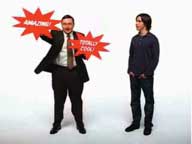
Sales Pitch
Although Mac introduces himself as usual, PC says “… and buy a PC.” He explains that Mac’s increasing popularity is forcing him to be more forward in his self-promotion, and is reduced to holding up red signs with various pitches on them.


Gift Exchange
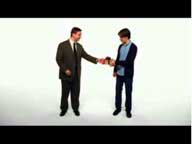
Mac and PC exchange gifts for Christmas; PC, who is hoping for a C++ GUI programming guide, is disappointed to receive a photo album of previous Get a Mac ads made on iPhoto, and Mac receives from PC a C++ GUI programming guide.


Goodwill
Mac and PC agree to put aside their differences because of the Christmas season. Although PC momentarily slips and states that Mac “wastes his time with frivolous pursuits like home movies and blogs,” the two agree to, as Mac says, “pull it into hug harbor” and the each wish each other a good holiday.

WSJ
Mac is reading a favourable review of himself by Walt Mossberg in the Wall Street Journal. Jealous, PC then claims that he also received a great review, but is caught offguard when Mac asks for specific details. This ad is currently not available online at the Apple site. But you can see it here.


2007

Surgery
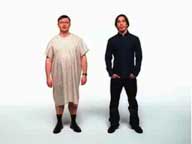
PC appears in the garb of a patient awaiting surgery, and explains that he is upgrading to Windows Vista but requires “surgery” to upgrade (specifically, upgrading such items as graphics cards, processors, memory, etc). In reference to perceived difficulties in upgrading, PC admits that he is worried about going through it and bequeaths his peripherals to Mac should he not survive. Mac ask PC if, like him, his upgrade is just straight forward.

Sabotage
In this advert, PC is present, but a different actor appears in Mac’s place, obviously reciting poorly memorized lines to flatter PC. The real Mac arrives soon after, and while PC sheepishly denies anything is happening, ‘impostor’ Mac tells ‘real’ Mac that he’s “a big fan.”


Tech Support
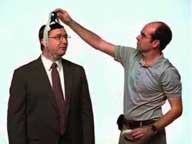
A technician is present to ‘install’ a webcam to PC (using masking tape to attach it to his head). PC is extremely pleased by his new upgrade, but on hearing from the technician that Mac has a built-in webcam, he storms off without waiting for the camera to be fully ‘installed’.

Security
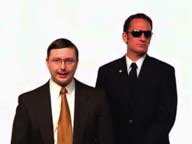
In a reference to criticisms of Windows Vista’s security features, PC is a joined by a tall United States Secret Service-style bodyguard representing Vista’s new security feature, who intrusively demands that he “cancel or allow” every incoming or outgoing interaction he has with Mac.

Computer Cart
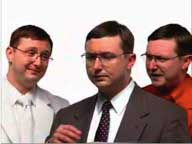
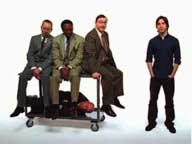
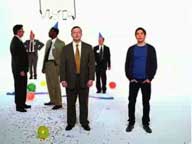
PC and 3 other men in suits are on a computer cart. When Mac asks why, PC says that he gets an error with a Windows Media Player Dynamic-link library file (WMP.DLL), and that the others suffer from similar errors (The man in the beige suit represents error 692, the man in the grey suit represents a Syntax error, and the man in the bottom of the cart represents Fatal error in which PC whispers along with “he’s a goner” after the commercial). Mac explains that Macs don’t get cryptic error messages.

Flashback
Mac asks PC if he would like to see a website and home movie that he made. This prompts PC to flashback to a time when both he and Mac were children; when the younger Mac asks the younger PC if he would like to see some artwork he did, the younger PC takes out a calculator and calculates “the time we’ve just wasted.” (This may be a reference to the time when PC’s were text-based, while Macs were slower but had GUI’s) Returning from the flashback, PC does the same thing.

Stuffed
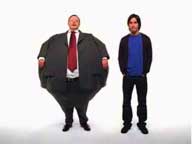
PC enters slowly, with a ballooned torso, explaining that all the trial software is slowing him down. Mac replies that Macs only come with the software “you want” (namely, the iLife package). As PC finally gets on his mark, Mac begins his intro again, but PC realizes that he’s forgotten something and begins to slowly leave.

Party is Over
PC unhappily throws a party celebrating the release of Windows Vista. He complains to Mac that he had to upgrade his hardware, and now can’t use some of his old software and peripherals. He then talks with one of the party members about throwing another in 5 years, which turns into 5 years and a day, and so on.

Genius
Mac introduces PC to one of the Apple Geniuses from the Apple Retail Store’s Genius Bar. PC tests the Genius, starting with math questions and culminating in asking her, on a scale of one to ten, how much does he loathe Mac, to which she answers eleven which is correct, and PC says “She’s good. Very good.”

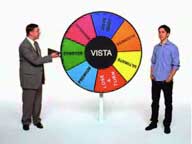
Choose a Vista
Confused about which of the six versions of Windows Vista to get, PC spins a big game wheel. PC spins “Lose a Turn” and Mac questions why PC put that space on the wheel.


Boxer
PC is introduced as if he were in a Boxing match, stating that he’s not going down without a fight. Mac says back that it’s not a competition, but rather people switching to a computer that’s simpler and more intuitive. The ring announcer admits his brother-in-law got a Mac and loves it.


Podium
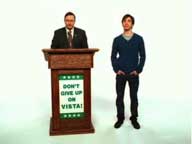
PC, in the style of a political candidate, is standing at a podium making declarations about Windows Vista, urging those who are having compatibility problems with existing hardware to simply replace them and to ignore the new features of Mac OS X Leopard – however, he privately admits to Mac that he himself has downgraded to Windows XP three weeks ago. His key slogan is “It’s not about what Vista can do for you, it’s what you can buy for Vista.”

PR Lady
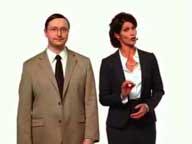
Mac and PC are joined by a public relations representative (played by Mary Chris Wall), who has been hired by PC to place a positive spin on the reaction to Windows Vista and claims that many people are even downgrading back to Windows XP, but her response to claims that more people are switching to Mac instead is a sheepish “No comment.”


Misprint
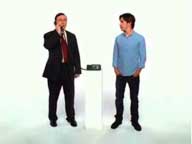
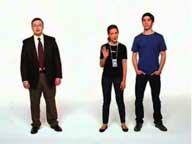
PC is on the phone with PCWorld attempting to report a misprint. He explains how they said, “The fastest Windows Vista notebook we tested this year is a Mac.” PC goes on to argue how impossible it is for a Mac to run Vista faster than a PC while Mac tries to explain that it is true. While arguing with PCWorld over the phone, PC says he’ll put Mac on the line to set things straight. However, he instead lowers his voice and talks ‘cool’ in an attempt to impersonate Mac saying that PCs are faster.

Now What
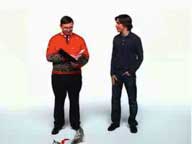
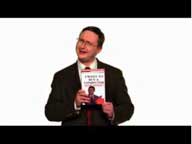
PC begins by showing off his new, long book, I Want to Buy a Computer — Now What?, to help customers deal with all the difficult computer-buying decisions, with no one out there to help. Mac then replies that buying a computer is in fact “really easy,” explaining that at Apple Stores there are “personal shoppers” to help you find the perfect Mac. Mac goes on to say that there are even workshops there to teach people about using the computers. Upon hearing this, PC says that he also thought of this and brings out the companion volume, I Just Bought a Computer — Now What?.

Santa Claus
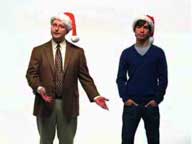
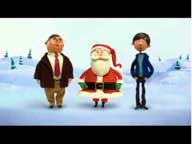
An animated Get a Mac commercial featuring Santa Claus and Christmas caroling by both PC and Mac. PC spoils the song by inserting “Buy a PC and not a Mac this holiday season or any other time for goodness sake”. The animation style is similar to the Rankin/Bass television specials Rudolph the Red-Nosed Reindeer and Santa Claus Is Comin’ to Town.


Referee
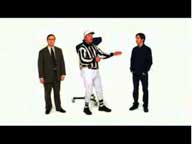
A referee is present, according to PC, to make sure that Mac doesn’t go on saying that Leopard is better and faster than Vista. When Mac defends himself saying that it was The Wall Street Journal who compared the two, PC complains, and the referee sides with Mac. Upon insulting the referee, PC gets ejected, but PC rebuts, saying that he has nowhere to go (in the ad’s area).

2008

Time Machine
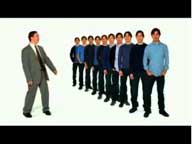
In the typical introduction of Mac and PC, instead of there being one Mac, there is a line of 10. PC is shocked, so the various Macs explain that it is simply “Time Machine,” a feature in Leopard which makes regular backups of the hard drive. PC is forced to admit that such a feature is “pretty awesome,” followed by thanks from the various Macs.


Breakthrough
Mac and PC’s therapist (see “Counselor” below) suggest that PC’s problems are simply a result of software and hardware coming from various places, whereas Mac gets all his hardware and software from one place. “It’s not my fault!” PC keeps repeating with support of Mac and the therapist. Then PC concludes, “It’s Mac’s fault, it’s Mac’s fault,” with Mac and the therapist disappointed in PCs conclusion. PC ends with the comment: “What a Breakthrough!”.

Tech Support
A technician is present to ‘install’ a webcam to PC (using masking tape to attach it to his head). PC is extremely pleased by his new upgrade, but on hearing from the technician that Mac has a built-in webcam, he storms off without waiting for the camera to be fully ‘installed’.


Yoga
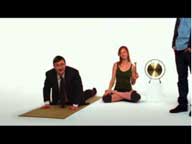
Mac is watching PC have a yoga session where the yoga instructor (Judy Greer) is coaching PC in “expelling bad Vista energy” and forgetting Vista’s problems, but when the yoga instructor goes on to complain that Vista screwed up the yoga billing, PC considers switching to pilates.

Office Stress
Mac’s new Microsoft Office 2008 program has just come out. In the box that PC gives him, is a stress toy for Mac to use when he gets stressed from doing lots more work, which PC begins using as he complains that Microsoft Office is too compatible with Mac and that he wants to switch his files over and he is getting less work then Mac, eventually breaking the toy.
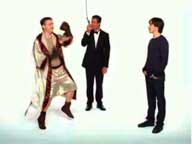
Group
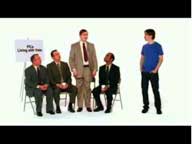
PC is at a help group for “PCs living with Vista”. The other PC’s there tell him to take it one day at a time and that he is facing the biggest fact of all, that Vista isn’t working as it should. They all wish the Vista problems will go away sooner and a lot easier. One of them says pleasingly that he has been error-free for a week and starts to repeat himself uncontrollably and the others get disappointed.

Pep Rally
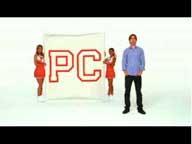
PC is introduced by a cheerleading squad. When asked to explain, PC explains that Mac’s number 1 status on college campuses with his built in iSight camera, his Stable operating system, and being able to run Microsoft Office so well, so he is trying to win students back with a pep rally. The cheerleaders cheer, “Mac’s Number One!,” and upon PC’s complaint, they cheer, “PC’s Number Two!”

Sad Song
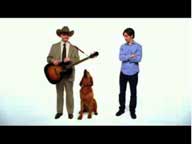
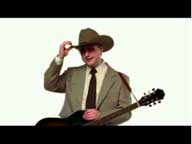
PC sings a short country-blues style song because Vista has gotten him feeling down. The song is about people ‘leaving him’ for Mac and that Vista’s got issues. A hound dog then howls and Mac claims the song is touching.


Sad Song (extended Version)
PC sings a short country-blues style song because Vista has gotten him feeling down. The song is about people ‘leaving him’ for Mac and that Vista’s got issues. A hound dog then howls and Mac claims the song is touching. This longer version ends with PC asking Mac if the dog is his, which it’s not.


Calming teas
PC announces calming teas and bath soaps to make Vista’s annoyances easier to live with.


Throne
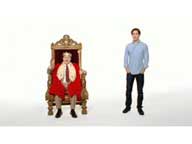
PC appears in a king’s robe and throne saying that even though switching computers can be difficult, his “subjects” won’t leave him and that he’s still king. Mac then begins talking about how PC’s subjects can just bring their PC into an Apple Store where they’ll transfer all the files over to a new Mac, at which PC declares Mac ‘banished’.


Pizza Box
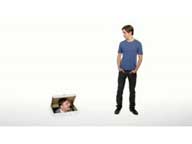
PC tries to attract college students by posing as a free box of pizza. Note that this ad was aired during Apple’s 2008 back-to-school promotion.


Off the Air
Mac and PC show up with a Mac Genius who says that it is now “easier than ever” to switch to a Mac and that a Mac Genius can switch over a PCs files to a new Mac for free. PC then protests that it is fear which keeps people from switching and that people don’t need to hear about the Mac Genius, pulling a cover over the camera and declaring them to be “off the air”.


Bean Counter
PC is “doing a little budgeting”. He admits that Vista’s problems are frustrating PC users and that it’s time to take “drastic action”: spending almost all of the money on advertising. When Mac asks PC why he thinks the small amount of money left will fix Vista, PC reallocates it to advertising.


V Word
PC declares that “we’re going to stop referring to my operating system ([Vista]) by name”. He says using the word “doesn’t sit well with frustrated PC users. From now on, we’re going to use a word with a lot less baggage: Windows”. He is holding a black box with a large red button that sounds a buzzer when pressed. PC presses the button whenever Mac says “Vista”. After pointing out that not using the word isn’t the same as fixing the operating system’s problems, Mac ends the ad by saying “Vista” several times in rapid succession, thwarting PC’s attempts to sound the buzzer.


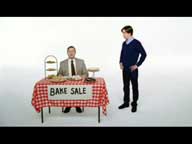
Bake Sale
PC is seen having a bake sale. When Mac questions PC regarding the occasion, PC replies that he is trying to raise money by himself in order to fix Vista’s problems. Mac decides to contribute by buying a cupcake and as soon as he takes a bite, PC wants Mac to pay ten million dollars for it.


httpv://www.youtube.com/watch?v=KHO3eWlmWNc


Tree Trimming
– A holiday animated Get a Mac commercial. Mac and PC set aside their disagreements and decide to trim a Christmas tree by hanging ornaments and stringing lights. Mac tells PC that they are good friends while PC gets nervous. When they are finished, PC does not want to light the lights on the tree. Mac persuades him to do so. PC plugs the trees lights in and they light up and say: “PC RULES”. He apologies to Mac and says that it just sort of happened. The animation is like the Get a Mac Santa Claus ad in Rankin/Bass clay animation style.

httpv://www.youtube.com/watch?v=0J0JVU3bpDE

I Can Do Anything
– A holiday animated Get a Mac commercial. PC asks Mac why he loves the holidays so much. Mac says it is the season for Peace on Earth. PC says that they get to be animated and they can do anything. PC demonstrates by floating in the air, building a snowman in fast motion, and talking to animals. PC asks a bunny hopping by where he is going. The bunny replies by saying he’s going to the Apple Store for some last minute gifts. PC then purposely tips the snowman’s head off making it fall on the bunny and apologies. The animation is like the Get a Mac Santa Claus ad in Rankin/Bass clay animation style.

httpvh://www.youtube.com/watch?v=s9QAkW12DZY

Time Traveler—PC uses a time machine to travel to the year 2150 to see if any major issues (such as freezing and crashing) have been removed from the PC and to see if PCs are as hassle-free as Macs. Promptly after PC arrives at 2150, future PC literally freezes, which answers the question.

httpvh://www.youtube.com/watch?v=F0VvbpJR-Y0

Stacks—PC is searching through all of his pictures, trying to find a photograph of his friend. He searches one picture at a time, but Mac states that iPhoto has a feature called Faces, in which you tag the face of a person and iPhoto finds other pictures of the same person, putting them all into the same folder and saving search time. PC responds to the facial-recognition technology as expensive and tells Mac to sort the pictures instead because he has the technology to make it easier.

httpvh://www.youtube.com/watch?v=uR487qnNKCk

Legal Copy—Every time PC says something positive about himself, the legal copy that appears on the screen increases. He finally states that PCs are now 100% trouble-free, and the legal copy covers the whole screen.

httpvh://www.youtube.com/watch?v=sWaagCttaPo

Biohazard Suit—PC first appears wearing a biohazard suit to protect himself from PC viruses and malware, of which PC says there are 20,000 discovered every day. Mac asks PC if he is going to live in the suit for the rest of his life, and PC cannot hear him because he is too protected by his virus-proof mask, and takes it off. PC then shrieks and struggles to place it on again.

httpvh://www.youtube.com/watch?v=Afa9C98gZ7w

Elimination—PC attempts to find Megan, a new laptop hunter, the perfect PC. Unfortunately, no PCs are ‘immune’ to viruses, which is Megan’s #1 concern, so PC leaves her with Mac.

httpvh://www.youtube.com/watch?v=S6SCc6A6Kck

PC Choice Chat—PC has his own radio talk show called PC Choice Chat, and people begin to call in asking for advice on which computer to get. All the callers ask for advice on a computer that would qualify as a Mac but not a PC, as one caller asks for a computer that is for people who hate getting viruses. One other caller asks for PC help like Mac genius, and another wants to switch to Mac. PC ignores these calls.

httpvh://www.youtube.com/watch?v=D9Y0Arp-MYI

Customer Care—Mac is seen again with an Apple Genius, a real-life person who can help you with your Mac problems. PC then has a short montage of endless automated customer-support messages, never reaching a real person, which is not to PC’s liking, and he then says that his source of help is ‘the same’ as Mac Genius.

httpvh://www.youtube.com/watch?v=tM649iQ0ass

Surprise—Mac appears alongside a customer (Andree Vermeulen), with PC notably absent. The customer says she’s looking to buy a great computer. Mac tries to convince her that she should get a PC, telling her that they’re much better and more stable. The customer seems skeptical, tells Mac she’ll “think about it”, and leaves. A frustrated Mac pulls off a mask and his clothes, revealing himself to be PC in disguise. The real Mac then appears, sees PC’s discarded mask and clothes, and says “I don’t even wanna ask.”

httpvh://www.youtube.com/watch?v=wkrdy1p9BYI

Top of the Line—PC and Mac appear with a customer who’s looking for a new computer. PC introduces her to the “top of the line” PC (Patrick Warburton), a handsome and overly slick PC in a suit. She asks him about screen size and speed, to which Top of the Line says he’s the best, but he then balks when she says she doesn’t want to deal with any viruses or hassle. She decides to go with Mac, so Top of the Line hands her his business card and tells her to give him a call “when she’s ready to compromise.”

httpvh://www.youtube.com/watch?v=Qh1O0piBDm0

Trainer—The commercial starts off traditionally, but PC is doing sit-ups with a trainer in a striped shirt (Robert Loggia), saying fierce things to make PC improved. PC suggests the trainer try some ‘positive reinforcement’, and is a little angry and shocked when the trainer compliments Mac instead.

httpvh://www.youtube.com/watch?v=NUZqANYD7zY

PC Innovations Lab—PC, who has wrapped another PC in Bubble Wrap, is saying that the Bubble Wrap is actually a security shield. Mac tries to speak, but PC cuts him off, showing another PC who apparently has cupholders on his shoulders. The cupholders are full of foam coffee cups, and PC takes a full coffee cup, pretending to toast the cup and saying, “Cheers to innovation”.

httpvh://www.youtube.com/watch?v=AYWmDag3ruM

Broken Promises—PC tells Mac how excited he is about the launch of Windows 7 and assures him it won’t have the same problems as Vista. However, Mac feels like he heard this before, and has a series of flashbacks about PC assuring Mac about Windows Vista, XP, Me, 98, 95, and 2.0. On the last flashback, he says “Trust me.” Back in the present, he says this time it’s going to be different, then says “Trust me.” in an almost identical way to the flashback.

httpvh://www.youtube.com/watch?v=XosJw6bEzzY

Teeter Tottering—A woman who had a PC has a box of things that were in her PC and says she’s switching to Mac, but PC tries to convince her to stay while she just goes over to Mac every time.

httpvh://www.youtube.com/watch?v=AiU1Gu14xG0

PC News—PC is sitting at a news desk and turns it over to a correspondent at what seems to be a launch party for Windows 7 until a person being interviewed reveals that he is switching to a Mac. PC is surprised by this and asks why, and more people speak of how Mac is #1 with customer satisfaction and PC finally says to cut the feed. This is one of two commercials where Mac and PC acknowledge that they are in a commercial. PC: “Let’s go to a commercial.” Mac: “We are a commercial”. PC: “Let’s go to another commercial”.

Source (Text):

“Get a Mac.” Wikipedia, The Free Encyclopedia. 11 Sep 2008, 22:32 UTC. 14 Sep 2008 <http://en.wikipedia.org/w/index.php?title=Get_a_Mac&oldid=237810498>.

This article is published under the GNU General Public License