Category Archives: Top

Apple Super Bowl Commercial 1984

“1984″ – Apple’s famous Super Bowl Spot

The most famous Super Bowl ad

The Hammer That Shattered the Monolith: How 60 Seconds Defined the Apple Mythos

It is January 22, 1984. Inside Tampa Stadium, Super Bowl XVIII is in full swing. The Los Angeles Raiders are systematically dismantling the Washington Redskins. But during a break in the third quarter, the game becomes a footnote. For 60 seconds, nearly 100 million Americans are pulled away from the grass and grit into a dystopian nightmare—and then shown a glimpse of a digital revolution.

This wasn’t just a commercial. It was a cinematic manifesto directed by Ridley Scott, a man who had just finished reshaping science fiction with Blade Runner.

The Aesthetic of the Abyss

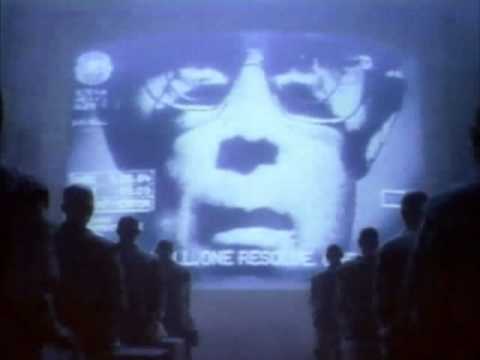
The spot opens on a monochrome, ash-colored world. Rows of hollow-eyed men, their heads shaved and spirits broken, march in lockstep through industrial corridors. They gather in a cold hall before a towering screen where a bespectacled “Big Brother”—a thinly veiled avatar for the then-dominant IBM—drones on about the “unification of thoughts.”

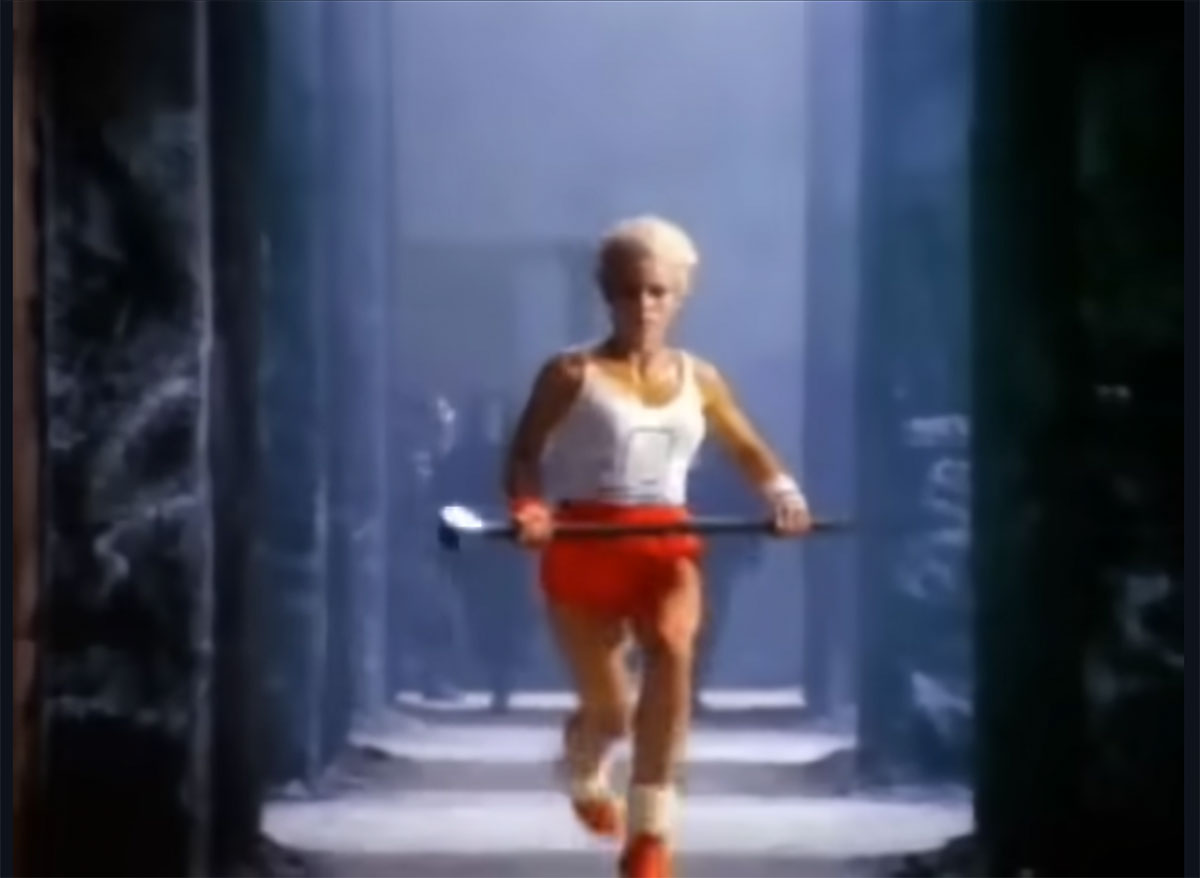
Then, a flash of color breaks the gray. A young woman (played by British athlete Anya Major) sprints toward the screen, pursued by riot police. She wears bright orange shorts and a white tank top emblazoned with a line drawing of a computer. In her hands, she swings a heavy sledgehammer with the grace of an Olympian. As she releases the hammer, it sails through the air and crashes directly into the face of the tyrant.

The screen explodes in a blinding white light. A voiceover—and a simple scroll of text—delivers the finishing blow: “On January 24th, Apple Computer will introduce Macintosh. And you’ll see why 1984 won’t be like ‘1984’.”

Corporate Cold Feet: The Board vs. The Visionaries

Today, the “1984” ad is heralded as the greatest commercial of all time. Yet, it almost never aired.

The backstory is a corporate thriller. The agency Chiat/Day had crafted the concept, and Steve Jobs was immediately electrified by it. He wanted a “thunderclap.” However, when the finished film was screened for Apple’s board of directors in December 1983, the reaction was icy silence.

Mike Markkula, Apple’s chairman and major investor, was horrified. “This is the worst ad I’ve ever seen. Who wants to fire the agency?” he reportedly asked. The board ordered CEO John Sculley to sell back the expensive Super Bowl airtime they had already purchased.

Wozniak’s Act of Rebellion

Steve Jobs, refusing to see his masterpiece buried, showed the spot to co-founder Steve Wozniak. “Woz” was so blown away that he offered to pay for half of the airtime out of his own pocket if the board refused to budge. “If Apple won’t run it, I’ll pay $400,000 and you pay $400,000,” Wozniak told Jobs.

In the end, it was a mix of chutzpah and luck: Chiat/Day claimed they couldn’t find a buyer for the 60-second slot in time. With the slot already paid for and no one to take it, Apple was forced to run the ad.

Skinheads and Discus Throws: The Making of a Legend

Ridley Scott’s production was grueling and authentic. Filmed at Shepperton Studios in London, Scott didn’t hire standard extras. To achieve the look of a true oppressed proletariat, he hired actual London skinheads for a pittance and the promise of a free lunch. The atmosphere on set was reportedly tense, with the extras’ rowdy behavior adding a layer of genuine grit to the film.

The choice of Anya Major for the lead role was a stroke of casting genius. Many models had auditioned, but most couldn’t even swing the hammer while running. Major was an experienced discus thrower; she had the muscle memory and the athletic form to hurl the sledgehammer with deadly precision.

The Legacy: When Advertising Became Art

The impact the next morning was unprecedented. News stations didn’t just talk about the ad; they replayed it in its entirety during their broadcasts. Apple generated over $5 million in free publicity. Overnight, the Macintosh became more than a piece of hardware; it became a symbol of individuality and freedom.

“1984” marked the moment advertising stopped merely explaining products and started creating myths. It was the birth of Apple as a lifestyle brand and Steve Jobs as the high priest of the digital counter-culture.

There is a modern irony to the story: today, critics often point at Apple’s massive market cap and closed ecosystem, suggesting the company has become the very “Big Brother” it once vowed to destroy. Regardless of the politics, the 60-second storm Ridley Scott and Steve Jobs unleashed remains a masterclass in storytelling—a hammer throw that changed the cultural trajectory of technology forever.

The commercial was rebroadcast in an updated version in 2004 on its 20th anniversary, with the heroine modified to be listening to an iPod. Viewers generally saw the Big Brother target of the Apple advertisement as being Microsoft, with the original villain, IBM, being all but forgotten.

Making of the Apple Ad 1984

Apple commercial “1984”: The Plot

The commercial opens with a dystopic, industrial setting in blue and gray tones, showing a line of people (of ambiguous gender) marching in unison through a long tunnel monitored by a string of telescreens. This is in sharp contrast to the full-color shots of the nameless runner (Anya Major). She looks like an Olympic track and field athlete, as she is carrying a large brass-headed hammer and is wearing an athletic “uniform” (bright orange athletic shorts, running shoes, a white tank top with a cubist picture of Apple’s Macintosh computer, a white sweat band on her left wrist, and a red one on her right).

As she is chased by four police officers (presumably agents of the Thought Police) wearing black uniforms, protected by riot gear, helmets with visors covering their faces, and armed with large night sticks, she races towards a large screen with the image of a Big Brother-like figure (David Graham, also seen on the telescreens earlier) giving a speech:

My friends, each of you is a single cell in the great body of the State. And today, that great body has purged itself of parasites. We have triumphed over the unprincipled dissemination of facts. The thugs and wreckers have been cast out. And the poisonous weeds of disinformation have been consigned to the dustbin of history. Let each and every cell rejoice! For today we celebrate the first, glorious anniversary of the Information Purification Directive! We have created, for the first time in all history, a garden of pure ideology. Where each worker may bloom secure from the pests purveying contradictory truths. Our Unification of Thoughts is more powerful a weapon than any fleet or army on earth. We are one people, with one will, one resolve, one cause. Our enemies shall talk themselves to death and we will bury them with their own confusion. We shall prevail!

The runner, now close to the screen, hurls the hammer towards it, right at the moment Big Brother announces, “we shall prevail!” In a flurry of light and smoke, the screen is destroyed, shocking the people watching the screen.
The commercial concludes with a portentous voiceover, accompanied by scrolling black text (in Apple’s early signature “Garamond” font); the hazy, whitish-blue aftermath of the cataclysmic event serves as the background. It reads:

On January 24th, Apple Computer will introduce Macintosh. And you’ll see why 1984 won’t be like “1984.

The screen fades to black as the voiceover ends, and the rainbow Apple logo appears.

Apple commercial “1984”: The Production

Development

The commercial was created by the advertising agency Chiat/Day, Venice, with copy by Steve Hayden, art direction by Brent Thomas and creative direction by Lee Clow. Ridley Scott (whose dystopian sci-fi film, Blade Runner was released two years prior) was hired by agency producer Richard O’Neill to direct it, with a then-“unheard-of production budget of $900,000.” The actors who appeared in the commercial were paid $25 per day.

Steve Jobs and John Sculley were so enthusiastic about the final product that they “…purchased one and a half minutes of ad time for the Super Bowl, annually the most-watched television program in America. In December 1983 they screened the commercial for the Apple Board of Directors. To Jobs’ and Sculley’s surprise, the entire board hated the commercial.” However, Scully himself got “cold feet” and asked Chiat/Day to sell off the two commercial spots.

Despite the board’s dislike of the film, Steve Jobs continued to support it. Steve Wozniak watched it and offered to pay for half of the spot personally if the board refused to air it.

Of the original ninety seconds booked, Chiat/Day managed to resell thirty seconds to another advertiser, leaving the other sixty second slot.

Intended message

Adelia Cellini states in a 2004 article for MacWorld, “The Story Behind Apple’s ‘1984’ TV Commercial“:

Let’s see – an all-powerful entity blathering on about Unification of Thoughts to an army of soulless drones, only to be brought down by a plucky, Apple-esque underdog. So Big Brother, the villain from Apple’s ‘1984’ Mac ad, represented IBM, right? According to the ad’s creators, that’s not exactly the case. The original concept was to show the fight for the control of computer technology as a struggle of the few against the many, says TBWA/Chiat/Day’s Lee Clow. Apple wanted the Mac to symbolize the idea of empowerment, with the ad showcasing the Mac as a tool for combating conformity and asserting originality. What better way to do that than have a striking blonde athlete take a sledghammer to the face of that ultimate symbol of conformity, Big Brother?

However, in his 1983 Apple keynote address, Steve Jobs made the following comment before showcasing a preview of the commercial to a select audience:

It is now 1984. It appears IBM wants it all. Apple is perceived to be the only hope to offer IBM a run for its money. Dealers initially welcoming IBM with open arms now fear an IBM dominated and controlled future. They are increasing and desperately turning back to Apple as the only force that can ensure their future freedom. IBM wants it all and is aiming its guns on its last obstacle to industry control, Apple. Will Big Blue dominate the entire computer industry? The entire information age? Was George Orwell right about 1984?

Apple commercial “1984”: The Reception

Awards

* 2007: Best Super Bowl Spot (in the game’s 40-year history)

* 1999: TV Guide – Number One Greatest Commercial of All Time

* 1995: Advertising Age – Greatest Commercial

* 1984: 31st Cannes Lions International Advertising Festival – Grand Prix

Social impact

Ted Friedman, in his 2005 text, Electric Dreams: Computers in American Culture, notes the impact of the commercial:

Super Bowl viewers were overwhelmed by the startling ad. The ad garnered millions of dollars worth of free publicity, as news programs rebroadcast it that night. It was quickly hailed by many in the advertising industry as a masterwork. Advertising Age named it the 1980s Commercial of the Decade, and it continues to rank high on lists of the most influential commercials of all time […] 1984 was never broadcast again, adding to its mystique.

1984 became a signature representation of Apple computers. It was scripted as a thematic element in the 1999 docudrama, Pirates of Silicon Valley, which explores the rise of Apple and Microsoft (the film opens and closes with references to the commercial including a re-enactment of the heroine running towards the screen of Big Brother and clips of the original commercial).

“1984” became a signature representation of Apple computers. It was scripted as a thematic element in the 1999 docudrama, Pirates of Silicon Valley, which explores the rise of Apple and Microsoft (the film opens and closes with references to the commercial including a re-enactment of the heroine running towards the screen of Big Brother and clips of the original commercial). The “1984” ad was also prominent in the 20th anniversary celebration of the Macintosh in 2004, as Apple reposted a new version of the ad on its website. In this updated version, an iPod, complete with signature white earbuds, was digitally added to the heroine. Attendees were given a poster showing the heroine with iPod as a commemorative gift.

Influence in media

A commercial for the video game Half-Life 2 was based on this commercial. A parody of the commercial is seen in the Futurama episode Future Stock, promoting Planet Express. Another parody appears in The Simpsons TV show episode Mypods and Boomsticks, featuring Steve Jobs as “Big Brother” and the Comic Book Guy as the runner.

For the 20th anniversary of the Macintosh, Apple re-released the ad with the runner wearing an iPod.

Further reading

Source:

1984 (advertisement). (2012, May 13). In Wikipedia, The Free Encyclopedia. Retrieved 12:12, June 2, 2012, from http://en.wikipedia.org/w/index.php?title=1984_(advertisement)&oldid=492407781

A Look Back at Apple’s Super Ad : NPR.

This article is licenced under the GNU Free Documentation License

Jony Ive: The Man Who Shaped Apple and the Future of Personal Computing

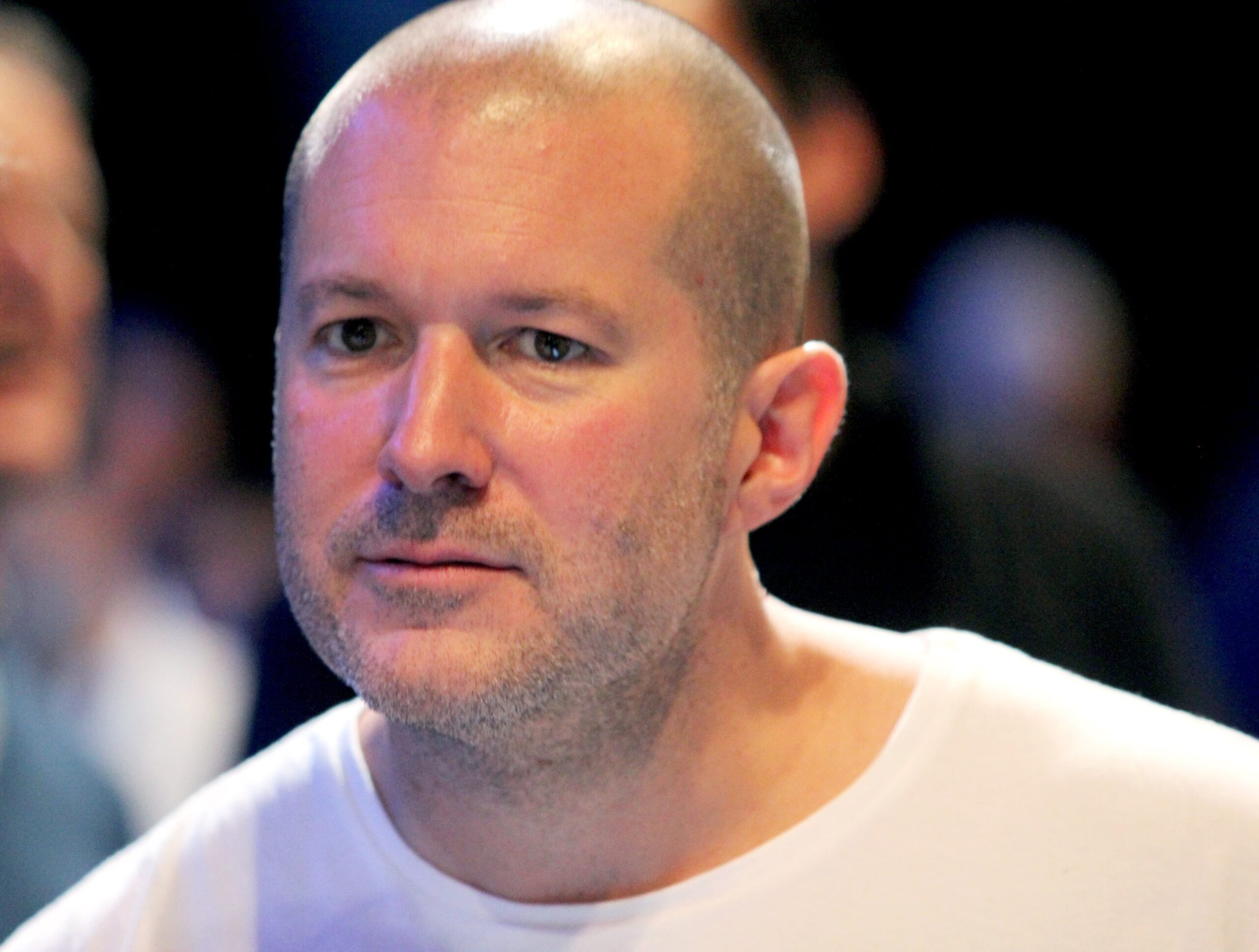
Jonathan Paul “Jony” Ive is a legendary designer who was responsible for the design of many of Apple’s most iconic products, including the iMac, iPod, iPhone, and iPad. Jony Ive has played a critical role in the company’s product design strategy, helping to establish its reputation for sleek and innovative design.

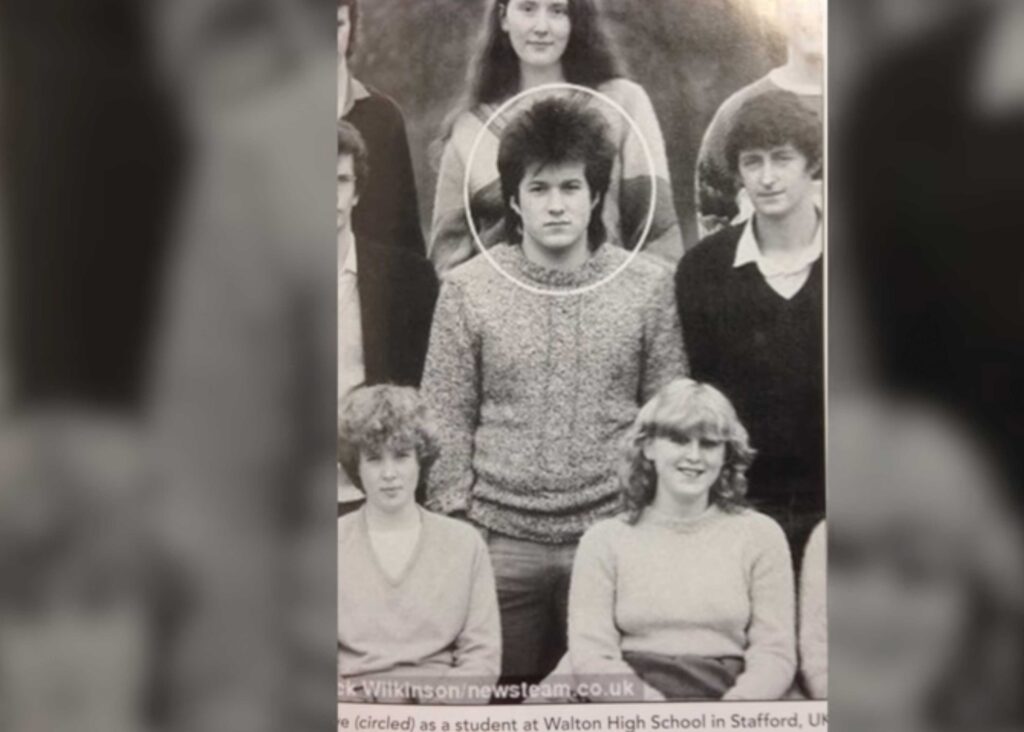
Jony Ive was born on 27 February 1967 in Chingford, a town in east London in England. His father, Michael John Ive, was a silversmith, and his mother, Pamela Mary Ive, was a psychotherapist. Jony Ive attended Chingford Foundation School just outside London, later to be the alma mater of David Beckham. While in school, Ive was diagnosed with dyslexia, but it never seriously affected his education.

Jony Ive at his High School

Ive was curious about the inner workings of things throughout his childhood and was fascinated by how objects were put together. He would carefully dismantle radios and cassette recorders, exploring how they were assembled and how the pieces fit. Although when he tried to put the equipment back together again, he didn’t always succeed.

In a 2003 interview conducted at London’s Design Museum he said, “I remember always being interested in made objects. The fact they had been designed was not obvious or even interesting to me initially. As a kid, I remember taking apart whatever I could get my hands on. Later, this developed into more of an interest in how they were made, how they worked, their form and material.”

By the age of thirteen or fourteen he was pretty certain that he wanted to draw and make stuff. “I knew that I wanted to design but I had no idea what I’d design as I was interested in everything: cars, products, furniture, jewellery, boats. After visiting a few design consultancies I eventually decided that product design would be a pretty good foundation as it seemed the most general.”

He studied art and design at school and went on to Newcastle Polytechnic. “I figured out some basic stuff — that form and colour defines your perception of the nature of an object, whether or not it is intended to. I learnt the fundamentals of how you make things and I started to understand the historical and cultural context of an object’s design. I wish my drawing skills had improved, but while that bothered me then, it doesn’t now.”

It was during his college years when Ive further developed his signature design style based on German Bauhaus tradition. This design philosophy embraced a minimalist approach, where designers should only design what is needed. And these were the same principles followed by former Braun designer Dieter Rams, and later you can see similarities in the products each of them Ive had created.

How Jony Ive joined Apple

After graduating 1989, Ive joined London-based design startup Tangerine, bringing bathroom manufacturer Ideal Standard along as a major client. But Ive’s designs for sinks were never turned into a product because they would have been too expensive to manufacture. In the fall of 1991, then-Apple design chief Bob Brunner appeared at Tangerine and commissioned four design studies.

Under Ive’s guidance, Tangerine’s Juggernaut project included the never-built “Macintosh Folio” tablet computer – which was to be operated with a stylus and was still five times as thick as the first iPad 18 years later. Ive recalls his experience there: “I was pretty naïve. I hadn’t been out of college for long but I learnt lots by designing a range of different objects: from hair combs and ceramics, to power tools and televisions. Importantly, I worked out what I was good at and what I was bad at. It became pretty clear what I wanted to do. I was really only interested in design. I was neither interested, nor good at building a business.

It was not inevitable in Ive’s career that he would one day shape the design of a major computer company like Apple. Quite the opposite. The young Brit initially had problems finding his way in the world of personal computers. “I went through college having a real problem with computers“, Ive recalls in the interview with the Design Museum. “I was convinced that I was technically inept, which was frustrating as I wanted to use computers to help me with various aspects of my design.” Right at the end of his time at college Ive discovered the Mac. “I remember being astounded at just how much better it was than anything else I had tried to use. I was struck by the care taken with the whole user experience. I had a sense of connection via the object with the designers.”

Ive started to learn more about the company, how it had been founded, its values and its structure. The more he learnt about this cheeky, almost rebellious company the more it appealed to him, as it unapologetically pointed to an alternative in a complacent and creatively bankrupt industry. “Apple stood for something and had a reason for being that wasn’t just about making money.”

In the early 1990s, Ive was living in London again and working with a number of clients in Japan, the US and Europe at Tangerine. Apple did a search to find a new design consultant and decided to work with him. Ive: “I still remember Apple describing this fantastic opportunity and being so nervous that I would mess it all up. While I had never thought that I could work successfully as part of a corporation — always assuming that I would work independently — at the end of a big program of work for Apple, I decided to accept a full-time position there and to move to California.” In September 1992, at age twenty-seven, Ive accepted a full-time position at Apple, and his first assignment was to redesign the Newton MessagePad.

At the time, Apple was being run by John Sculley since Steve Jobs had been forced out six years prior. The desktop publishing revolution was putting Macs in businesses all over the world and Apple had just celebrated its first quarter earning two billion in revenue. With all this cash, Apple was expanding it product lines and Sculley was investing heavily in R&D to speed up development of new products like the Apple Newton.

Failure and success with the Apple Newton

The first version of the Apple Newton was a failure, but Apple was hoping to change that with its second iteration.  Ive worked tirelessly on the project and involved himself in every last detail. He even traveled to Taiwan to fix manufacturing problems.  But no amount of effort from Ive was enough to save the Newton. Apple had made marketing and engineering mistakes that plagued the Newton until it was finally discontinued.

The Apple Newton proved to be a business failure and strategic setback, but Jonathan Ive’s Newton was a design success. It earned him four of the top awards in the industry and the honor of being featured in the permanent collection of the San Francisco Museum of Modern Art.

However, Apple CEO John Sculley not only had a poor sense of direction when it came to developing new product categories, but also had to contend with major difficulties in the core business. In 1995, the crisis became obvious.  Windows 95 was released, and cheap PCs began to fly off the shelves, undercutting the Mac. In the first quarter of 1996, Apple reported 69 million dollar loss and laid off 1300 employees.
This caused Apple’s focus to shift from developing high-quality, well-designed Macs to pushing out the cheapest machines they could possibly make.  This was truly a period of no innovation at Apple, and it destroyed Jonathan Ive’s moral. He said: “All they wanted from us designers was a model of what something was supposed to look like on the outside, and then engineers would make it as cheap as possible. I was about to quit.”

Rediscovered by Steve Jobs and John Rubenstein

But before Jony Ive could resign, Jon Rubinstein, his new boss, talked him out of it. Rubinstein gave him a raise and told him that eventually the company would turn around and they’d have the opportunity to make history. And with Jobs return to Apple in 1997, Rubinstein was exactly right. Jobs brought focus to not only the company but also Ive’s design group. In the interview with the Design Museum Ive recalls: “When I joined Apple the company was in decline. It seemed to have lost what had once been a very clear sense of identity and purpose. Apple had started trying to compete to an agenda set by an industry that had never shared its goals. While as a designer I was certainly closer to where the decisions were being made, but I was only marginally more effective or influential than I had been as a consultant. This only changed when Steve Jobs returned to the company. By re-establishing the core values he had established at the beginning, Apple again pursued a direction which was clear and different from any other company. Design and innovation formed an important part of this new direction.”
Jobs refocused the design team and got them working together on a new project called the Mac NC, which would later become the iMac. The team only had nine months to get it from design to production. To meet this deadline, Ive implemented a radical, integrated design process that transformed the way Apple developed its products. The workflow was so successful that it became permanent, and it’s essentially the same system the design group uses today. So the iMac was released nine months later and ended up being the best-selling Mac in Apple’s history up to that point.

Ive and his team became famous for its fanatical care beyond the obvious stuff: the obsessive attention to details that are often overlooked, like cables and power adaptors. Ive recalls: “Take the iMac — our attempts to make it less exclusive and more accessible occurred at a number of different levels. A detail example is the handle. While its primary function is obviously associated with making the product easy to move, a compelling part of its function is the immediate connection it makes with the user by unambiguously referencing the hand. That reference represents, at some level, an understanding beyond the iMac’s core function. Seeing an object with a handle, you instantly understand aspects of its physical nature — I can touch it, move it, it’s not too precious.”

Jonathan Ive had finally found a company that gave him the freedom to practice his craft effectively without limitations.  In fact, part of Jobs reorganization of Apple included giving the design team power over any other group, including engineering. And because Ive was head of design, he had a tremendous amount of operational power at Apple, second only to Steve Jobs. Jonathan “He’s not just a designer,” Mr. Jobs told his biographer, Walter Isaacson. “He has more operational power than anyone at Apple, except me.”

Starting in 2002, Jobs and Ive set about turning the vision of an iPod smartphone into reality. In a few detours and with the help of a team that was supposed to develop a tablet computer, the iPhone was born and presented to the astonished public in January 2007.

Inspired by Dieter Rams and Braun Design

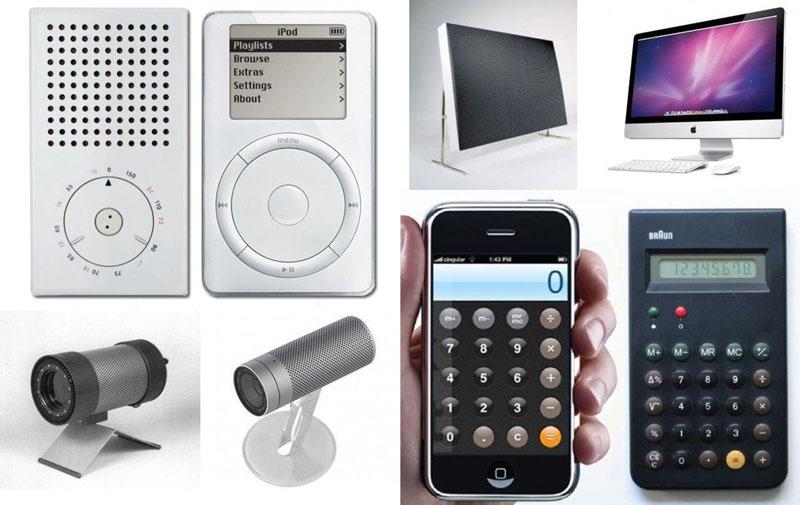
The iPhone also meant a tribute by Ive to Dieter Rams, the legendary chief designer of Braun. Users should understand products intuitively, without an instruction manual, was Rams’ motto. The minimalism and simplicity of the iPhone proved such a resounding success that competitors like Samsung quickly and shamelessly copied the concept.

Jony Ive and Braun Design

In one respect, however, Ive was unfaithful to the model from Germany: for Rams, the maxim that form must follow function still applies today. Ive, on the other hand, gave the engineers such strict guidelines that certain functions fell by the wayside. For example, the headphone jack in the iPhone 7 was sacrificed to save space and make the case a bit slimmer. The same reasoning was used to justify the MacBook’s lack of multiple input and output interfaces – forcing users to buy cumbersome adapters to be able to read photos from an SD card, for example. Critics also blame Ive’s efforts to produce thinner and thinner devices for the latest fiasco and the butterfly keyboards in the MacBooks.

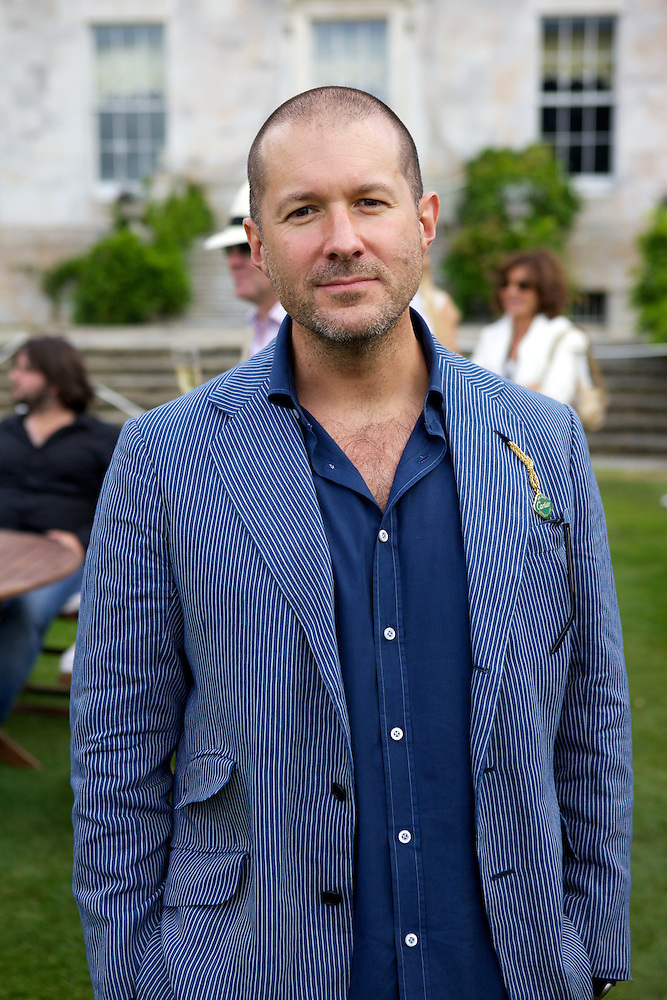
Sir Jonathan Ive at The Goodwood Festival of Speed Cartier Style et Luxe party Photo: Marcus Dawes, Licence: CC BY-SA 3.0, https://commons.wikimedia.org/w/index.php?curid=19277958

Alongside Steve Jobs, Jony Ive has always appeared in the past to be the gentle type who strives for balance. But this thesis is not correct: Ive repeatedly engaged in heated controversies with other Apple managers about the technical and financial effort required to implement design ideas. When designing the first Mac mini, for example, Ive and his team designed the case so that it was just two millimeters too narrow to use a conventional 3.5-inch hard drive. So they had to use a much more expensive 2.5-inch drive, which was usually only used in laptops. Under Steve Jobs’ umbrella, Jony Ive and design took precedence over cost considerations.

Ive clashed primarily with his old mentor Jon Rubinstein, who was actually his supervisor. But when in doubt, Steve Jobs always decided against Rubinstein and other pragmatists in Cupertino. When the Apple boss also promoted his protégé Ive to senior vice president in 2005, it was time for Rubinstein to leave Apple. His successor, Tony Fadell, was also constantly at odds with Ive.  When Fadell left Apple in October 2008 with a golden handshake, the controversy was still kept under wraps. It wasn’t until the publication of Leander Kahney’s Ive biography that the conflict became known in full detail.

The most prominent loser in a power struggle with Ive in 2013 was Scott Forstall, who three years earlier had been considered a possible successor to Steve Jobs, who had fallen ill. Ive disliked the software design (“skeuomorphism”) preferred by Forstall: Until the iPhone operating system iOS 6, it used the shapes of familiar objects that actually had no function, such as the virtual leather cover on the calendar application. Ive enforced “flat design,” a much more abstract design language, on iOS 7. After this defeat, Forstall left the company. Ive then also took over responsibility for “human interface” design. However, some Appleians in Cupertino still mourn Forstall’s passing.

During Steve Jobs’ lifetime, Jony Ive was clearly in second place in Apple’s internal hierarchy. But when the company’s co-founder died of cancer in October, it was clear that Tim Cook would be his successor, not Ive. Jony Ive stood for the soul of the company, but had little interest in the business figures.

After the death Steve Jobs Ive in a moving eulogy convince the assembled staff that Apple will not lose sight of its great vision even without the charismatic leader Steve Jobs.

Jony Ive’s tribute to Steve Jobs

But the death from cancer of his friend apparently hit Ive much harder than most Apple employees. The Brit missed the almost daily exchange of views with Jobs over lunch and the regular visits by the company boss to the otherwise almost hermetically sealed design studio.

At the same time, public and shareholder pressure was growing at the time for Apple to launch a new smash hit after the iPhone (2007) and iPad (2010). Some stock market analysts doubted whether Apple would even be able to innovate after Jobs’ death.

At this stage, Ive pushed to build a smartwatch. For the first model of the Apple Watch in 2015, Ive pursued his idea of making the smartwatch primarily a fashion accessory. The watch was sold in fashion stores and, for a jet-setting audience, was also offered in a sinfully expensive high-end variant with an 18-carat gold case.

Jony Ive presents the first Apple Watch (2014)

But it quickly became apparent that the mass of buyers did not want to follow Ive. Many of the gold models went unsold. Users weren’t looking for a luxury watch, but a practical gadget that would allow them to keep track of their fitness activities and see notifications without constantly pulling their iPhone out of their pocket. After this setback, Ive asked Apple Group CEO Tim Cook to be relieved of his day-to-day management duties, the Wall Street Journal reported.

Cook, however, was all about keeping Ive on board at all costs during this critical phase. It didn’t matter that Cook, in contrast to his predecessor Steve Jobs, showed up much less often at Apple’s design studios. He appointed Ive as “Chief Design Officer”, who would not only be responsible for the hardware and packaging of the devices, but also for the software design as well as the design of the Apple Stores and the new company campus Apple Park.

Paradoxically, after his promotion to “Chief Design Officer” in May 2015, Ive had hardly any influence on the design of concrete Apple products. Only the Apple Watch was an exception. Ive was now primarily concerned with the design of the company’s new Apple Park site. For two years, he was more likely to be seen in rubber boots on the construction site than in his team’s design studio. It wasn’t until the end of 2017 that the Apple Park chapter was largely closed for Ive.

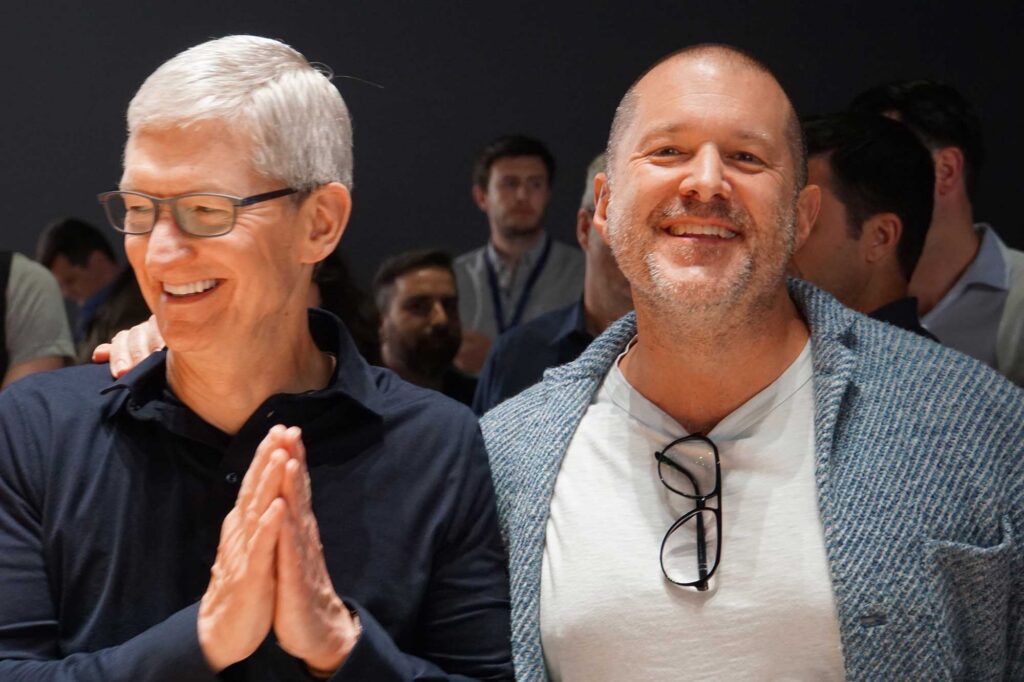
Tim Cook and Jony Ive at WWDC 2019

Afterwards, the members of the design team had hoped that Ive would now be available more often in Cupertino for detailed decisions. But these expectations were not fulfilled. Ive now frequently worked in his personal design studio in San Francisco near his home, saving the annoying stop-and-go trips on the dust-laden highway to Cupertino. Communication with the design team suffered as a result.

Apple announced on 27 June 2019 that Ive would depart the company. The decisive factor for Apple’s exit was probably Ive’s pronounced desire to no longer take responsibility for things that he could only influence to a limited extent. This includes topics such as the development of iPhone sales or the company’s share price. In a February 2015 Ive portrait in The New Yorker magazine, the designer is quoted as saying he is “deeply, deeply tired” and “always anxious.” And Laurence Powell Jobs, Steven Jobs’ widow, chimes in with this assessment: “Jony is an artist with an artist’s temperament, and he’d be the first to tell you artists aren’t supposed to be responsible for this kind of thing.”

Apple stated that Ive would start an independent firm named LoveFrom, along with fellow Apple industrial designer Marc Newson, that would work with Apple as its primary client. LoveFrom is known to keep a low profile, and does not disclose information about its employees. LoveFrom unveiled its minimalistic official website in October 2021.

The Final Severing of Ties and LoveFrom’s Diversification

In July 2022, the decades-long professional relationship between Jony Ive and Apple officially concluded when both parties agreed not to renew their $100 million consulting contract. This formal split allowed Ive’s creative collective, LoveFrom, to shed its restrictive “non-compete” clauses and expand into diverse luxury and industrial sectors. Since then, LoveFrom has established itself as a multidisciplinary powerhouse, designing the coronation emblem for King Charles III, a modular high-fashion collection for Moncler, and an interior overhaul for Ferrari’s first electric vehicle. These projects emphasize Ive’s move toward “gentle, human-centric design” across varied physical mediums, ranging from custom typefaces for historic San Francisco bookstores to high-end audio hardware like the Linn Sondek LP12.

The OpenAI Venture and the “Post-Smartphone” Frontier

The most significant chapter of Ive’s post-Apple career began in 2023 through a quiet collaboration with OpenAI CEO Sam Altman, which culminated in the May 2025 announcement that OpenAI had acquired Ive’s hardware startup, io, for approximately $6.5 billion. Now leading a dedicated hardware division within OpenAI while maintaining LoveFrom’s independence, Ive is developing a “screen-less” AI companion designed to move users beyond the smartphone era. Internally code-named “Sweetpea,” the device—rumored to be a voice-centric, multimodal wearable—is built on the philosophy of “ambient computing,” where technology recedes into the background. As of early 2026, working prototypes are in active testing, with a mainstream consumer launch targeted for late 2026, potentially marking the most significant hardware revolution since the original iPhone.


Susan Kare – Designing the GUI of the Apple Macintosh (and much more)

Susan Kare is an artist and designer and pioneer of pixel art; she created many of the graphical interface elements for the original Apple Macintosh in the 1980s as a key member of the Mac software design team, and continued to work as Creative Director at NeXT for Steve Jobs.

She was born on February 5, 1954 in n Ithaca, New York. Her father was a professor at the University of Pennsylvania and director of the Monell Chemical Senses Center, a research facility for the senses of taste and smell. Her mother taught her counted-thread embroidery as she immersed herself in drawings, paintings, and crafts. She graduated from Harriton High School (Rosemont, Pennsylvania) in 1971. In her high school years, she met Andy Hertzfeld, who would later become one of the key software engineers at Apple in the development of the Macintosh.

She graduated summa cum laude with a B.A. in Art from Mount Holyoke College,  a private liberal arts women’s college in South Hadley, Massachusetts, in 1975, with an undergraduate honors thesis on sculpture. She received a M.A. and a Ph.D. in fine arts from New York University in 1978 with a doctoral dissertation on “the use of caricature in selected sculptures of Honoré Daumier and Claes Oldenburg”. Her goal was “to be either a fine artist or teacher”.

Susan Kare’s career has always focused on fine art. For several summers during high school she interned at the Franklin Institute for designer Harry Loucks, who introduced her to typography and graphic design while she did phototypesetting with “strips of type for labels in a dark room on a PhotoTypositor”. Because she did not attend an artist training school, she built her experience and portfolio by taking many pro-bono graphics jobs such as posters and brochure design in college, holiday cards, and invitations. After her Ph.D., she moved to San Francisco to work at the Fine Arts Museums of San Francisco (FAMSF), as sculptor and occasional curator. 

In 1982, Kare was welding a life-sized razorback hog sculpture commissioned by an Arkansas museum when she received a phone call from high school friend Andy Hertzfeld. In exchange for an Apple II computer, he solicited her to hand-draw a few icons and font elements to inspire the upcoming Macintosh computer. However, she had no experience in computer graphics and “didn’t know the first thing about designing a typeface” or pixel art so she drew heavily upon her fine art experience in mosaics, needlepoint, and pointillism.

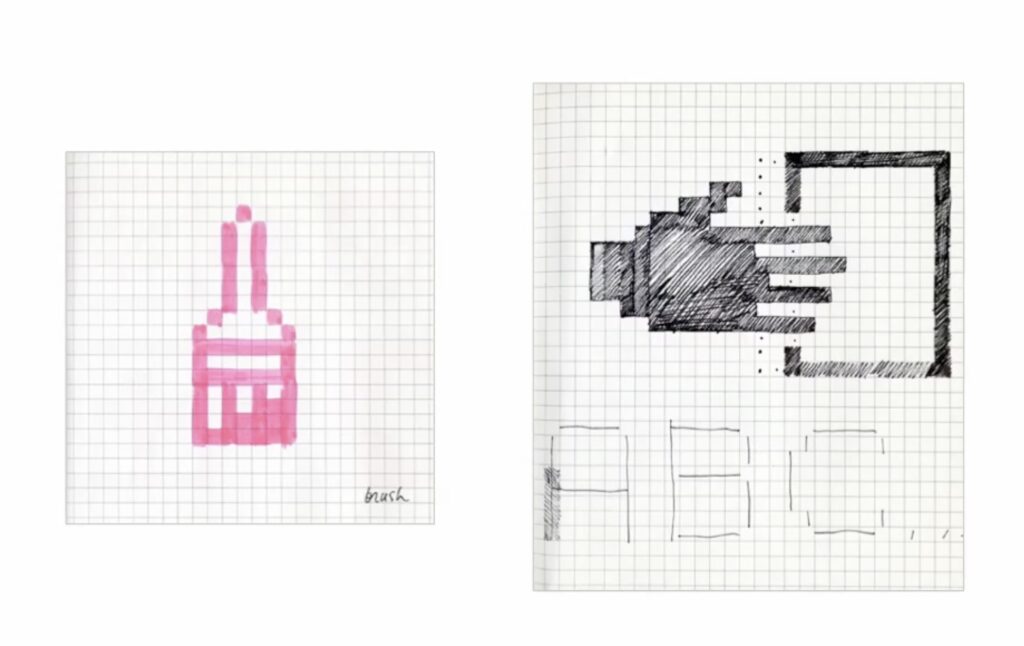
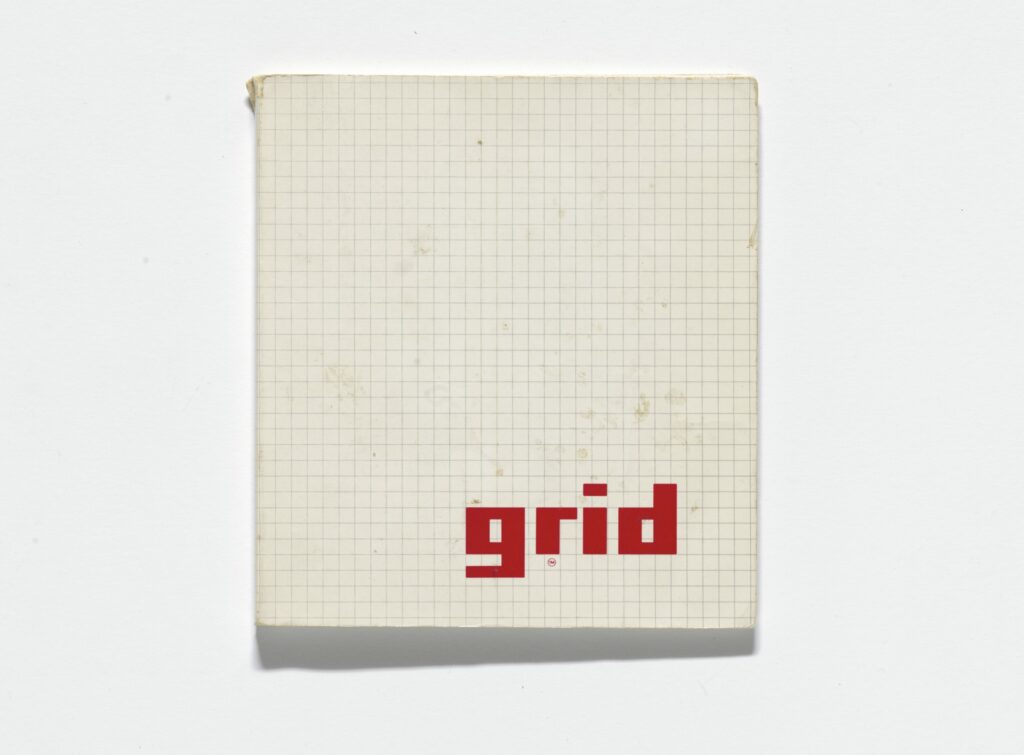
Hertzfeld suggested that she get a US$2.50 grid notebook of the smallest graph paper she could find at the University Art store in Palo Alto and mock up several 32 × 32 pixel representations of his software commands and applications. This includes an icon of scissors for the “cut” command, a finger for “paste”, and a paintbrush for MacPaint.

Compelled to actually join the team for a fixed-length part-time job, she interviewed “totally green” but undaunted, bringing a variety of typography books from the Palo Alto public library to show her interest alongside her well-prepared notebook. “The interview lasted five minutes”, Kare recalled in 2014. “It was, when can you start? And I found myself the next week in the Mac Software Group.” She was officially hired in January 1983 with Badge #3978. Her business cards read “HI Macintosh Artist”.

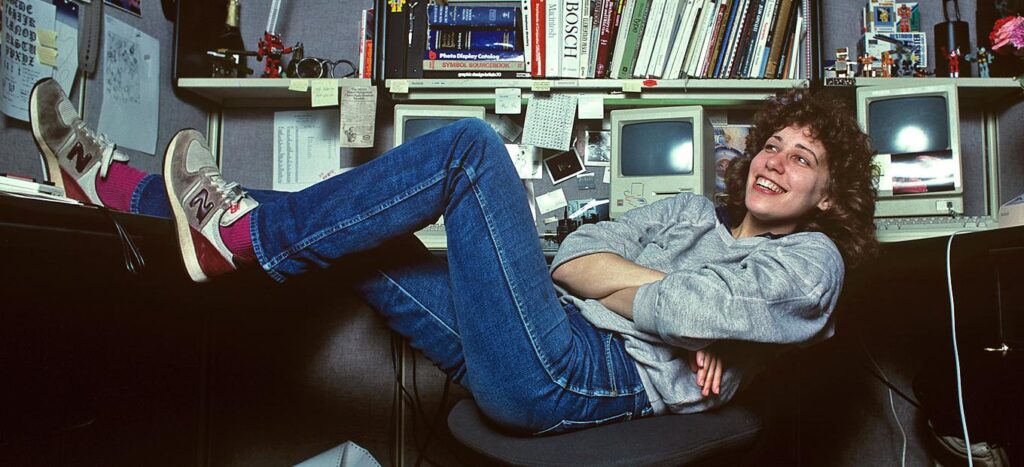
Susan Kare, Apple’s “Macintosh Artist,” relaxes at her desk in 1984. © Norman Seeff

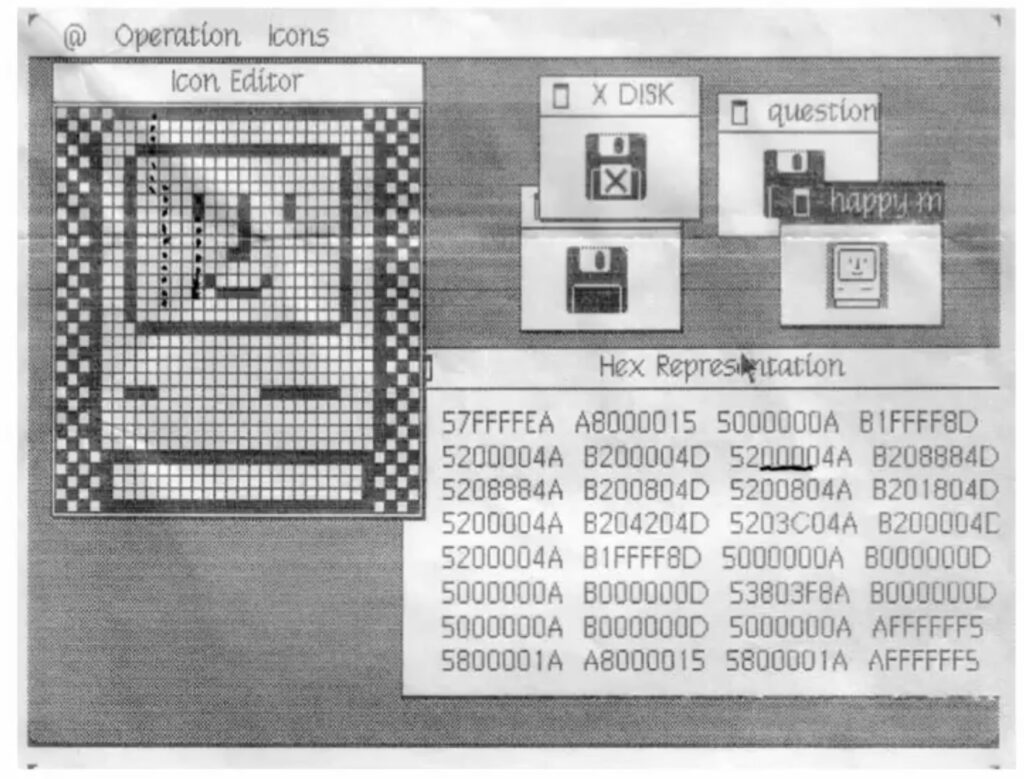
Kare was working on-site in Cupertino. “I definitely learned on the job”, she said in an interview conducted by Alex Pang on 8 September 2000. “As when I went to Macintosh, there wasn’t really an icon editor, but there was a way to turn pixels on and off. I did some work on paper, but obviously, it was much better to see it on the screen, so there was a rudimentary icon editor. First, they showed me how I could take the art and figure out the hex equivalent so it could be keyboarded in. Then Andy made a much better icon editor that automatically generated the hex under the icons. That was how I did the first ones. I think I did the fonts that way, going letter by letter before we had a font editor.”

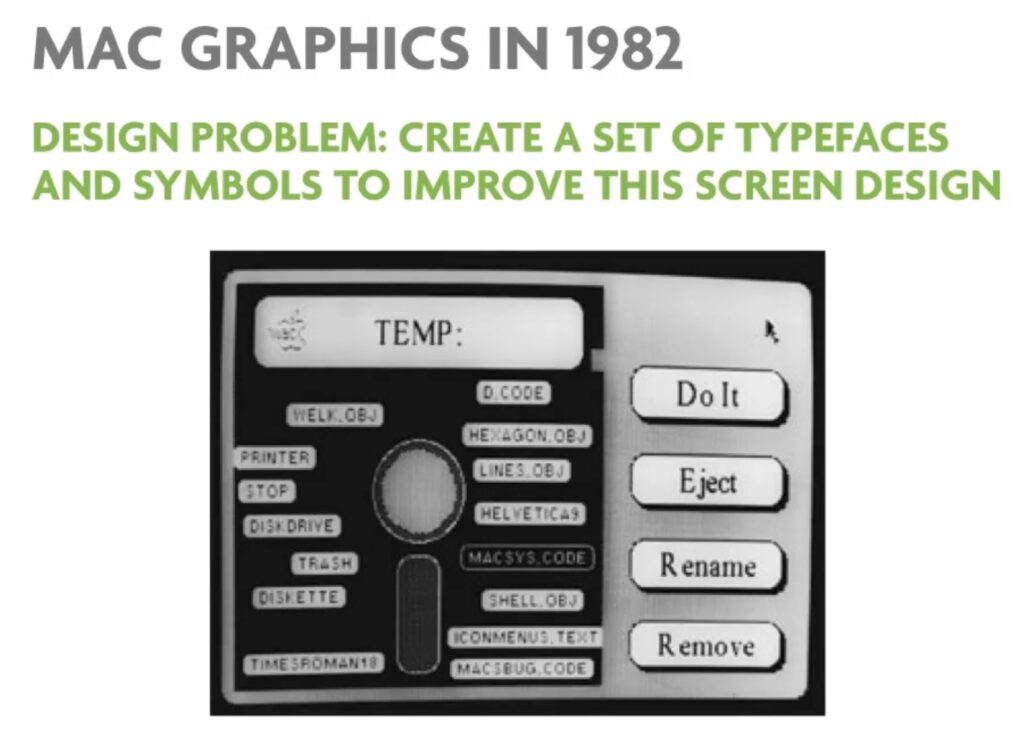
Susan Kare was looking at a screen like this:

“You can see some of the little rounded wrecks. They have words like trash and disk drive and printer. So those were the things that I needed to make icons for. And on the right, you see the kind of verb of those buttons. “Do it” became “Okay” because “Do it” is maybe more clear but people read it as “Dolt” (a stupid person).

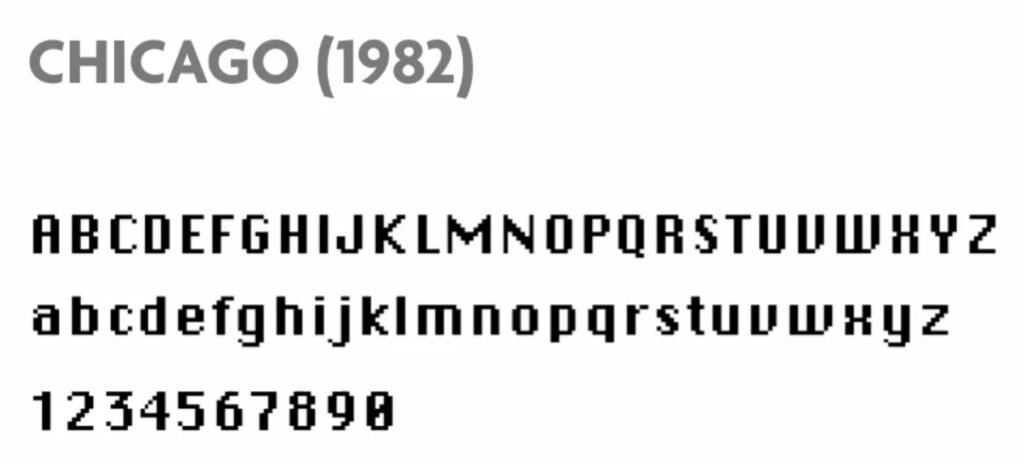
Among her first Macintosh designs were the Elefont, Overbrook, Merion, Ardmore, and Rosemont typefaces, which, however, were named after Chicago, London, New York, and other world cities after objections from Apple CEO Steve Jobs. Susan Kare then took on “icons” to operate the computer, drawing on art historical antecedents such as mosaics.

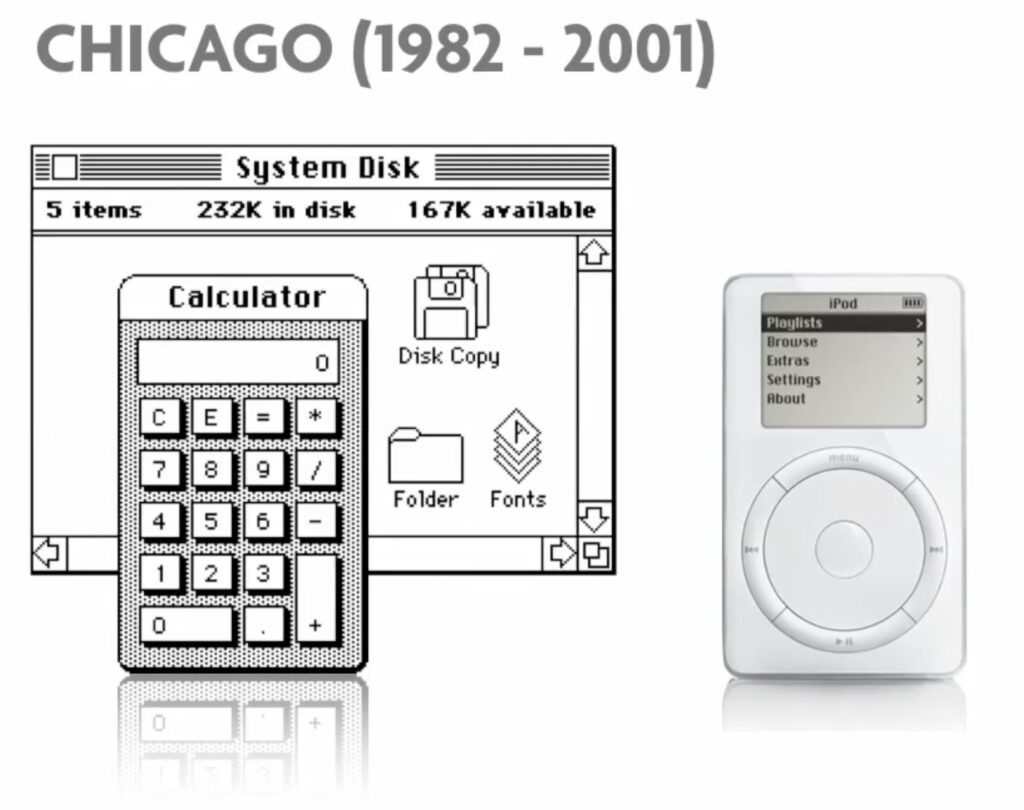
“The first thing I did in a seven pixels wide, nine pixels high typeface Chicago, that I tried to make bold and not have jagged edges. The typeface Chicago ended up in the title bars. And it ended up having a bit of another life in the first iPod.

The typeface Chicago ended up in the title bars. And it ended up having a bit of another life in the first iPod.

Kare: “So, when I got there, the goals were explained to me that it (the Macintosh) was a computer for people who were not computer literate so your mom could use it. Not too politically correct. And that it should be discoverable like our cade games, you shouldn’t have to have to use the manual to be able to do it and that it should be friendly. So, I started out making these icons in 32 by 32. This was an icon, I designed. They just said there should be something on the screen. 32 by 32 dots that sits there while the computer boots So I know that I reached back to my junior high favorite symbol to do that (the smiley).”

Kare was also asked to design an icon for a system crash. “I designed this image as a bomb because I was told they would never be seen by anyone. So I thought I could be a little irreverent. But unfortunately, that was not the case. But the programmers truly thought at the time, they would be deeply hidden.”

Icon for system crash

At the EG conference in May 2014, Kare shared an amusing anecdote about the bomb icon: “Right after the Mac had shipped, we were in our software area and a call came in – fielded through apple, and it was a woman who was using MacWrite. It had crashed and she was afraid her computer was going to blow up. So I felt kind of bad.

Susan Kare, Iconographer (EG8) from eg on Vimeo.

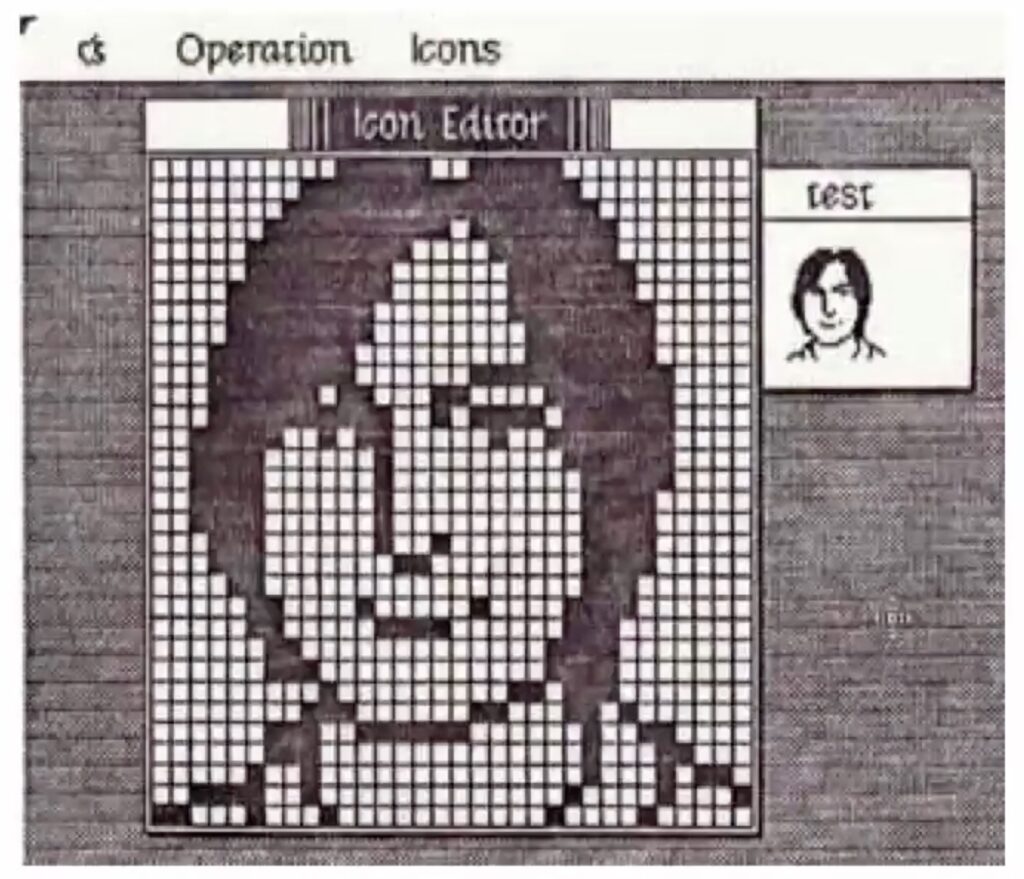
There weren’t any tools on the Mac to make icons. “So I did it on paper. And then Andy Hertzfeld wrote this icon editor that allowed you. (to make icons) I mean, it seemed so fantastic. What you could do is turn one pixel off or on.”

Macintosh Icon Editor (1983) by Andy Hertzfeld

“You could draw a line or circle or anything and then you could see it magnified and edit the size that you’d see it on the screen. And it generated the code, you needed for the programmers to get it into the software.”

The smiling Mac, the bomb with the fuse, the clock, the floppy disk, and the wastebasket are legendary.

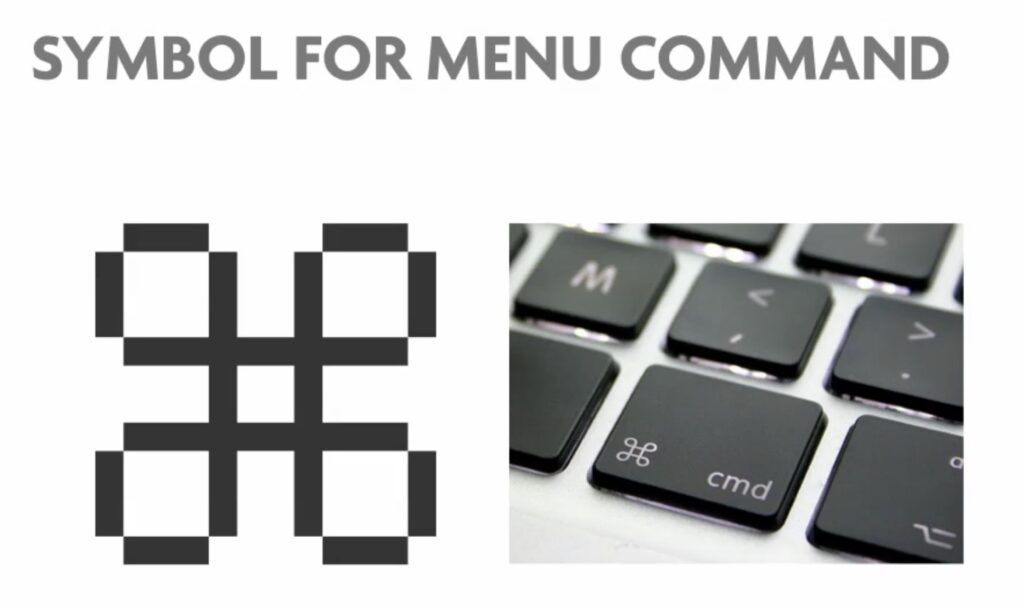
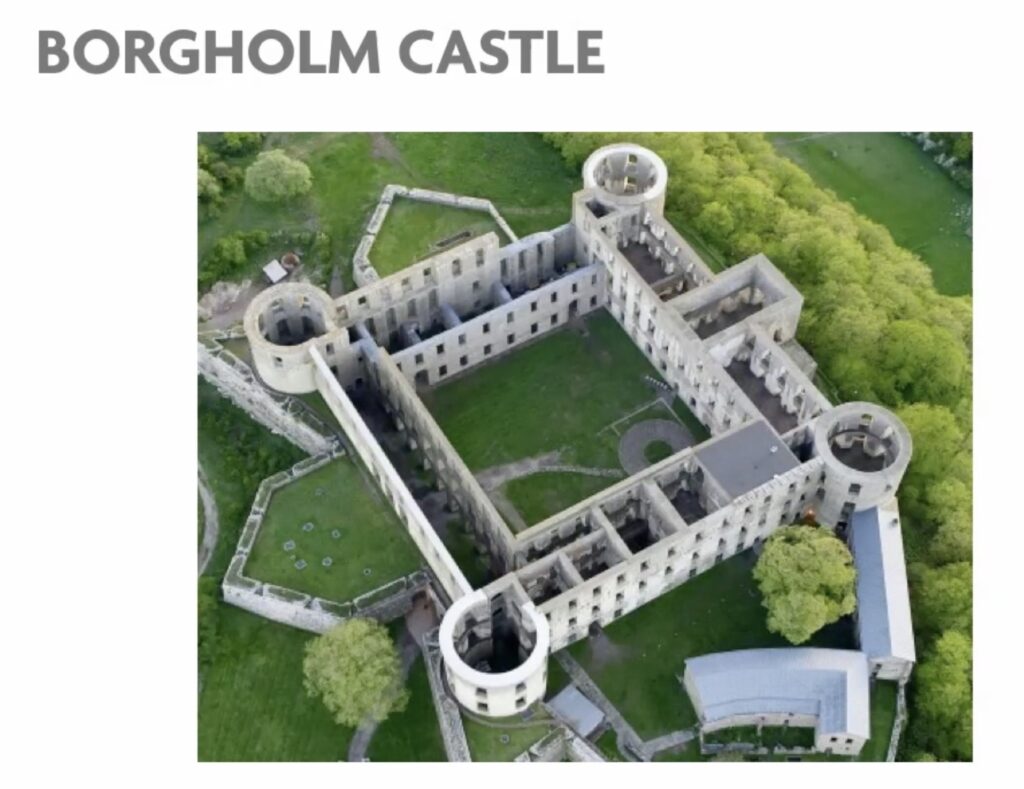
But she found the loop square for the Apple command key in a symbol dictionary; it originated in ancient Scandinavia and later served as a marker for landmarks.

Borgholm Castle

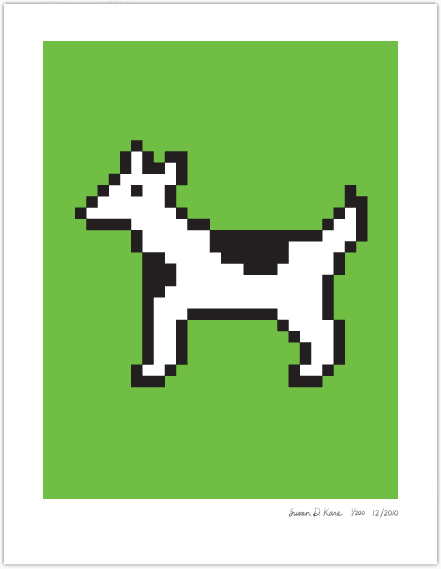
She created a plethora of “dingbats” for her writings, including a cute animal symbol that combines features of a dog and a cow. As Clarus the Dog Cow, it now has its own fan base.

Susan Kare. Clarus, the Dogcow

Sometimes for fun, Susan Kare did pictures of her colleagues in icon format. Her digital portrait of Steve Jobs became quite famous.

Portrait of Steve Jobs by Susan Kare in icon format.

Susan Kare worked only three years at Apple. But this experience put her on the leading edge of a whole new field of graphic design. Working with only a grid of pixels, she began to master a peculiar sort of minimal pointillism. She spent her days turning tiny dots on and off to craft instantly understandable visual metaphors for computer commands.

Initially, her job was to shape individual letters and numbers to bring a semblance of print’s elegance to the grainy domain of computer screens. But Kare’s most memorable legacy is the playful quality of some of her icons. She’s quick to point out that Xerox PARC had already created a garbage can for disposing of files, but Kare’s can is so viewer- riendly that one half-expects Oscar the Grouch to pop out.

Susan Kare: Life after Apple

In 1986, Kare followed Steve Jobs in leaving Apple to launch NeXT, Inc. as its Creative Director and 10th employee. She introduced Jobs to her design hero Paul Rand and hired him to design NeXT’s logo and brand identity, admiring his table-pounding exactitude and confidence. She created and re-created slideshows to Jobs’s exacting last-minute requirements.

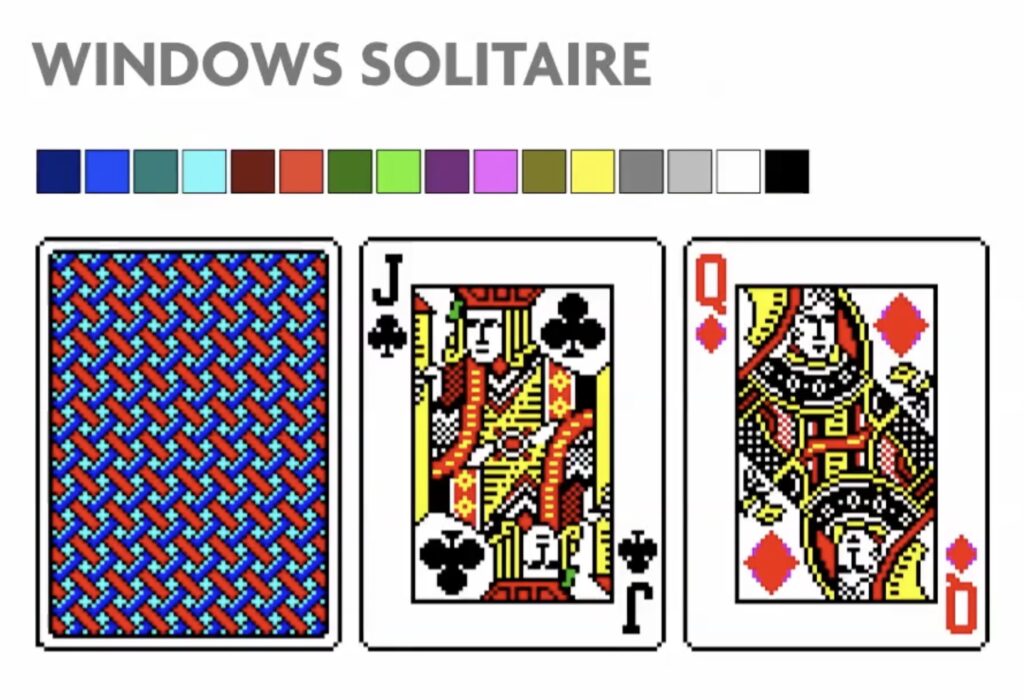
She realized that she wanted “to be back doing bitmaps” so she left NeXT to become an independent designer with a client base including graphical computing giants Microsoft, IBM, Sony Pictures, Motorola, General Magic, and Intel. Her projects for Microsoft include the card deck for Windows 3.0’s solitaire game, which taught early computer users to use a mouse to drag and drop objects on a screen.

Windows Solitaire

In 1987, she designed a “baroque” wallpaper, numerous other icons, and design elements for Windows 3.0, using isometric 3D and 16 dithered colors. Many of her icons, such as those for Notepad and various Control Panels, remained essentially unchanged by Microsoft until Windows XP.

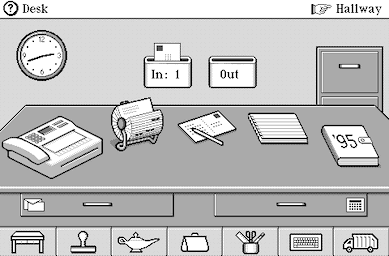
Magic Cap OS

For IBM, she produced pinstriped isometric bitmap icons and design elements for OS/2. For General Magic, she made Magic Cap’s “impish” cartoon of dad’s office desktop. For Eazel, she rejoined Andy Hertzfeld and many from the former Macintosh team and contributed iconography to the Nautilus file manager which the company permanently donated to the public for free use.

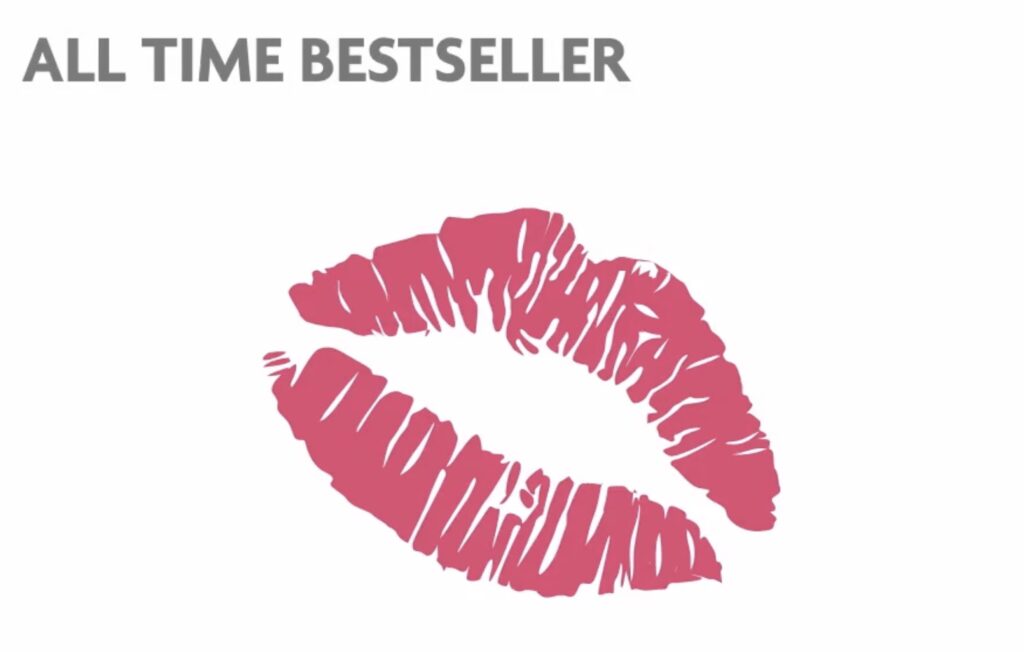
Between 2006 and 2010, Susan Kare produced hundreds of 64 × 64 pixels icons for the virtual gifts feature of Facebook. For these items, Facebook was charging $1 each. Initially, profits from gift sales were donated to the Susan G. Komen for the Cure foundation until Valentine’s Day 2007. The most popular gift icon, titled “Big Kiss” is featured in some versions of Mac OS X as a user account picture.

Susan Kare: Big Kiss

In 2007, she designed the identity, icons, and website for Chumby Industries, Inc., as well as the interface for its Internet-enabled alarm clock.

Since 2008, The Museum of Modern Art (MoMA) store in New York City has carried stationery and notebooks featuring her designs.

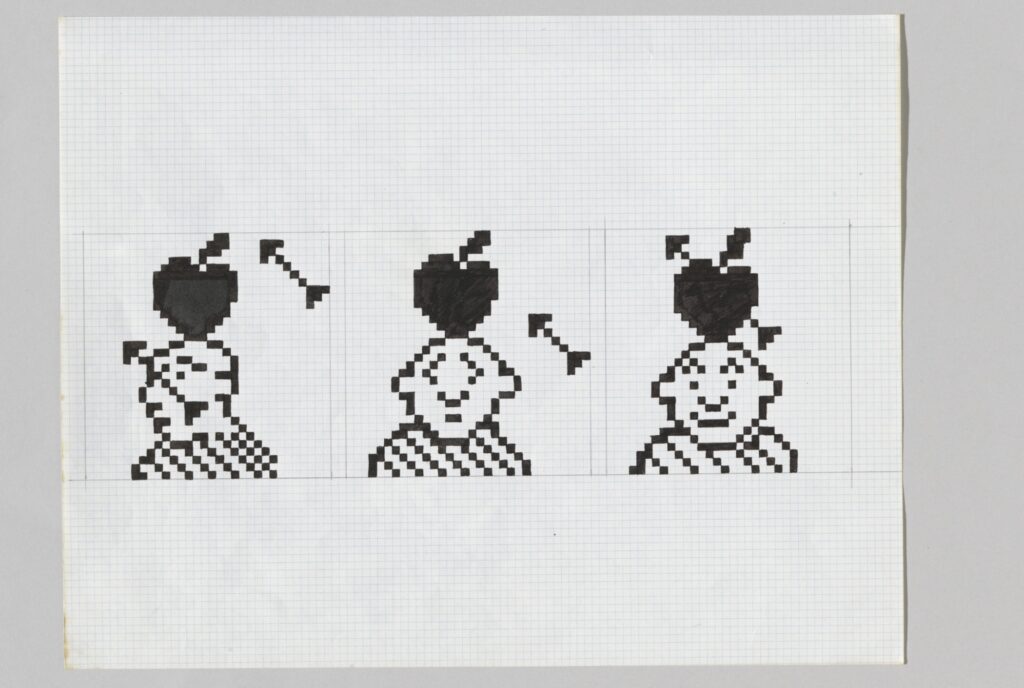
Susan Kare at MoMa: Graphic icon sketch1 (982–1983)

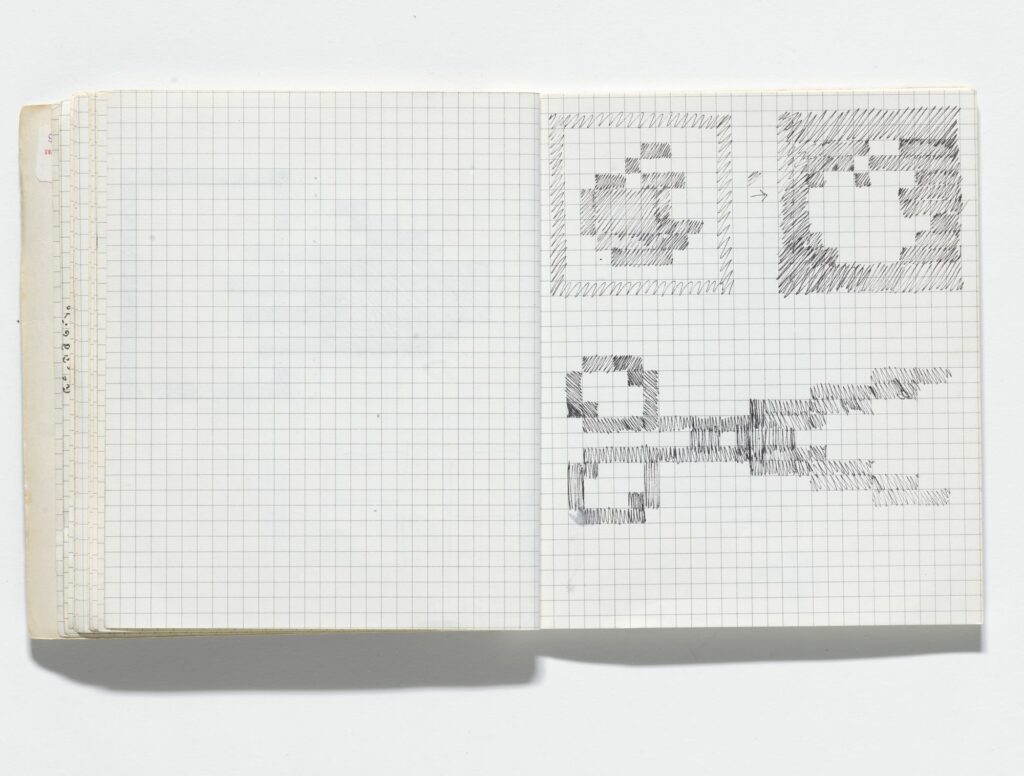
In 2015 MoMA acquired her notebooks of sketches that had led to the early Mac GUI.

Susan Kare at Moma: Apple Macintosh OS icon sketchbook (1982)
 MoMa – Susan Kare. “Mac OS Icon sketchbook.” Bound sketchbook, ink and felt-tipped pen on paper. Gift of the designer.

This is an excellent example of the often “invisible” design that goes behind the graphic user interfaces that we use on a day-to-day basis, an intangible piece of design that we all carry in our pockets. Kare’s humble icons were all based on a 16×16 pixel grid; a grid that has expanded ad infinitum into the screens of our desktops, our laptops, our cell phones.”

MoMa Curatorial Assistant Evangelos Kotsioris

In 2015, Kare was hired by Pinterest as a product design lead as her first corporate employment in three decades. Working with design manager Bob Baxley, the former design manager of the original Apple Online Store, she compared the diverse and design-driven corporate cultures of Pinterest and early 1980s Apple. In February 2021, Kare became Design Architect at Niantic Labs.  As of 2022, she concurrently heads a digital design practice in San Francisco and sells limited-edition, signed fine-art prints.

Andy Hertzfeld – The Software-Wizard

Software developer Andy Hertzfeld is one of the most important heroes of Macintosh development, but he has rarely been in the spotlight. He was the technical lead for the Macintosh system software and was the second programmer to join the project, after Bud Tribble. Hertzfeld was responsible for the overall architecture of the system and wrote a substantial portion of the system code himself, while helping the other programmers to integrate their parts.

He was born on April 6, 1953, in Philadelphia, Pennsylvania, and grew up in the eastern United States.

He had his first exposure to computers in high school, although there was no computer at all in high school itself. “Back in the late ’60s and ’70s, high schools couldn’t afford computers, but there was a teleprinter-connected GE timesharing computer about 10 miles away. I was lucky enough to use a program in 11th grade. And I talked to it like a fish to water,” Andy told in an interview.

Back then, you couldn’t use the computer in real time; you had to write your program in advance, print it out on a punch tape, and then read it with a special reader to transmit the program to the computer. “It was a little cumbersome, but I loved it anyway.”

After high school, which he attended with Susan Kare, Andy Hertzfeld moved to California and studied at UC Berkeley. But after buying an Apple II, he found computing much more interesting than college. “I started spending all my time on it and dropped out of college to go to work for Apple in August of ’79.”

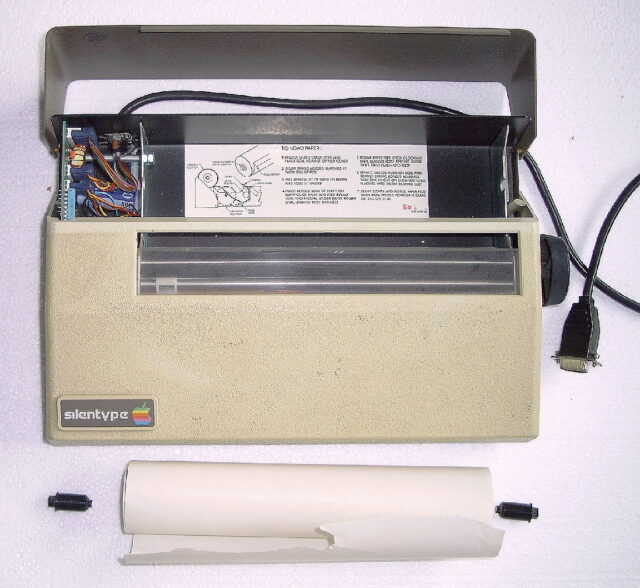
He was hired by Apple Computer as a systems programmer in 1979 and developed the Apple Silentype printer firmware and wrote the firmware for the Sup’R’Terminal, the first 80-column card for the Apple II. In the early 1980s, he invited his high school friend, artist Susan Kare, to join Apple in order to help design what would become standard Macintosh icons.

Apple Silentype Thermodrucker
Foto: Von StromBer – CC BY-SA 3.0, https://commons.wikimedia.org/w/index.php?curid=14972849

The story of how Andy Hertzfeld was recruited for the Macintosh project is legendary: “Steve came by my cubicle. This was on a Thursday afternoon, late on a Thursday afternoon.,” Hertzfeld recalls in the Land of Giants podcast, talking with Peter Kafka. “I said ‘Okay, I’ll start Monday. Just give me half a day to document the work I’ve been doing so someone else can pick it up’. And he goes: ‘No, the Macintosh is the future of Apple. You’re going to start on it now.’ And he grabbed my Apple Two off my desk and started walking away with it. What could I do but follow my computer?”

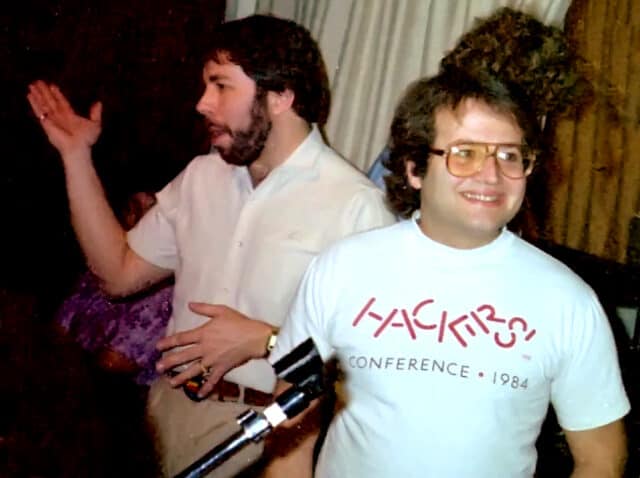
Steve Wozniak and Andy Hertzfeld (right) at a Apple Computer Users Group Meeting (1985).
Photo: Tony Wills – CC BY-SA 3.0, https://commons.wikimedia.org/w/index.php?curid=18512032

That’s how Andy Hertzfeld joined the Macintosh team. There he wrote much of the original system software for the Mac, including the User Interface Toolbox, Windows Manager, Menu Manager, Control Manager. Steve Jobs constantly gave the impression that there was a much bigger goal at stake: „We weren’t just designing a computer. We were saving mankind. We were enhancing the future of humanity. And so some of that you roll your eyes a little bit, but enthusiasm is contagious.“

With the legendary “1984” commercial, Jobs then also told the whole world that he was going to unveil something world-changing. But there was still one problem. At the time, he hadn’t completed this world-changing device. He needed Hertzfeld and a small team working around the clock, driven by the idea that they would create something great.

“It was a monumental effort to finish the Macintosh system software. All of the software engineers, about a dozen of us were up like 48 hours with no sleep”, Andy Hertzfeld recalls. “We barely succeeded. We were exhausted, lying around on the floor the next day in a happy haze. Hey, we did it. We’re finally done. When Steve walks into the software area saying, ‘Get up off the floor. You’re not done. I want the Macintosh to be the first computer to announce itself.”

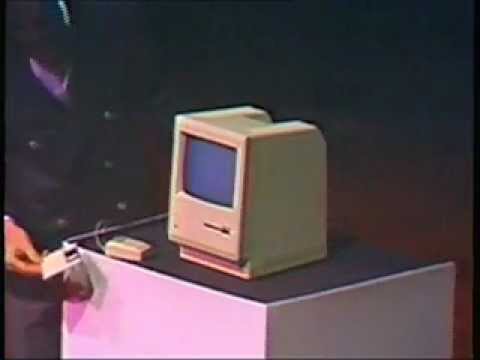
Jobs verlangte also, dass Hertzfeld und sein erschöpftes Team dem Mac das Sprechen beibringen soll. Das war ein technischer Vorstoß, der das Team bis zur letzten Minute an die Grenzen der Belastungsfähigkeit getrieben hat. Und als Jobs dann auf der Apple-Aktionärsversammlung 1984 die Bühne betrat, zog er den Mac aus der Tasche, von dem Hertzfeld nicht wirklich überzeugt war, dass er funktionieren würde.

Jobs had gambled high and won. It worked. The Macintosh could talk, more or less at least. And it looked almost cuddly like it was smiling. And it was sealed so you couldn’t open it. Unlike other computers, which were designed so you could poke around and modify the guts of the machine, the Mac was designed for people who didn’t know or care about the difference between RAM and ROM or other computer terms. Turn it on and go, says Apple expert Peter Kafka.

Andy Hertzfeld: “The Mac had this great intro. People saw it as the revolution that it was. We started selling them to the colleges by tens of thousands. But by the fall of 1984, the sales started falling off. By Christmas 1984, the sales were very disappointing. They were maybe a 10th of what Apple had predicted.”

Andy Hertzfeld left Apple in April 1984, fairly soon after the Mac was introduced. When asked why he turned his back on Apple, Hertzfeld replied on “NerdTV”:

“Bob Cringley: Why did you choose to leave Apple?
Andy: I had a bad manager, a manager who wanted me to salute to him. I didn’t salute crisply enough.
Bob: Literally salute?
Andy: That’s metaphor. I call the story in my book “to big for my britches.” He took me for a walk to give me a verbal review. For the period of time I’d written most of the Macintosh system software he gave me a bad review because I was insubordinate to him. That disillusioned me. That took place in February 1983. I would have left then except I was too committed to the Mac. I had to stay to see it through. But as soon as it January 1984 left.
I was still able to do system software. Did Switcher, the first multitasking environment for the Macintosh just as an outsider – I was able to sell it back to Apple. I wasn’t going to work there because I loved the spirit of the Mac group but this guy came in – his name is Bob Belleville – the bad manager who made me quit, and wasn’t able to compromise enough to stay there.
Bob: Why didn’t Steve protect you?
Andy: Steve had promised to. When Bud Tribble, the former manager, had left, Burrell and I both almost quit. We were afraid we’d get a bad manager and Steve promised to protect me but at the time we had already essentially developed the Mac. The technical work was done and what Steve needed at that point were managers to take over the rest of Apple.
The Macintosh having shipped, his next agenda was to turn the rest of Apple into the Mac group. He had perceived the rest of Apple wasn’t as creative or motivated as the Mac team, and what you need to take over the company are managers, not innovators or technical people.
Bob: So at that moment he needed Bob Belleville more than he needed you?
Andy: That was what I thought. A little later on I think he thought he needed me more, but during that time, yeah. And of course it all kind of backfired on him. He (Steve) got kicked out of Apple just shortly afterwards… much o the ill fate of Apple. I almost killed Apple.”

Andy Hertzfeld left Apple in April of 1984, pretty soon after the introduction of the Mac. He helped his friend Burrell Smith who did the digital hardware for the Mac start a company called Radius in 1986 that made peripherals for the Mac. “I did a lot of stuff as a third-party developer, sold system software back to Apple. In 1990, along with Bill Atkinson, who was sort of my mentor on the Mac project, we started a company called General Magic that made some of the first handheld computers.”

Magic Cap Introduction Demo 1/6/94 with Andy Hertzfeld

Andy Hertzfeld: “Apple was our benefactor at starting General Magic, but about a year later decided they would rather BE General Magic and tried to make us blink out of existence… which we eventually did, but it took a few years. I left General Magic in 1996 to become an Internet hobbyist – got a T-1 line to my house. At one point I had all four food banks of the Bay Area hosted from this house here.”

But it was much too early for a real retirement. Andy got bitten by the free software bug in February of 1998 around the time of the Mozilla announcement. “I was despairing of the structural problems in the software industry and suddenly, after reading Eric Raymond’s book The Cathedral and the Bazaar, I realized that free software could be the path to an open and fair software industry.”

Hertzfeld decided to work for change in the traditional software industry. In August 1999, he founded a company called Eazel that would make free software easier to use. Eazel failed to secure its second round of funding, however, and he was forced to close the company in May 2001.

He then began working with Mitch Kapor. This is the man who developed the legendary spreadsheet program “Lotus 1-2-3.” Hertzfeld helped Kapor launch the Open Source Applications Foundation. Together they developed an innovative personal information manager called Chandler. He then launched a project to preserve for posterity the memories of the makers of the first Apple Macintosh.

To do this, Hertzfeld even developed his own software to publish these memories on the Web: the Folklore Project. “I established a website called folklore.org devoted to what I call “collective historical storytelling” — allowing a group of people to cooperate telling their shared stories. I published on the web about 60 anecdotes about the development of the Mac in time for the Mac’s 20th birthday in 2004.” This then became the book “Revolution in The Valley: The Insanely Great Story of How the Mac Was Made.”

Hertzfeld then spent the last years of his active professional career at Google.

From August 2005 to July 2013, Hertzfeld worked for Google, where he was primarily responsible for the Google+ user interface.

Hertzfeld is now mainly retired and describes himself as a retired hacker, but he still sometimes appears as an investor, most recently in the start-up Spatial.

Sources:

Interview Christoph Dernbach with Andy Hetzfeld on August 25, 2011 at WWDC 2011.

Interview Robert Cringely (NerdTV) with Andy Herzfeld
https://web.archive.org/web/20120728185354/https://www.pbs.org/cringely/nerdtv/transcripts/001.html

The Kamla Show: Silicon Valley Pioneers: Andy Hertzfeld

Podcast: „Land of Giants“ mit Peter Kafka, Episode 2: „This Changes Everything“

Wikipedia contributors. Andy Hertzfeld. Wikipedia, The Free Encyclopedia. November 4, 2022, 22:38 UTC. Available at: https://en.wikipedia.org/w/index.php?title=Andy_Hertzfeld&oldid=1120061717. Accessed December 22, 2022.