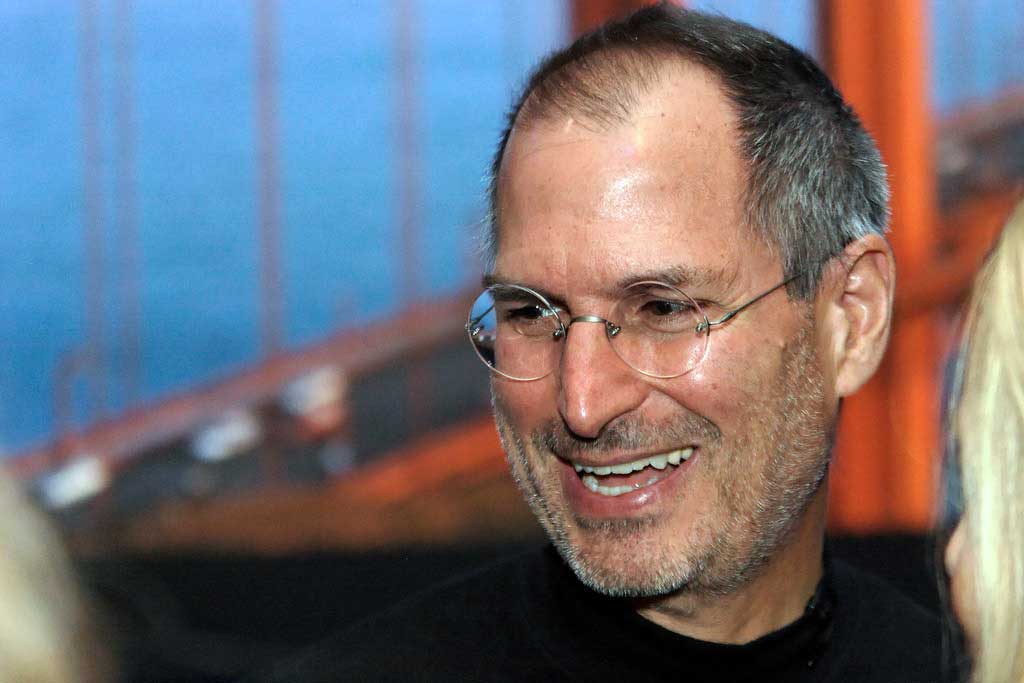
Steve Jobs was a visionary, a genius, a perfectionist, and sometimes a difficult contemporary. When the Apple co-founder died in 2011 at the age of 56, many Apple fans saw a bleak future for the company. However, things turned out differently.
It was unimaginable to think of Apple without Steve Jobs. But on October 5, 2011, the inevitable occurred: the charismatic Apple co-founder lost his long battle with cancer. Six weeks prior, on August 24, 2011, Jobs had appointed his confidant Tim Cook as the company’s new CEO. The decision surprised many observers as Cook had made a name for himself as a logistics and manufacturing expert, but he lacked the charisma that Jobs had regularly used to captivate the masses.
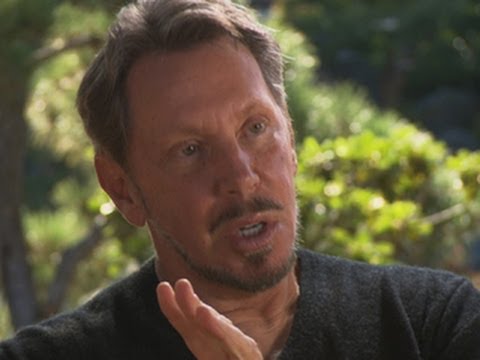
One of the skeptics was Larry Ellison, who had been close friends with the Apple co-founder for years. The head of software giant Oracle believed that Apple was doomed without Steve Jobs. In a TV interview, he drew a parallel to 1985, when Apple’s board of directors forced Steve Jobs out of the company. Over the next 12 years, Apple fell into such disrepair that by 1997 the company was on the verge of bankruptcy, and Jobs was brought back as a savior. “We saw Apple with Steve Jobs, we saw Apple without Steve Jobs. We saw Apple with Steve Jobs. Now we’re going to see Apple without Steve Jobs,” Ellison said. “I like Tim Cook. I think there are a lot of talented people there. But Steve is irreplaceable.”
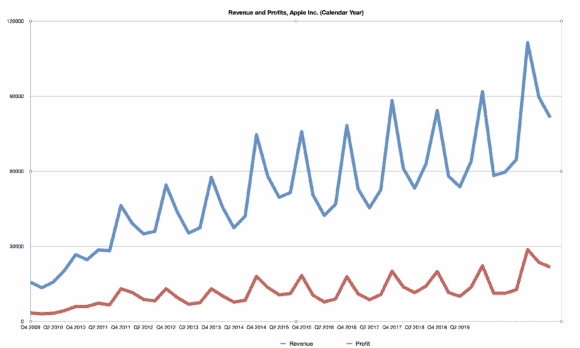
But things have turned out very differently after Jobs’ death than Ellison had feared. Apple is selling more devices and services than ever before. In August 2018, the iPhone maker made financial history as the first U.S. company to reach a trillion-dollar valuation on the stock market. Just two years later, it was two trillion. In addition to the stock market boom, experts say the company’s customer loyalty was a major factor in its rise. “When a new user starts using an Apple smartphone, they tend to stay with an Apple smartphone,” says Jeriel Ong, an equity analyst at Deutsche Bank.
And the rally is not over. Since October 2011, the share price has risen from around $13 to an all-time high of just under $150. Cook is also regularly rewarding shareholders with dividends, something Jobs always refused to do.
With the iPhone, Cook has managed to attract new groups of buyers. He also expanded the range of accessories, such as the Apple Watch computer watch and AirPods earphones, and launched subscription services such as iCloud and Apple TV+. It has also been able to charge higher prices for its products, so much so that a large portion of the industry’s profits now go to Apple.

Still, Tim Cook is not a great presenter on stage. However, he has now set the tone that sets him apart from his predecessor. One example is the environment. In 2008, Steve Jobs had a heated exchange with Greenpeace when the environmentalists demanded that Apple stop using brominated flame retardants in its products. These can be toxic, difficult to break down in the environment, and accumulate in living organisms.
Under Cook’s leadership, Apple not only eliminated the controversial BFRs, but also all other environmental toxins in its manufacturing. He also switched the company entirely to renewable energy. This ambitious project will now be extended to the entire supply chain.
This change has also been noted by Greenpeace. “Since Tim Cook took the helm at Apple, he has made environmental protection an important part of the company’s identity,” the organization said in 2017, when it published a report on environmental standards at electronics manufacturers. Apple only lost out to smartphone maker Fairphone in the Greener Electronics ranking because the Dutch company’s devices are easier to repair.
In addition to the environmental issue, Apple under Cook is also trying harder to differentiate itself from the competition in the area of privacy. Last April, for example, Apple changed its iPhone software so that providers like Facebook would have to ask users for permission if they wanted to track their activities across different apps and websites. Jobs had announced this privacy principle at the D8 conference in 2010, but left the implementation to his successor.
When it comes to privacy, Cook already made his mark in 2016. At the time, the FBI demanded that Apple manipulate the iPhone’s iOS operating system to allow law enforcement to search the locked iPhone of the shooter in the San Bernardino terrorist attack. Cook rejected the request, saying it would not undermine the security features of the products.
But Cook has also faced setbacks on the issue. For example, Apple shelved plans to introduce a scanning feature on the iPhone that would prevent child abuse images from being uploaded to the cloud. There had been an outcry that Apple was taking the wrong approach in the legitimate fight against child pornography.
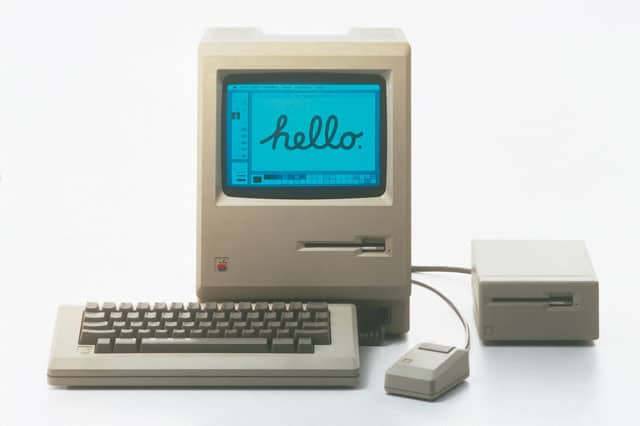
The biggest shortcoming of the Cook era, however, is that Jobs’ successor has yet to come up with a revolutionary new product. His predecessor regularly produced “one more thing” that disrupted entire industries: the iMac in 1999, the iPod and iTunes music service in 2001, the revolutionary iPhone in 2007, and the iPad in 2010. Under Cook, there have been rumors of revolutionary new products such as an Apple car or glasses for augmented reality applications, but so far Apple fans are waiting in vain.
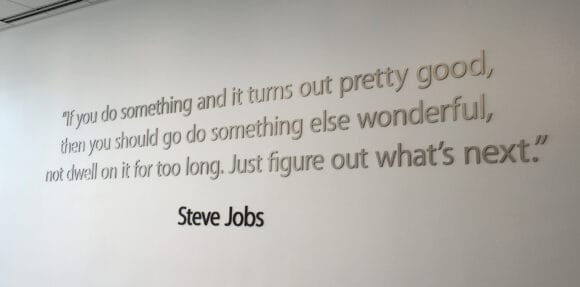
In this context, Cook’s critics point to a quote from Steve Jobs written in large letters on the wall of Apple’s old headquarters: “If you do something and it turns out pretty good, then you should go do something else wonderful, not dwell on it for too long. Just figure out what’s next.”