Steve Jobs was a visionary, a genius, a perfectionist, and sometimes a difficult contemporary. When the Apple co-founder died in 2011 at the age of 56, many Apple fans saw a bleak future for the company. However, things turned out differently.
It was unimaginable to think of Apple without Steve Jobs. But on October 5, 2011, the inevitable occurred: the charismatic Apple co-founder lost his long battle with cancer. Six weeks prior, on August 24, 2011, Jobs had appointed his confidant Tim Cook as the company’s new CEO. The decision surprised many observers as Cook had made a name for himself as a logistics and manufacturing expert, but he lacked the charisma that Jobs had regularly used to captivate the masses.
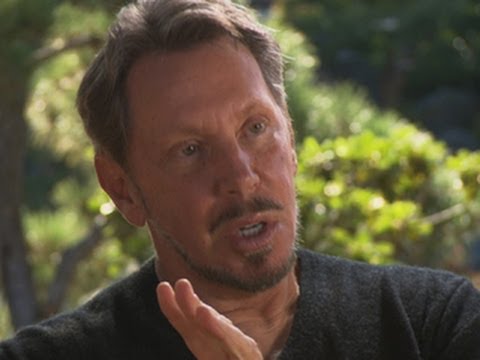
One of the skeptics was Larry Ellison, who had been close friends with the Apple co-founder for years. The head of software giant Oracle believed that Apple was doomed without Steve Jobs. In a TV interview, he drew a parallel to 1985, when Apple’s board of directors forced Steve Jobs out of the company. Over the next 12 years, Apple fell into such disrepair that by 1997 the company was on the verge of bankruptcy, and Jobs was brought back as a savior. “We saw Apple with Steve Jobs, we saw Apple without Steve Jobs. We saw Apple with Steve Jobs. Now we’re going to see Apple without Steve Jobs,” Ellison said. “I like Tim Cook. I think there are a lot of talented people there. But Steve is irreplaceable.”
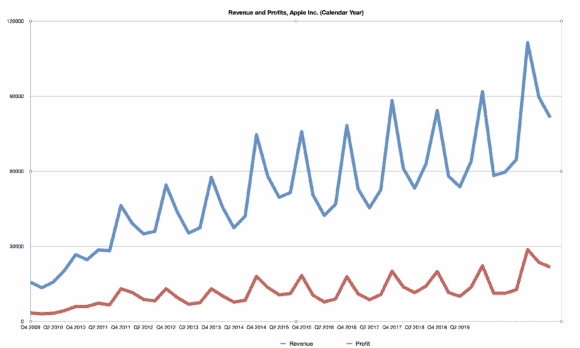
But things have turned out very differently after Jobs’ death than Ellison had feared. Apple is selling more devices and services than ever before. In August 2018, the iPhone maker made financial history as the first U.S. company to reach a trillion-dollar valuation on the stock market. Just two years later, it was two trillion. In addition to the stock market boom, experts say the company’s customer loyalty was a major factor in its rise. “When a new user starts using an Apple smartphone, they tend to stay with an Apple smartphone,” says Jeriel Ong, an equity analyst at Deutsche Bank.
And the rally is not over. Since October 2011, the share price has risen from around $13 to an all-time high of just under $150. Cook is also regularly rewarding shareholders with dividends, something Jobs always refused to do.
With the iPhone, Cook has managed to attract new groups of buyers. He also expanded the range of accessories, such as the Apple Watch computer watch and AirPods earphones, and launched subscription services such as iCloud and Apple TV+. It has also been able to charge higher prices for its products, so much so that a large portion of the industry’s profits now go to Apple.
Revenue and Profit, Apple Inc. (Calendar Year)
Still, Tim Cook is not a great presenter on stage. However, he has now set the tone that sets him apart from his predecessor. One example is the environment. In 2008, Steve Jobs had a heated exchange with Greenpeace when the environmentalists demanded that Apple stop using brominated flame retardants in its products. These can be toxic, difficult to break down in the environment, and accumulate in living organisms.
Under Cook’s leadership, Apple not only eliminated the controversial BFRs, but also all other environmental toxins in its manufacturing. He also switched the company entirely to renewable energy. This ambitious project will now be extended to the entire supply chain.
This change has also been noted by Greenpeace. “Since Tim Cook took the helm at Apple, he has made environmental protection an important part of the company’s identity,” the organization said in 2017, when it published a report on environmental standards at electronics manufacturers. Apple only lost out to smartphone maker Fairphone in the Greener Electronics ranking because the Dutch company’s devices are easier to repair.
In addition to the environmental issue, Apple under Cook is also trying harder to differentiate itself from the competition in the area of privacy. Last April, for example, Apple changed its iPhone software so that providers like Facebook would have to ask users for permission if they wanted to track their activities across different apps and websites. Jobs had announced this privacy principle at the D8 conference in 2010, but left the implementation to his successor.
When it comes to privacy, Cook already made his mark in 2016. At the time, the FBI demanded that Apple manipulate the iPhone’s iOS operating system to allow law enforcement to search the locked iPhone of the shooter in the San Bernardino terrorist attack. Cook rejected the request, saying it would not undermine the security features of the products.
But Cook has also faced setbacks on the issue. For example, Apple shelved plans to introduce a scanning feature on the iPhone that would prevent child abuse images from being uploaded to the cloud. There had been an outcry that Apple was taking the wrong approach in the legitimate fight against child pornography.
The biggest shortcoming of the Cook era, however, is that Jobs’ successor has yet to come up with a revolutionary new product. His predecessor regularly produced “one more thing” that disrupted entire industries: the iMac in 1999, the iPod and iTunes music service in 2001, the revolutionary iPhone in 2007, and the iPad in 2010. Under Cook, there have been rumors of revolutionary new products such as an Apple car or glasses for augmented reality applications, but so far Apple fans are waiting in vain.
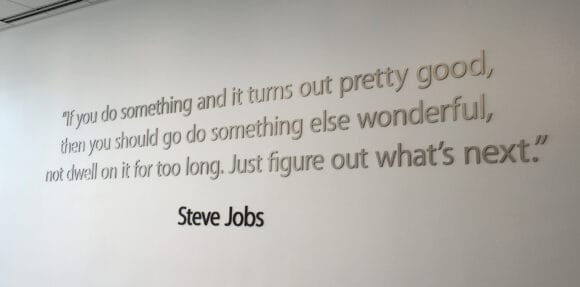
In this context, Cook’s critics point to a quote from Steve Jobs written in large letters on the wall of Apple’s old headquarters: “If you do something and it turns out pretty good, then you should go do something else wonderful, not dwell on it for too long. Just figure out what’s next.”
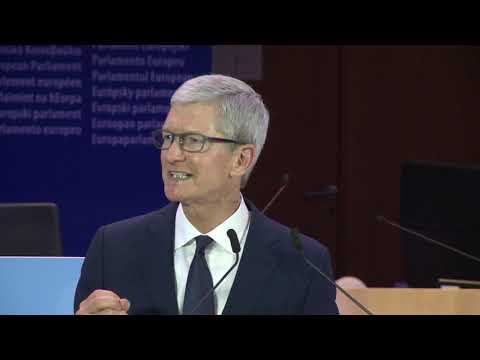
In his most political speech ever Apple chief executive Tim Cook has demanded a tough new US data protection law.
Referring to the misuse of “deeply personal” data, he said it was being “weaponised against us with military efficiency”.
“We shouldn’t sugar-coat the consequences,” he added. “This is surveillance.”
The strongly-worded speech presented a striking defence of user privacy rights from a tech firm’s chief executive.
Mr Cook also praised the EU’s new data protection regulation, the General Data Protection Regulation (GDPR).
Here is a transcript of his speech:
Good morning.
It is an honor to be here with you today in this grand hall…a room that represents what is possible when people of different backgrounds, histories, and philosophies come together to build something bigger than themselves.
I am deeply grateful to our hosts. I want to recognize Ventsislav Karadjov for his service and leadership. And it’s a true privilege to be introduced by his co-host, a statesman I admire greatly, Giovanni Butarelli.
Now Italy has produced more than its share of great leaders and public servants. Machiavelli taught us how leaders can get away with evil deeds…And Dante showed us what happens when they get caught.
Giovanni has done something very different. Through his values, his dedication, his thoughtful work, Giovanni, his predecessor Peter Hustinx—and all of you—have set an example for the world. We are deeply grateful.
We need you to keep making progress—now more than ever. Because these are transformative times. Around the world, from Copenhagen to Chennai to Cupertino, new technologies are driving breakthroughs in humanity’s greatest common projects. From preventing and fighting disease…To curbing the effects of climate change…To ensuring every person has access to information and economic opportunity.
At the same time, we see vividly—painfully—how technology can harm rather than help. Platforms and algorithms that promised to improve our lives can actually magnify our worst human tendencies. Rogue actors and even governments have taken advantage of user trust to deepen divisions, incite violence, and even undermine our shared sense of what is true and what is false.
This crisis is real. It is not imagined, or exaggerated, or “crazy.” And those of us who believe in technology’s potential for good must not shrink from this moment.
Now, more than ever — as leaders of governments, as decision-makers in business, and as citizens — we must ask ourselves a fundamental question: What kind of world do we want to live in?
I’m here today because we hope to work with you as partners in answering this question.
At Apple, we are optimistic about technology’s awesome potential for good. But we know that it won’t happen on its own. Every day, we work to infuse the devices we make with the humanity that makes us. As I’ve said before, “Technology is capable of doing great things. But it doesn’t want to do great things. It doesn’t want anything. That part takes all of us.”
That’s why I believe that our missions are so closely aligned. As Giovanni puts it, “We must act to ensure that technology is designed and developed to serve humankind, and not the other way around.”
We at Apple believe that privacy is a fundamental human right. But we also recognize that not everyone sees things as we do. In a way, the desire to put profits over privacy is nothing new.
As far back as 1890, future Supreme Court Justice Louis Brandeis published an article in the Harvard Law Review, making the case for a “Right to Privacy” in the United States.
He warned: “Gossip is no longer the resource of the idle and of the vicious, but has become a trade.”
Today that trade has exploded into a data industrial complex. Our own information, from the everyday to the deeply personal, is being weaponized against us with military efficiency.
Every day, billions of dollars change hands, and countless decisions are made, on the basis of our likes and dislikes, our friends and families, Our relationships and conversations…Our wishes and fears…Our hopes and dreams.
These scraps of data…each one harmless enough on its own…are carefully assembled, synthesized, traded, and sold.
Taken to its extreme, this process creates an enduring digital profile and lets companies know you better than you may know yourself. Your profile is then run through algorithms that can serve up increasingly extreme content, pounding our harmless preferences into hardened convictions. If green is your favorite color, you may find yourself reading a lot of articles—or watching a lot of videos—about the insidious threat from people who like orange.
In the news, almost every day, we bear witness to the harmful, even deadly, effects of these narrowed worldviews.
We shouldn’t sugarcoat the consequences. This is surveillance. And these stockpiles of personal data serve only to enrich the companies that collect them.
This should make us very uncomfortable. It should unsettle us. And it illustrates the importance of our shared work and the challenges still ahead of us.
Fortunately, this year, you’ve shown the world that good policy and political will can come together to protect the rights of everyone. We should celebrate the transformative work of the European institutions tasked with the successful implementation of the GDPR. We also celebrate the new steps taken, not only here in Europe, but around the world. In Singapore, Japan, Brazil, New Zealand, and many more nations, regulators are asking tough questions and crafting effective reforms.
It is time for the rest of the world—including my home country—to follow your lead.
We at Apple are in full support of a comprehensive federal privacy law in the United States. There, and everywhere, it should be rooted in four essential rights: First, the right to have personal data minimized. Companies should challenge themselves to de-identify customer data—or not to collect it in the first place. Second, the right to knowledge. Users should always know what data is being collected and what it is being collected for. This is the only way to empower users to decide what collection is legitimate and what isn’t. Anything less is a sham. Third, the right to access. Companies should recognize that data belongs to users, and we should all make it easy for users to get a copy of…correct…and delete their personal data. And fourth, the right to security. Security is foundational to trust and all other privacy rights.
Now, there are those who would prefer I hadn’t said all of that. Some oppose any form of privacy legislation. Others will endorse reform in public, and then resist and undermine it behind closed doors.
They may say to you, ‘our companies will never achieve technology’s true potential if they are constrained with privacy regulation.’ But this notion isn’t just wrong, it is destructive.
Technology’s potential is, and always must be, rooted in the faith people have in it…In the optimism and creativity that it stirs in the hearts of individuals…In its promise and capacity to make the world a better place.
It’s time to face facts. We will never achieve technology’s true potential without the full faith and confidence of the people who use it.
At Apple, respect for privacy—and a healthy suspicion of authority—have always been in our bloodstream. Our first computers were built by misfits, tinkerers, and rebels—not in a laboratory or a board room, but in a suburban garage. We introduced the Macintosh with a famous TV ad channeling George Orwell’s 1984—a warning of what can happen when technology becomes a tool of power and loses touch with humanity.
And way back in 2010, Steve Jobs said in no uncertain terms: “Privacy means people know what they’re signing up for, in plain language, and repeatedly.”
It’s worth remembering the foresight and courage it took to make that statement. When we designed this device we knew it could put more personal data in your pocket than most of us keep in our homes. And there was enormous pressure on Steve and Apple to bend our values and to freely share this information. But we refused to compromise. In fact, we’ve only deepened our commitment in the decade since.
From hardware breakthroughs…that encrypt fingerprints and faces securely—and only—on your device…To simple and powerful notifications that make clear to every user precisely what they’re sharing and when they are sharing it.
We aren’t absolutists, and we don’t claim to have all the answers. Instead, we always try to return to that simple question: What kind of world do we want to live in.
At every stage of the creative process, then and now, we engage in an open, honest, and robust ethical debate about the products we make and the impact they will have. That’s just a part of our culture.
We don’t do it because we have to, we do it because we ought to. The values behind our products are as important to us as any feature.
We understand that the dangers are real—from cyber-criminals to rogue nation states. We’re not willing to leave our users to fend for themselves. And, we’ve shown, we’ll defend those principles when challenged.
Those values…that commitment to thoughtful debate and transparency…they’re only going to get more important. As progress speeds up, these things should continue to ground us and connect us, first and foremost, to the people we serve.
Artificial Intelligence is one area I think a lot about. Clearly, it’s on the minds of many of my peers as well.
At its core, this technology promises to learn from people individually to benefit us all. Yet advancing AI by collecting huge personal profiles is laziness, not efficiency. For Artificial Intelligence to be truly smart, it must respect human values, including privacy.
If we get this wrong, the dangers are profound.
We can achieve both great Artificial Intelligence and great privacy standards. It’s not only a possibility, it is a responsibility.
In the pursuit of artificial intelligence, we should not sacrifice the humanity, creativity, and ingenuity that define our human intelligence.
And at Apple, we never will.
In the mid-19th Century, the great American writer Henry David Thoreau found himself so fed up with the pace and change of Industrial society that he moved to a cabin in the woods by Walden Pond.
Call it the first digital cleanse.
Yet even there, where he hoped to find a bit of peace, he could hear a distant clatter and whistle of a steam engine passing by. “We do not ride on the railroad,” he said. “It rides upon us.”
Those of us who are fortunate enough to work in technology have an enormous responsibility.
It is not to please every grumpy Thoreau out there. That’s an unreasonable standard, and we’ll never meet it.
We are responsible, however, for recognizing that the devices we make and the platforms we build have real…lasting…even permanent effects on the individuals and communities who use them.
We must never stop asking ourselves…What kind of world do we want to live in?
The answer to that question must not be an afterthought, it should be our primary concern.
We at Apple can—and do—provide the very best to our users while treating their most personal data like the precious cargo that it is. And if we can do it, then everyone can do it.
Fortunately, we have your example before us.
Thank you for your work…For your commitment to the possibility of human-centered technology…And for your firm belief that our best days are still ahead of us.
On October 5th, 2015, Apple CEO Tim Cook sent out an internal email to staff, in remembrance of the fourth anniversary of the passing of the company’s co-founder Steve Jobs. In the text, he encouraged employees to learn about what he was like to work with.
“If you never knew Steve, you probably work with someone who did or who was here when he led Apple,” Cook wrote. “Please stop one of us today and ask what he was really like.”
Cook’s comments come after a report from the Wall Street Journal detailing criticism of an upcoming Aaron Sorkin biopic of Jobs that’s based on a biography penned by Walter Isaacson. Among the film’s critics was Jobs’ wife, Laurene Powell Jobs, who tried to kill the film several times during its development. The film, “Steve Jobs,” is set to release October 9th, 2015.
Remembering Steve for who he was and what he stood for. We honor him by continuing the work he loved so much. pic.twitter.com/6UiXBjYe3l
Today marks four years since Steve passed away. On that day, the world lost a visionary. We at Apple lost a leader, a mentor, and many of us lost a dear friend.
Steve was a brilliant person, and his priorities were very simple. He loved his family above all, he loved Apple, and he loved the people with whom he worked so closely and achieved so much.
Each year since his passing, I have reminded everyone in the Apple community that we share the privilege and responsibility of continuing the work Steve loved so much.
What is his legacy? I see it all around us: An incredible team that embodies his spirit of innovation and creativity. The greatest products on earth, beloved by customers and empowering hundreds of millions of people around the world. Soaring achievements in technology and architecture. Experiences of surprise and delight. A company that only he could have built. A company with an intense determination to change the world for the better. And, of course, the joy he brought his loved ones.
He told me several times in his final years that he hoped to live long enough to see some of the milestones in his children’s lives. I was in his office over the summer with Laurene and their youngest daughter. Messages and drawings from his kids to their father are still there on Steve’s whiteboard.
If you never knew Steve, you probably work with someone who did or who was here when he led Apple. Please stop one of us today and ask what he was really like. Several of us have posted our personal remembrances on AppleWeb, and I encourage you to read them.
Thank you for honoring Steve by continuing the work he started, and for remembering both who he was and what he stood for.
Apple’s chief executive publicly confirmed that he is gay in an essay published by Bloomberg Businessweek. The 53-year-old wrote he was inspired by Dr Martin Luther King to set aside his desire for privacy to do “something more important.”
Cook said he hopes to support and inspire others by coming out.
While I have never denied my sexuality, I haven’t publicly acknowledged it either, until now. So let me be clear: I’m proud to be gay, and I consider being gay among the greatest gifts God has given me.
Cook said he would continue to advocate for human rights and equality. “We pave the sunlit path toward justice together, brick by brick. This is my brick.”
Many colleagues already knew about his sexual orientation, he said.
On Twitter co-workers and colleges showed support for Cook.
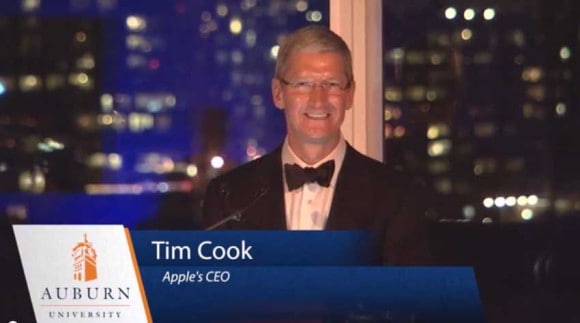
Apple CEO Tim Cook isn’t known for talking much about himself, but in a speech this week, he talked about some of the early childhood experiences that shape his passions around fighting for human rights and equality.
“Growing up in Alabama in the 1960s, I saw the devastating impacts of discrimination,” Cook said, accepting a lifetime achievement award from Auburn University, his alma mater. “Remarkable people were denied opportunities and treated without basic human dignity, solely because of the color of their skin.”
He talked about seeing a cross-burning at the home of a nearby family.
“This image was permanently imprinted in my brain, and it would change my life forever,” Cook said. “For me, the cross-burning was a symbol of ignorance, of hatred, and a fear of anyone different than the majority. I could never understand it ,and I knew then that America’s and Alabama’s history would always be scarred by the hatred that it represented.”
Apple’s CEO Tim Cook remembered the company’s late cofounder, Steve Jobs on the one-year anniversary of Jobs’ passing. The letter with a video montage appeared on Apple’s website to remember his life and death. The nearly two-minute video presents a slideshow of Jobs throughout his career and it softly ends with “Remembering Steve”.
Jobs died on Oct. 4, 2011. After he passed, at just 56 years old, news of his death flooded the Internet, TV, newspapers, and homes. Millions of people immediately emailed Apple, and the company subsequently created a “Remembering Steve” page to display a massive compilation of condolences that poured in from around the world.
The tribute letter from Apple’s current CEO appears upon completion of the “Remembering Steve” video. In the message, Cook describes Jobs’ death as a “sad and difficult time”. The executive hopes, however, that everyone will “reflect on [Jobs’] extraordinary life and the many ways he made the world a better place.”
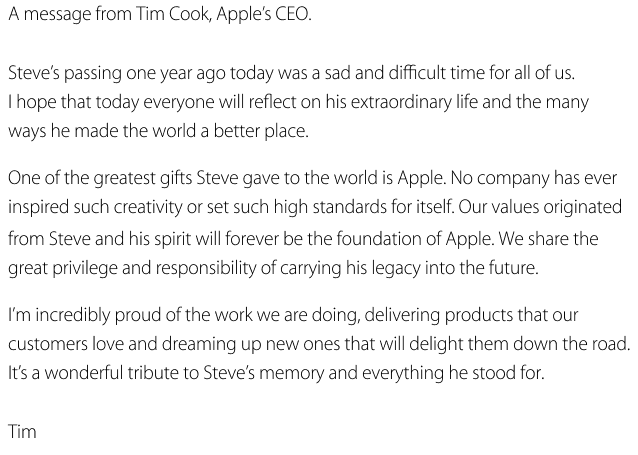
A Message from Tim Cook, Apple’s CEO.
Steve’s passing one year ago today was a sad and difficult time for all of us. I hope that today everyone will reflect on his extraordinary life and the many ways he made the world a better place.
One of the greatest gifts Steve gave to the world is Apple. No company has ever inspired such creativity or set such high standards for itself. Our values originated from Steve and his spirit will forever be the foundation of Apple. We share the great privilege and responsibility of carrying his legacy into the future.
I’m incredibly proud of the work we are doing, delivering products that our customers love and dreaming up new ones that will delight them down the road. It’s a wonderful tribute to Steve’s memory and everything he stood for.
– Tim
Apple Inc’s Tim Cook, on his first trip to China as the chief executive officer, has visited an iPhone production plant run by the Foxconn Technology Group, which is being accused of improper labor practices.