Larry Tesler talks about Steve Jobs’ trips to Xerox’s Palo Alto Research Center, including the one where Jobs eyed the company’s graphical user interface prototype — which ended up on Mac OS.
Introducer: Larry Tesler, I believe you took Steve on a tour of Xerox PARC and showed him some technology that became important. I wonder if you could tell us about that that tour?
Larry Tesler: Well it wasn’t the physical facility. It was a tour of the software it was part of that demonstration . Xerox was facing a lot of competition from Asian companies in copiers when their patents expired and one thing they found was that they had a very high manufacturing cost and they were really having trouble competing with these new forces in the market. At the same time they had Xerox PARC, developing very exciting technologies including the Ethernet, GUIs with windows and improved mice from what existed before.
They started worrying that they would not be able to manufacture those cheaply enough when they moved into that market. So they looked around and saw that Apple was cranking out Apple ][s for really cheap and selling lots of them and they thought, “Well, we should partner with a company like Apple and they’ll make our machines for us”. Or something like that. Xerox had some kind of idea of [that] type, so some business development peope came from the East Coast to PARC and when they got to Apple they made a deal where in exchange for various business arrangements, distribution and future discussion of manufacture and so on, Apple would sell them stock. This was a very appealing thing because it was very clear Apple was going to have a very successful IPO, […] and in exchange though, Steve Jobs required information… disclosure, everything cool going on at Xerox PARC [laughter] [voice commenting “Good bargain!”]. Nobody checked with the PARC people first but the business development people signed the deal.
So there was a number of visits [by Apple to PARC]. I was involved in a couple of them. One was [Apple] executives visiting and meeting with some of us [PARC researchers] trying to just get information out of us or an agenda for how to get the information out of us.
That was a little bit of a tense meeting but I remember at one point Steve was pacing the room trying not to be in charge of the meeting because he was not the CEO of the company – Mike Scott was – and at one point he just said “Stop! Stop! Stop! Stop! Stop this discussion! We need to tell them about the Lisa!” and all the Apple people kind of froze… “Come on! Come on, we need to tell them about the Lisa! This conversation is gonna go nowhere!”. So we got perked up, because it was us disclosing to them, not them disclosing to us, but finally they threw up their hands “OK, tell ’em about the Lisa!” so somebody told us a little about the Lisa, which at that time did not have a GUI but it was powerful enough to do the kinds of thing that they thought we were doing.
The next thing I remember was another meeting where apparently Apple people had been demoed in-between but they weren’t satisfied with the demo. They knew there was lot more than [what] we were showing them. There were a lot of people at PARC that didn’t want to show Apple everything. And in fact we all felt like we didn’t want to show them everything, but I was one of those who felt we should show them more. There were people who wanted to hold back everything we could. So they arranged a new set of demos, where more people came, Bill [Atkinson] was there, John Couch, Mike Scott, obviously Steve, Jef Raskin, [and] a couple of other people.
The room as pretty full and there were two or three of us from PARC at a time, one person sitting at the computer, getting the demonstration and the other people waiting their turn or observing. So, during that demo, Steve again got very excited. He was pacing around the room and occasionally looking at the screen. he was mostly just looking and reacting and taking it all in, trying to process it and at one point he said “You’re still not showing us everything!” And the meeting paused, there were some phone calls [made], and [then] “OK, we’re going to show you more.” [laughter]
So I gave my demo, then Dan Ingalls gave a demo for Smalltalk and they started asking us lot of questions. Bill and, Bruce Daniels was there too, he had joined Apple from MIT… those technical people just asking us questions and we were answering the questions and frankly I was amazed.
I had looked into Apple earlier, a couple of years before, because someone tried to get me to work there, and I found these people who were Homebrew Computer Club kinda hackers. Suddenly there were all these computer scientists in the room and they were asking really good questions! So I got a completely different view about what Apple was like from that meeting. But Jobs was saying “What is going on here? You’re sitting on a gold mine! Why aren’t you doing something with this technology? You could change the world!” And his buddies, who were trying to arrange the negotiation of some kind, were trying to quite him down [laughter] “Don’t be so excited!” But it was really clear to him that we [at Xerox] were never really gonna do anything with this, and by that I mean the kinds of revolutionary things that he was envisioning.
The irony was that when they left we still had shown the like only 1% of what PARC was doing but it was enough that they got really excited and decided they were going to retarget the Lisa to be something like what they had seen, in terms of GUI. They fell in love with the mouse and that changed everything. And seven months after I was working at Apple.”
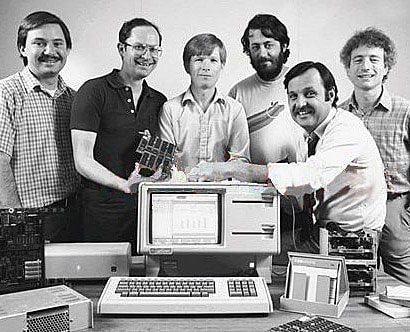
Apple Lisa team: Paul Baker, Bruce Daniels, Chris Franklin, Rich Page, John Couch, and Larry Tesler.
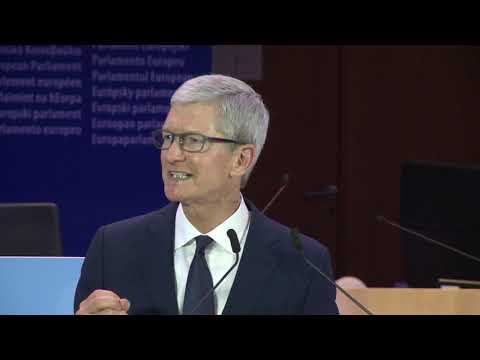
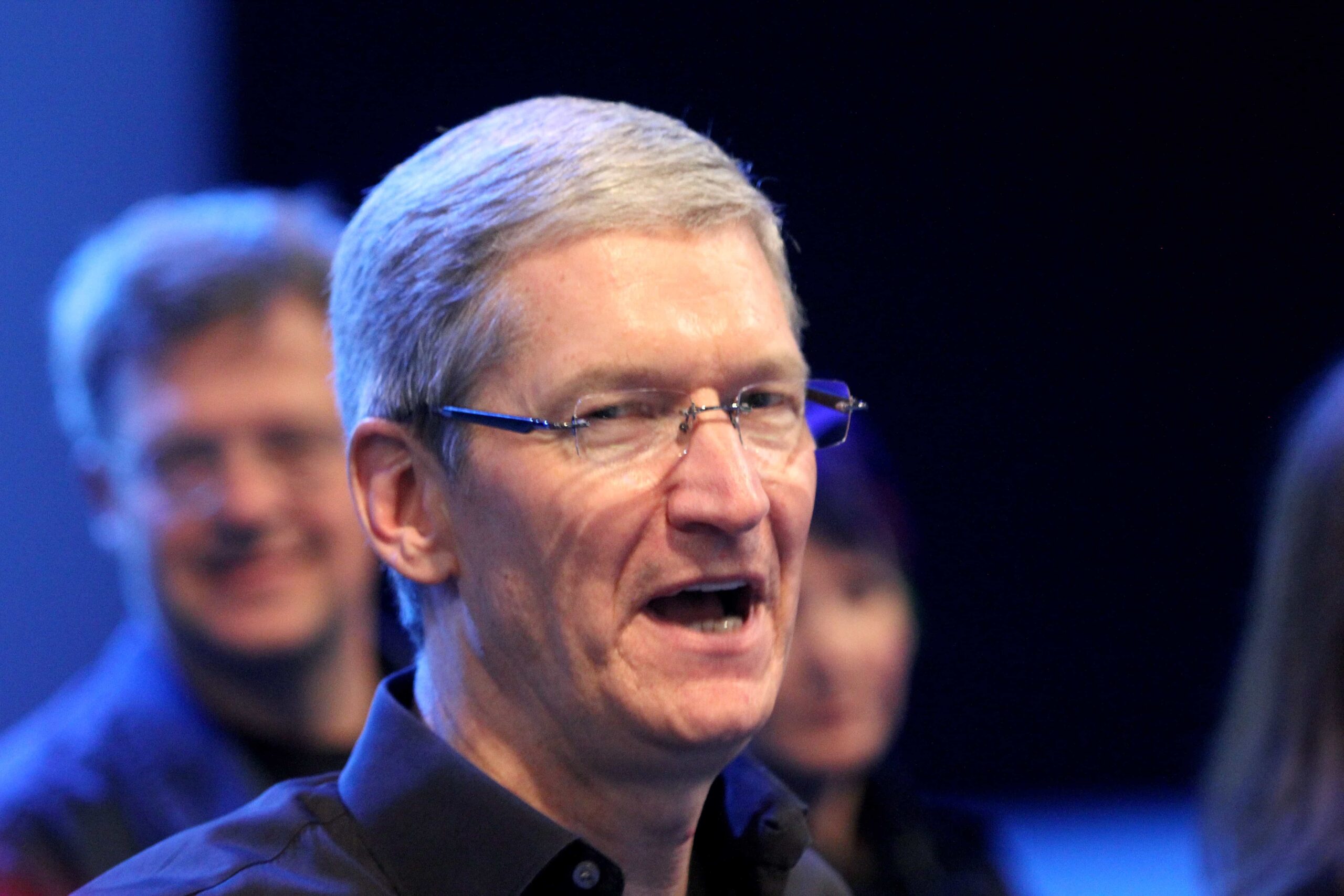
In his most political speech ever Apple chief executive Tim Cook has demanded a tough new US data protection law.
Referring to the misuse of “deeply personal” data, he said it was being “weaponised against us with military efficiency”.
“We shouldn’t sugar-coat the consequences,” he added. “This is surveillance.”
The strongly-worded speech presented a striking defence of user privacy rights from a tech firm’s chief executive.
Mr Cook also praised the EU’s new data protection regulation, the General Data Protection Regulation (GDPR).
Here is a transcript of his speech:
Good morning.
It is an honor to be here with you today in this grand hall…a room that represents what is possible when people of different backgrounds, histories, and philosophies come together to build something bigger than themselves.
I am deeply grateful to our hosts. I want to recognize Ventsislav Karadjov for his service and leadership. And it’s a true privilege to be introduced by his co-host, a statesman I admire greatly, Giovanni Butarelli.
Now Italy has produced more than its share of great leaders and public servants. Machiavelli taught us how leaders can get away with evil deeds…And Dante showed us what happens when they get caught.
Giovanni has done something very different. Through his values, his dedication, his thoughtful work, Giovanni, his predecessor Peter Hustinx—and all of you—have set an example for the world. We are deeply grateful.
We need you to keep making progress—now more than ever. Because these are transformative times. Around the world, from Copenhagen to Chennai to Cupertino, new technologies are driving breakthroughs in humanity’s greatest common projects. From preventing and fighting disease…To curbing the effects of climate change…To ensuring every person has access to information and economic opportunity.
At the same time, we see vividly—painfully—how technology can harm rather than help. Platforms and algorithms that promised to improve our lives can actually magnify our worst human tendencies. Rogue actors and even governments have taken advantage of user trust to deepen divisions, incite violence, and even undermine our shared sense of what is true and what is false.
This crisis is real. It is not imagined, or exaggerated, or “crazy.” And those of us who believe in technology’s potential for good must not shrink from this moment.
Now, more than ever — as leaders of governments, as decision-makers in business, and as citizens — we must ask ourselves a fundamental question: What kind of world do we want to live in?
I’m here today because we hope to work with you as partners in answering this question.
At Apple, we are optimistic about technology’s awesome potential for good. But we know that it won’t happen on its own. Every day, we work to infuse the devices we make with the humanity that makes us. As I’ve said before, “Technology is capable of doing great things. But it doesn’t want to do great things. It doesn’t want anything. That part takes all of us.”
That’s why I believe that our missions are so closely aligned. As Giovanni puts it, “We must act to ensure that technology is designed and developed to serve humankind, and not the other way around.”
We at Apple believe that privacy is a fundamental human right. But we also recognize that not everyone sees things as we do. In a way, the desire to put profits over privacy is nothing new.
As far back as 1890, future Supreme Court Justice Louis Brandeis published an article in the Harvard Law Review, making the case for a “Right to Privacy” in the United States.
He warned: “Gossip is no longer the resource of the idle and of the vicious, but has become a trade.”
Today that trade has exploded into a data industrial complex. Our own information, from the everyday to the deeply personal, is being weaponized against us with military efficiency.
Every day, billions of dollars change hands, and countless decisions are made, on the basis of our likes and dislikes, our friends and families, Our relationships and conversations…Our wishes and fears…Our hopes and dreams.
These scraps of data…each one harmless enough on its own…are carefully assembled, synthesized, traded, and sold.
Taken to its extreme, this process creates an enduring digital profile and lets companies know you better than you may know yourself. Your profile is then run through algorithms that can serve up increasingly extreme content, pounding our harmless preferences into hardened convictions. If green is your favorite color, you may find yourself reading a lot of articles—or watching a lot of videos—about the insidious threat from people who like orange.
In the news, almost every day, we bear witness to the harmful, even deadly, effects of these narrowed worldviews.
We shouldn’t sugarcoat the consequences. This is surveillance. And these stockpiles of personal data serve only to enrich the companies that collect them.
This should make us very uncomfortable. It should unsettle us. And it illustrates the importance of our shared work and the challenges still ahead of us.
Fortunately, this year, you’ve shown the world that good policy and political will can come together to protect the rights of everyone. We should celebrate the transformative work of the European institutions tasked with the successful implementation of the GDPR. We also celebrate the new steps taken, not only here in Europe, but around the world. In Singapore, Japan, Brazil, New Zealand, and many more nations, regulators are asking tough questions and crafting effective reforms.
It is time for the rest of the world—including my home country—to follow your lead.
We at Apple are in full support of a comprehensive federal privacy law in the United States. There, and everywhere, it should be rooted in four essential rights: First, the right to have personal data minimized. Companies should challenge themselves to de-identify customer data—or not to collect it in the first place. Second, the right to knowledge. Users should always know what data is being collected and what it is being collected for. This is the only way to empower users to decide what collection is legitimate and what isn’t. Anything less is a sham. Third, the right to access. Companies should recognize that data belongs to users, and we should all make it easy for users to get a copy of…correct…and delete their personal data. And fourth, the right to security. Security is foundational to trust and all other privacy rights.
Now, there are those who would prefer I hadn’t said all of that. Some oppose any form of privacy legislation. Others will endorse reform in public, and then resist and undermine it behind closed doors.
They may say to you, ‘our companies will never achieve technology’s true potential if they are constrained with privacy regulation.’ But this notion isn’t just wrong, it is destructive.
Technology’s potential is, and always must be, rooted in the faith people have in it…In the optimism and creativity that it stirs in the hearts of individuals…In its promise and capacity to make the world a better place.
It’s time to face facts. We will never achieve technology’s true potential without the full faith and confidence of the people who use it.
At Apple, respect for privacy—and a healthy suspicion of authority—have always been in our bloodstream. Our first computers were built by misfits, tinkerers, and rebels—not in a laboratory or a board room, but in a suburban garage. We introduced the Macintosh with a famous TV ad channeling George Orwell’s 1984—a warning of what can happen when technology becomes a tool of power and loses touch with humanity.
And way back in 2010, Steve Jobs said in no uncertain terms: “Privacy means people know what they’re signing up for, in plain language, and repeatedly.”
It’s worth remembering the foresight and courage it took to make that statement. When we designed this device we knew it could put more personal data in your pocket than most of us keep in our homes. And there was enormous pressure on Steve and Apple to bend our values and to freely share this information. But we refused to compromise. In fact, we’ve only deepened our commitment in the decade since.
From hardware breakthroughs…that encrypt fingerprints and faces securely—and only—on your device…To simple and powerful notifications that make clear to every user precisely what they’re sharing and when they are sharing it.
We aren’t absolutists, and we don’t claim to have all the answers. Instead, we always try to return to that simple question: What kind of world do we want to live in.
At every stage of the creative process, then and now, we engage in an open, honest, and robust ethical debate about the products we make and the impact they will have. That’s just a part of our culture.
We don’t do it because we have to, we do it because we ought to. The values behind our products are as important to us as any feature.
We understand that the dangers are real—from cyber-criminals to rogue nation states. We’re not willing to leave our users to fend for themselves. And, we’ve shown, we’ll defend those principles when challenged.
Those values…that commitment to thoughtful debate and transparency…they’re only going to get more important. As progress speeds up, these things should continue to ground us and connect us, first and foremost, to the people we serve.
Artificial Intelligence is one area I think a lot about. Clearly, it’s on the minds of many of my peers as well.
At its core, this technology promises to learn from people individually to benefit us all. Yet advancing AI by collecting huge personal profiles is laziness, not efficiency. For Artificial Intelligence to be truly smart, it must respect human values, including privacy.
If we get this wrong, the dangers are profound.
We can achieve both great Artificial Intelligence and great privacy standards. It’s not only a possibility, it is a responsibility.
In the pursuit of artificial intelligence, we should not sacrifice the humanity, creativity, and ingenuity that define our human intelligence.
And at Apple, we never will.
In the mid-19th Century, the great American writer Henry David Thoreau found himself so fed up with the pace and change of Industrial society that he moved to a cabin in the woods by Walden Pond.
Call it the first digital cleanse.
Yet even there, where he hoped to find a bit of peace, he could hear a distant clatter and whistle of a steam engine passing by. “We do not ride on the railroad,” he said. “It rides upon us.”
Those of us who are fortunate enough to work in technology have an enormous responsibility.
It is not to please every grumpy Thoreau out there. That’s an unreasonable standard, and we’ll never meet it.
We are responsible, however, for recognizing that the devices we make and the platforms we build have real…lasting…even permanent effects on the individuals and communities who use them.
We must never stop asking ourselves…What kind of world do we want to live in?
The answer to that question must not be an afterthought, it should be our primary concern.
We at Apple can—and do—provide the very best to our users while treating their most personal data like the precious cargo that it is. And if we can do it, then everyone can do it.
Fortunately, we have your example before us.
Thank you for your work…For your commitment to the possibility of human-centered technology…And for your firm belief that our best days are still ahead of us.
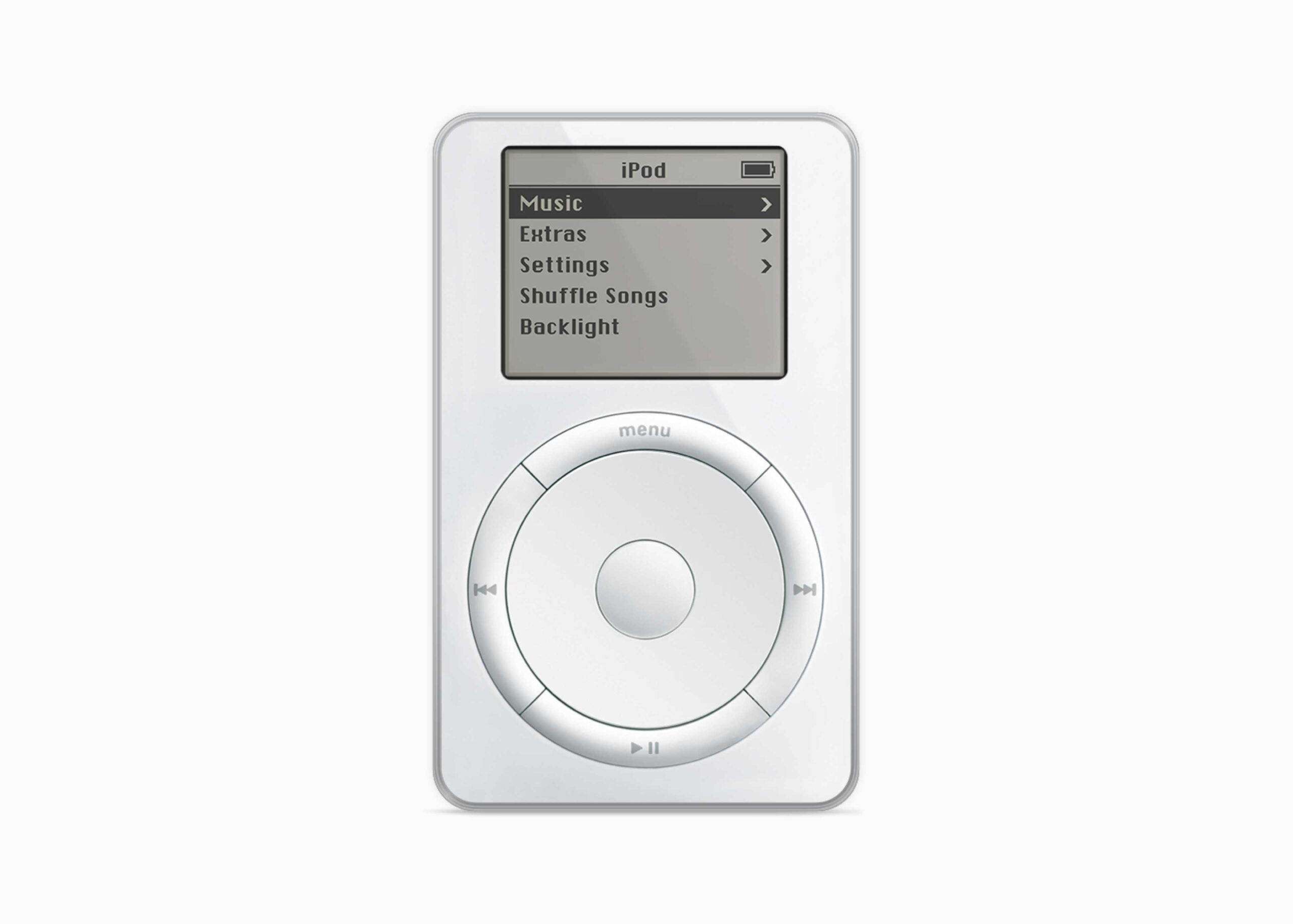
Apple CEO Steve Jobs introduced the first iPod seven years ago on 23 October 2001. He announced it as a Mac-compatible product with a 5 GB hard drive that put “1,000 songs in your pocket.” The software bundled with the first generation iPod was Macintosh-only, so Windows users had to use third-party software like ephPod or XPlay to manage their music.
It is quite funny to read the Cnet article by Ina Fried about this event and all the reactions of the experts:
IDC analyst Bryan Ma said Apple may take some heat for entering the consumer electronics market, which typically has lower profit margins than Apple gets from its computers. But, he added, the iPod could serve an important function: convincing people to buy a Mac instead of a PC. “It’s another incentive for them that can convince people to buy a Mac,” Ma said. The iPod does cost considerably more than the nearest competitor with a portable hard drive–the $249 6GB Nomad Jukebox from Creative Labs. But Ma said the iPod has significant advantages in terms of its size, battery life and anti-skip protection. “They’ve totally polished…the product,” Ma said of Apple. “If I were an engineer at Creative Labs, I’d be scrambling.” Technology Business Research analyst Tim Deal dinged the $399 price as “a little high.” But he noted that the iPod’s FireWire connectivity allows for faster song downloading than USB. The iPod also sports “a significant battery life and a fast recharge speed,” he said. Deal also praised that fact that the iPod fits into Apple’s digital hub strategy. “However, I question the company’s ability to sell into a tight consumer market right now at the iPod’s current price.” The iPod is another stab at Sony’s success in the consumer market, Deal noted. “Clearly Apple is following Sony’s lead by integrating consumer electronics devices into its marketing strategy, but Apple lacks the richness of Sony’s product offering. And introducing new consumer products right now is risky, especially if they cannot be priced attractively,” Deal said. Stephen Baker, an analyst at NPD Intelect, said that the iPod will likely stand out for its large storage capacity but predicted that the device may have trouble digging out a niche in the market. The most expensive MP3 players that use flash memory sell for around $249 right now, with the average player selling for less. Many are also adding features for playing mini-CDs. Sonicblue’s Rio 600, for instance, sells for $199. It comes with 64MB of flash memory for storage. Apple’s new device has far more storage–enough for 50 hours of music–but it costs twice as much. The iPod has “good features, but this is a pretty competitive category,” Baker said. “The question is whether people want that robust of a feature set with that high of a price.”
John Carmack was the lead programmer of the id video games Commander Keen, Wolfenstein 3D, Doom, Quake, Rage and their sequels. Carmack is best known for his innovations in 3D graphics, such as his Carmack’s Reverse algorithm for shadow volumes. In August 2013, Carmack took the position of CTO at Oculus VR. His first meeting with Steve Jobs was quite interesting.
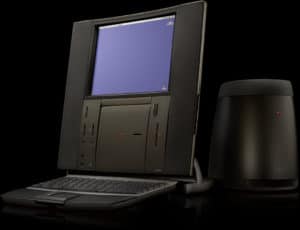
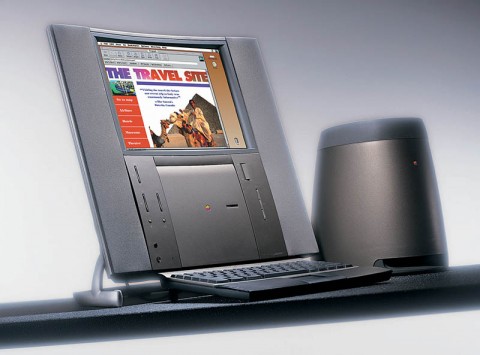
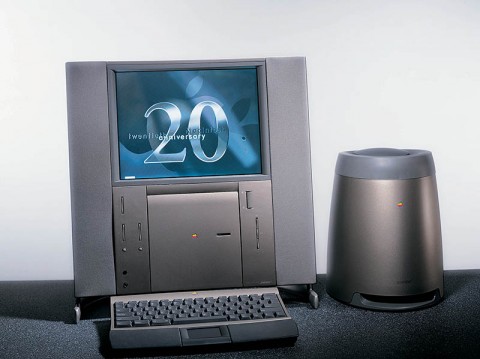
Apple is now (2017) the most valuable company in the world. But 20 years ago it looked like the company was about to completely implode. Nevertheless Apple was celebrating it’s anniversary. It had been twenty years since Apple had officially incorporated, and it marked the occasion with the Twentieth Anniversary Macintosh, or TAM. The machine was a technological showcase of the day, boasting a number of features beyond simple computing, and with a price tag aimed at the “executive” market.
Released on March 20, 1997, the TAM was essentially the computing version of a concept car, an innovation showcase. It compared to a car in another way: it was expensive, costing $7,499 upon its release. After its launch event, The New York Timescalled the ambitious effort a “Ferrari-on-a-desktop.”
The TAM was an all-in-one PC, kind of a spiritual ancestor of the iMac, back when the whole idea of a monitor that contains the computer was totally crazy. It was designed by a young Jony Ive, who would go on to become Apple’s resident creative genius.
April 1, 1996 marked 20 years since the day that Steve Jobs, Steve Wozniak, and Ronald Wayne came together to form Apple Computer. As this milestone arrived and came to the attention of Apple’s then current executives, the decision was made to release a limited edition Macintosh computer to celebrate – and so the “Spartacus” (or “Pomona”, or “Smoke & Mirrors”) project was born.
The normal time-span to develop a new Macintosh computer was 18+ months, however they were already late to the party. Luckily the design team had already been working on several “dream” concepts, and soon settled on the most feasible of those – the (almost) “All-in-One” LCD-based design. To cut down on development time, many off-the-shelf components were used on the new computer’s internals.
The TAM was announced almost 20 years to the day after Jobs and Wozniak incorporated the company, in January 1997 at MacWorld Expo, San Francisco. It was given a release date of March 20, 1997, with a retail price of US$7,499. Originally intended as a mainstream product, the marketing group turned it into a pricey special edition.
Specifications and design
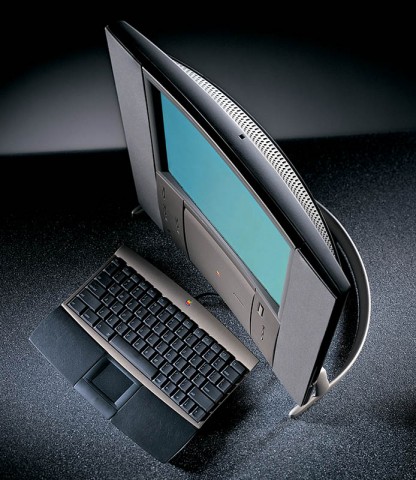
The TAM was to break the established form factor of the personal computer. One of the first projects of Jonathan “Jony” Ive, the design of the TAM was both a state-of-the-art futuristic vision of where computing could go whilst redeveloping Apple’s original objective to create a device that would integrate into people’s lives.
The TAM featured a 250 MHz PowerPC 603e processor and 12.1″ active matrix LCD powered by an ATI 3D Rage II video chipset with 2MB of VRAM capable of displaying up to 16bit color at either 800×600 or 640×480 pixels. It had a vertically mounted 4x SCSI CD-ROM and an Apple floppy Superdrive, a 2GB ATA hard drive, a TV/FM tuner, an S-Video input card, and a custom-made Bose sound system including two “Jewel” speakers and a subwoofer built into the externally located power supply “base unit”.
A thick “umbilical” cable connects the base unit to the head unit, supplying both power, and communications for the subwoofer. The umbilical connects via a multi-pin connector, which is a possible cause of the TAM’s one major fault – the “speaker buzz”. Inspections of units that received a repair by Apple due to the speaker buzz found an extra resistor/s had been installed in the umbilical. Ensuring the connectors are free of dust/dirt has also been known to resolve the “buzz”, though the buzz ultimately only affected a small percentage of machines. An Apple Engineer noted[5] that the thick umbilical was intended to power a higher end CPU, however that option was ultimately curtailed, though the diameter of the umbilical remained.
The TAM came with a unique 75 key ADB keyboard which featured leather palm-rests and a trackpad instead of a mouse. The trackpad could be detached from the keyboard if desired, with a small leather insert found underneath the keyboard ready to fill the gap. When not required, the keyboard could slide under the TAM’s head unit, leaving the trackpad exposed for continued access. The TAM also came with a remote control (standard with the Apple TV/FM Tuner card), but also featured buttons on the front panel that could control sound levels, CD playback, brightness, contrast, and TV mode. The pre-installed operating system was a specialized version of Mac OS 7.6.1, which allowed control over those features.
Expandability was offered via a 7 inch PCI slot and Apple Communication slot II for the addition of Ethernet. Later G3 upgrade options offered by Sonnet and NewerTechnologies made use of the TAM’s Level II Cache slot, which allow the computer to reach speeds of up to 500 MHz. All of these options come at the price of the TAM’s slim profile. The back panel must be removed, and replaced with an (included) “hunchback” cover that adds several inches to the depth of the machine.
One last unique feature of the TAM greeted owners when they turned the computer on—a special startup chime used only by the TAM. This chime does not sound the same when played on other devices, possibly simply due to the design of the Bose speakers.
Production/release
Apple CEO Gil Amelio praised the TAM:
For twenty years, Apple design engineers have been building bridges between what people dream about and the amazing new technologies that can take them beyond those dreams. It’s our magnificent obsession. It’s about working and playing and listening and learning and creating and communicating – sometimes all at the same time. It’s about the delight of doing things faster and better and easier. It’s about turning your back on conventional wisdom and finding new ways. Now, it’s about celebrating the last twenty years, and heralding the next twenty. It’s about the most beautiful thing we’ve ever built. It’s the Twentieth Anniversary Macintosh.
Apple manufactured 12,000 TAMs, with a release run of 11,601. The remaining 399 were kept by Apple for use as spare parts.
The TAM was only released in 5 countries: USA, Japan, France, Germany, and the UK.
Both of Apple’s founders, Steve Wozniak and Steve Jobs, received a TAM. When “Woz” allowed people to see into his office via webcam in the late 1990s, his TAM was visible on his desk.
Ten TAMs were sent to Apple Australia. One was given away as a prize via AU MacWorld magazine. Another was awarded as a prize at a gathering of Apple reseller staff. For some time one was on display in Apple’s Sydney HQ; the remainder were kept for use by Apple Australia executives.
Due to the scarcity of scale, rather than training all Apple authorized technicians in repairing the TAM, Apple opted to ship faulty units to three central locations worldwide—one per continent. The US location was the Eastman Kodak Company’s service center, Building 601, in Kodak Park (now known as Eastman Technology Park) in Rochester, New York. Apple’s Service Source CD, containing information for authorized technicians in the repair of Apple computers, lists the TAM as a “closed unit”, to be returned to said repair locations for all repairs. It does not contain a “take apart” guide for the TAM. Support from online forums is the best source of information for repairing a TAM now.
A prototype TAM was spotted on eBay circa 2010 featuring darker colored speaker panels, and missing the “Sound by Bose” label.
Websites
Rather than a simple page on Apple’s website, the TAM was given its own website, albeit only amounting to approximately 6 brief pages. This was nevertheless a departure from Apple’s standard advertising practice for its other Macintosh computers of the time.
Not long after the TAM’s release, a community website was created by Bob Bernardara, an original TAM owner in the U.S. He created the site for TAM owners around the world and it featured news and information about the TAM, along with links to useful software and a forum for discussions. Apple had an active link to the site shortly before the last TAM rolled off the assembly line.
Welcome to The 20th Anniversary Macintosh Web Site—the “Official” home of the TAM user community. This is the place where 20th Anniversary Macintosh owners can share a wealth of information on this “insanely great” product. The TAM (Twentieth Anniversary Macintosh) is a unique machine in the world of computers and this site will help you get the most out of yours.
The TAM site actively ran for several years and it eventually had to shut down when Bernardara could not contact Axon, the Australian hosting company who hosted the site, to make critical updates.
A number of newer TAM community websites have sprung up over the years, though none with the membership that Bernardara’s achieved
Limitations
Based on a PowerPC 603e processor, the TAM cannot run Mac OS X natively, but with the addition of a G3 or G4 aftermarket upgrade and the use of XPostFacto 4.0 software the TAM could run several versions of OS X, with some limitations.
Attempting to install Mac OS X otherwise can “brick” the TAM, and is ill-advised.
Discontinuation
Upon unveiling, the TAM was predicted to cost US$9,000, which would include a direct-to-door concierge delivery service. At release the price was reduced to $7,499. In the middle of its sales’ lifespan Apple dropped the price further to around US$3,500, and finally upon discontinuation in March 1998 the price was set to US$1,995. Customers who paid full price for the TAM, and then complained to Apple when the price was so drastically cut, were offered a free high-end Powerbook as compensation.
Steve Jobs returned to Apple in 1997. In March 1998 he made sweeping changes, including scrapping the Newton MessagePad. It was at this time that the TAM was discontinued, and remaining stocks reduced to US $1,995. The timing itself was not conspicuous – most Apple computers only feature a 1-year production run, and the TAM’s began in March 1997. However Jobs was on record stating that he hated the TAM, as it stood for everything that was wrong at Apple when he returned. The attempt to move the remaining stock by further reducing the price may have been a directive from Jobs himself.
Dealers in the US ran out of stock within 14 days of this final price drop.
Legacy
The Twentieth Anniversary Macintosh may not have been a well known machine in its time, nor a big seller (until the price reductions), but it has had a lasting legacy on personal computers. All-in-one LCD computers are now quite common, not least being Apple’s own modern iMac (starting with the G4 model), which clearly owes its design to the TAM, including using a vertically mounted removable drive (i.e. Superdrive). Even the removable trackpad has been replicated with Apple’s Magic Trackpad.
External power supplies were also used in later Apple computers such as the Power Mac G4 Cube and Mac Mini. Joint efforts with speaker manufacturers (originally Bose, but later Harman Kardon) have become common for several Apple computers.
Despite its poor sales, the TAM remains a “holy grail” amongst Macintosh collectors. As of 2010, complete working TAMs with boxes can sell for over US $1,000. As of early 2015, on eBay, complete working TAMs usually sell with boxes and rarely fetch less than about US$1600 with most examples priced starting at around $3200 and it’s not uncommon to find them listed for nearly twice that, sometimes more still.[6] TAM parts on eBay are rare.
Twentieth Anniversary Macintosh
Twentieth Anniversary Macintosh
Twentieth Anniversary Macintosh
In popular culture
Due to its unconventional design, the TAM has featured in numerous films and television series, including:
Seinfeld: Several episodes of the ninth season of Seinfeld in Jerry’s apartment.
Friends: Behind Chandler’s office desk in the fourth season of Friends in the episode “The One With the Worst Best Man Ever”.
The Real World: The housemates on MTV’s The Real World: Seattle.[7]
Serial Experiments Lain: The appearance of the NAVI computer seen in Serial Experiments Lain was greatly influenced by TAM.
Sabrina (1995): A prototype TAM on the desk of Linus Larrabee in the 1995 remake of the movie Sabrina. The TAM prototype sits on the far right side of Linus, on a dedicated side desk. The CD player has a see through port in the middle of the door that allows for the CD to be inserted and removed, this see through feature was removed in the production version that has a solid dark grey plastic door. The actual unit that Linus had on his desk was Apple’s in house development model that Apple lent to the studio.
Batman & Robin (1997): Used by Alfred to write a CD (a capability the real computer did not have) in Batman & Robin.[8]
Children of Men (2006): In Jasper’s hideout, in the film Children of Men, to show the video feeds of intruders breaking in is a TAM. In this movie it would be 30 years old.
introduced 1997.03.20 at $7,499, discontinued 1998.03.14
Part no.:
Gestalt ID: 512
upgrade path:
Mac OS
Requires Mac OS 7.6.1 through 9.1 (requires special version of Mac OS 8)
Core System
CPU: 250 MHz PPC 603e
Level 2 cache: 256 KB, expandable to 1 MB
Bus: 50 MHz
ROM: 4 MB
RAM: 32 MB (expandable to 128 MB, accepts two 168-pin 5V 60ns or faster EDO or FPM DIMMs)
Performance
CPU performance: 237, MacBench 4
Graphics
GPU: ATI 3D Rage II
VRAM: 2 MB VRAM
Video: 12.1″ 800 x 600 at 8- or 16-bit. 24-bit video support possible with ATI January 2002 retail drivers noted above, although the display itself only supports 18-bit output (6 bits per color channel).
Drives
floppy drive: 1.4M
Hard drive: 2 GB 2.5″ ATA/EIDE drive, 128 GB maximum, newer drives may requires a different drive bracket or modification of the original bracket.
CD-ROM: 4x
Expansion
ADB ports: 1
SCSI: DB-25 connector on back of computer
serial ports: 2 DIN-8 GeoPorts
PCI slots: 1 6.88″ slot
other expansion slots: 1 Comm Slot II, filled with 33.6kbps GeoPort modem
Six of the Rarest Macs, Benj Edwards, Macworld, 2012.10.19. JLPGA PowerBook 170. Colour Classic II. Macintosh TV. PowerBook 550c. 20th Anniversary Mac.
The Five Weirdest Macs of All Time, Benj Edwards, Macworld, 2012.10.12. Flower Power and Blue Dalmatian iMacs. Twentieth Anniversary Mac. Power Mac G4 Cube. Macintosh XL. Power Mac G3 All-in-One.
Low End Mac’s Compleat Guide to Mac OS 9, 2008 Edition, Charles W Moore, Miscellaneous Ramblings, 2008.05.12. Mac OS 9 remains fast and stable, but Classic software hasn’t kept up with the changing internet. Which Macs support OS 9, where to buy it, and how to update to 9.2.2.
The good, the bad, and the ugly of AppleDesign, Charles W Moore, Miscellaneous Ramblings, 2008.10.15. Apple has produced some beautiful computers and iPods over the years, but also a few of the ugliest and most ungainly computers ever seen.
The 25 most important Macs, Dan Knight, Mac Musings, 2009.02.17. The 25 most significant Macs in the first 25 years of the platform, continued.
Why You Should Partition Your Mac’s Hard Drive, Dan Knight, Mac Musings, 2008.12.11. “At the very least, it makes sense to have a second partition with a bootable version of the Mac OS, so if you have problems with your work partition, you can boot from the ’emergency’ partition to run Disk Utility and other diagnostics.”
The Compressed Air Keyboard Repair, Charles W Moore, Miscellaneous Ramblings, 2008.07.24. If your keyboard isn’t working as well as it once did, blasting under the keys with compressed air may be the cure.
10 cult Macs adored by collectors, Tamara Keel, Digital Fossils, 2008.05.13. Macs are not only noted for their longevity, but also by the passion which collectors have for some of the most interesting models ever made.
TAM I Am, James & John, RetroMacCast, 2006.12.25. Looking at the 20th Anniversary Mac, classic Mac scanners, and the MacMania cruise.
Web browser tips for the classic Mac OS, Nathan Thompson, Embracing Obsolescence, 2006.01.03. Tips on getting the most out of WaMCom, Mozilla, Internet Explorer, iCab, Opera, and WannaBe using the classic Mac OS.
The best browsers for PowerPC Macs and the classic Mac OS, Nathan Thompson, Embracing Obsolescence, 2005.12.16. Two browsers stand out from the pack: iCab 3 is modern and remains under development, and WaMCom brings Mozilla to older Macs.
On October 5th, 2015, Apple CEO Tim Cook sent out an internal email to staff, in remembrance of the fourth anniversary of the passing of the company’s co-founder Steve Jobs. In the text, he encouraged employees to learn about what he was like to work with.
“If you never knew Steve, you probably work with someone who did or who was here when he led Apple,” Cook wrote. “Please stop one of us today and ask what he was really like.”
Cook’s comments come after a report from the Wall Street Journal detailing criticism of an upcoming Aaron Sorkin biopic of Jobs that’s based on a biography penned by Walter Isaacson. Among the film’s critics was Jobs’ wife, Laurene Powell Jobs, who tried to kill the film several times during its development. The film, “Steve Jobs,” is set to release October 9th, 2015.
Remembering Steve for who he was and what he stood for. We honor him by continuing the work he loved so much. pic.twitter.com/6UiXBjYe3l
Today marks four years since Steve passed away. On that day, the world lost a visionary. We at Apple lost a leader, a mentor, and many of us lost a dear friend.
Steve was a brilliant person, and his priorities were very simple. He loved his family above all, he loved Apple, and he loved the people with whom he worked so closely and achieved so much.
Each year since his passing, I have reminded everyone in the Apple community that we share the privilege and responsibility of continuing the work Steve loved so much.
What is his legacy? I see it all around us: An incredible team that embodies his spirit of innovation and creativity. The greatest products on earth, beloved by customers and empowering hundreds of millions of people around the world. Soaring achievements in technology and architecture. Experiences of surprise and delight. A company that only he could have built. A company with an intense determination to change the world for the better. And, of course, the joy he brought his loved ones.
He told me several times in his final years that he hoped to live long enough to see some of the milestones in his children’s lives. I was in his office over the summer with Laurene and their youngest daughter. Messages and drawings from his kids to their father are still there on Steve’s whiteboard.
If you never knew Steve, you probably work with someone who did or who was here when he led Apple. Please stop one of us today and ask what he was really like. Several of us have posted our personal remembrances on AppleWeb, and I encourage you to read them.
Thank you for honoring Steve by continuing the work he started, and for remembering both who he was and what he stood for.
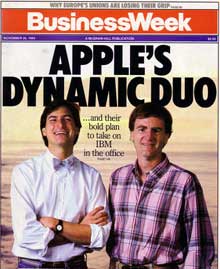
Steve Jobs and John Sculley on the Cover of Business Week (Nov. 1984)
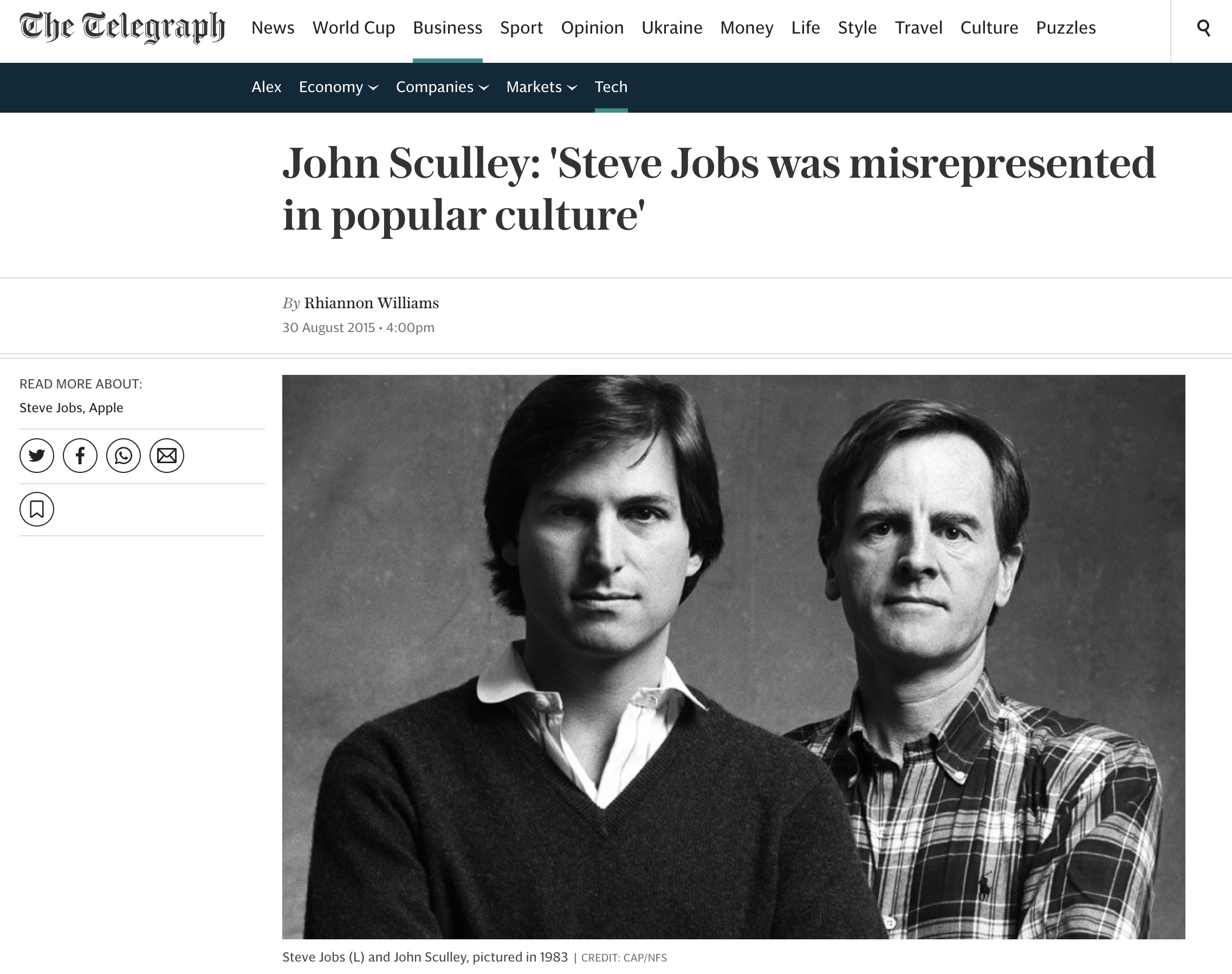
Rhiannon Williams, writing for The Telegraph, had the chance to interview John Sculley, the man who was instrumental in ousting Steve Jobs from Apple back in 1985.
When asked if he ever feels frustrated at how Jobs is presented, or misrepresented, in popular culture, Sculley pauses. “Misrepresented in what way?” he asks, tersely. People tend to draw on the more tyrannical aspects of his personality, I venture.
“I don’t think that’s fair. I think…” He pauses again. “People exaggerate, it’s simple to summarise and exaggerate. I found Steve, remember – at the time we were friends, we were incredibly close friends, and… he was someone who even then, showed compassion, and caring about people. “Didn’t mean he couldn’t be tough in a meeting and make decisions, and sometimes they seemed, y’know, overly harsh. But the reality was, the Steve Jobs I knew was still a very decent person, with very decent values. So I think he was misrepresented in popular culture.”
And:
The pair worked in harmony together on Apple’s 1984 Ridley Scott-directed Super Bowl television advert, but cracks began to appear when Sculley disagreed with Jobs’ plans to drop the price of the Macintosh and direct a large proportion of the marketing budget from Apple II to the Mac in the wake of the poorly-received Macintosh Office network, which later became Desktop Publishing.
“I said ‘Steve, the only cash for the company is coming from the Apple II, and we can’t do that,’” Sculley recalls sadly.
The working relationship between the two descended into a desperate struggle for power. The increasingly-erratic Jobs tried to lead an unsuccessful rebellion against Sculley in May 1985 with the goal of replacing him with Jean-Louis Gassée, then Apple’s director of European Operations. Gassée informed Sculley of the coup, who confronted Jobs at an executive committee meeting and demanded those present choose between the two men as to who they thought best to run the company. They backed Sculley, and Jobs fled the room.
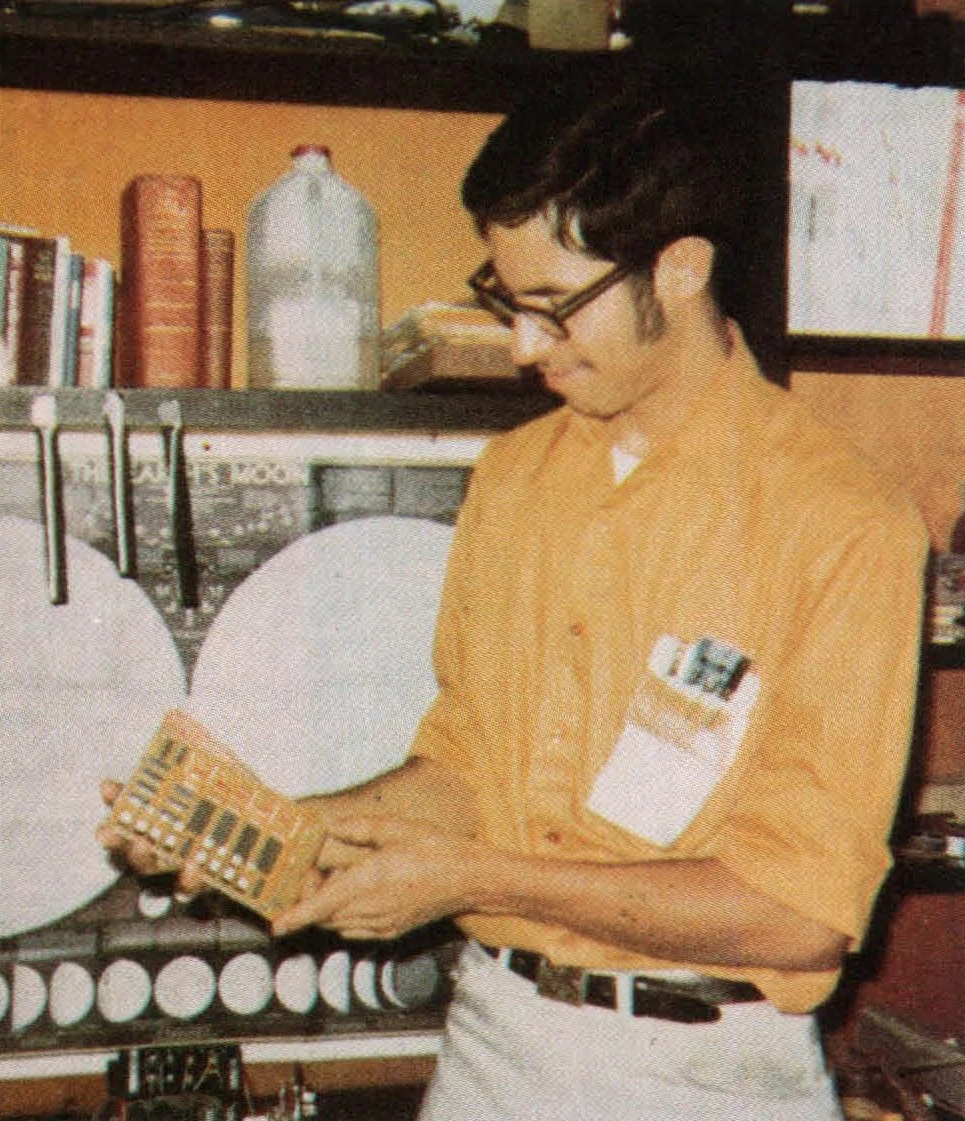
Perhaps best known as the guy who introduced Steve Jobs and Steve Wozniak, Bill Fernandez speaks out on Apple’s founding magic, how love built the first Mac, and the interface of the future.
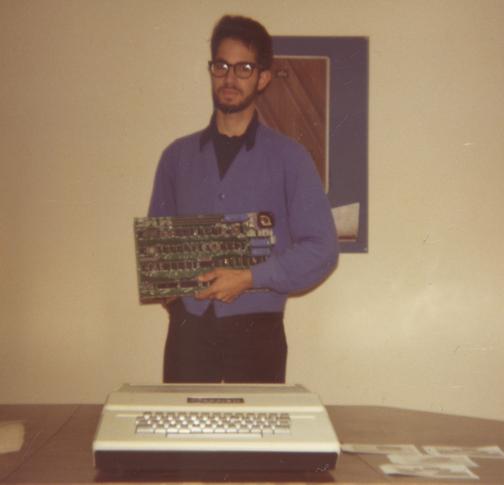
Bill Fernandez holds an Apple I, with an Apple II on the desk. Photo courtesy of Bill Fernandez
The Apple II got there first. It was the Wright Flyer I of personal computers.When the Wright brothers made their historic first flight in 1903, lots of other inventors were trying to fling their own shoddy little planes into the air. And in 1977, when Steve Wozniak and Steve Jobs unveiled the Apple II, there were a zillion other nerds working on building a personal computer.
But Woz beat them to it, and Jobs knew how to sell it.The Apple II was the product that turned Apple into Apple. It was the iPhone of its era, the product that redefined every machine like it that came afterward.Its real magic was Wozniak’s minimalism. He integrated many technologies and components that no one else had put together in the same device, and he did it with as few parts as possible. It was, as Wozniak wrote in his autobiography, “the first low-cost computer which, out of the box, you didn’t have to be a geek to use.
“But as genius as Wozniak was, the Apple II almost didn’t make it out of his brain and into a product that the rest of the world could use.Daniel Kottke, one of Apple’s first dozen employees, said, “[In 1976] the Apple II did not even work. Woz’s prototype worked. But when they laid it out as a circuit board, it did not work reliably… It was unacceptable. And Woz did not have the skills to fix that… But, it was even worse than that. They did not even have a schematic.”
Newly funded by investors, Apple had just hired Rod Holt as the company’s first engineering chief, and this was one of the big problems that Holt walked into when he took the job. At the time Woz’s Apple II prototype was a bunch of wires and chips in a cardboard shoebox. The tiny Apple team had to take this amazing concept machine and turn it into a product that could be manufactured and sold in stores.So Holt handed the first task to Apple technician Bill Fernandez.
In this vintage nine-minute video, cofounders Steve Jobs and Steve Wozniak looked back at some of it, dating all the way back to 1976’s Apple I.
The speaker at the start of the video is Paul Terrell, who founded one of the world’s first computer stores, the Byte Shop, in Mountain View, California, in 1975. The next year, he played a significant role in Apple history by placing an order for 50 of Wozniak and Jobs’s Apple I computers—on the contingency that they supply them fully assembled, rather than as a solder-it-yourself kit.