Author Archives:

PBS: Steve Jobs: One Last Thing

Few men have changed our everyday world of work, leisure, and human communication in the way that Apple founder, Steve Jobs, has done. This PBS documentary looks not only at how his talent, his style and his imagination have shaped all of our lives, but also at the influences that shaped and moulded the man himself. Since his untimely death, tributes from around the world have secured Steve’s place in the pantheon of great Americans.

PBS talked to the people who changed the man, who changed our world. Through interviews with the people who worked closely with him or chronicled his life, PBS gaines unique insight into what made him tick. In a never before broadcast, exclusive interview, Steve Jobs expounds his own philosophy of life, and offers advice to us all on changing our own lives to achieve our ambitions, our desires, and our dreams. “Life can be much broader once you discover one simple fact; that everything around you that you call life was made up by people no smarter than you…the minute you understand that, you can poke life; you can change it, you can mould it, embrace it, make you mark upon it. Once you learn that…. you’ll never be the same again.”

Apple’s 1984 spoof of ‘Ghostbusters’ goes after IBM

This is a 4-minute, uncut version of “Blue Busters”, a 1984 takeoff on ‘Ghostbusters’ that Apple produced to show at the opening of its worldwide sales staff meeting in Hawaii in October 1984. The video includes a cameo appearance by Steve Wozniak. Craig Elliott, former Apple employee now CEO and co-founder of cloud-computing startup Pertino Networks, gave access to this video.

Also shown at that meeting was another film in which Steve Jobs impersonates FDR. That film can be seen here:
https://www.mac-history.net/steve-jobs/2012-05-05/steve-jobs-acts-as-franklin-d-roosevelt-bizarre-internal-apple-promo-1984

Dieter Rams talks about design at Apple

Dieter Rams talks about being bum-rushed at a party by Philippe Starck, who exclaimed, “Apple is stealing from you!” But when it comes to Ive and Apple, Rams subscribes to the adage “Imitation is the sincerest form of flattery.”

via Our Interview With Dieter Rams, The Greatest Designer Alive [Video] | Co.Design: business + innovation + design.

https://web.archive.org/web/20210624214810/https://www.fastcompany.com/1663906/our-interview-with-dieter-rams-the-greatest-designer-alive-video

—————

And another interesting interview with Dieter Rams at Fastcodesign.com:

If you were to design a computer now, what would it look like?

It would look like one of Apple’s products. In many magazines, or on the Internet, people compare Apple products to things which I designed, with this or that transistor radio from 1965 or 1955. In terms of aesthetics, I think their designs are brilliant. I don’t consider it an imitation. I take it as a compliment.

Steve Jobs acts as Franklin D. Roosevelt – Bizarre internal Apple promo (1984)

Apple’s marketing history may seem like a continual streak of genius advertising, but even the mighty gadget company has suffered a few stumbles. Take this rarely seen sequel to Apple’s epic “1984” ad spot that features Steve Jobs showing off his acting chops as Franklin Roosevelt in 1944.

Steve Jobs acts as Franklin D. Roosevelt

The full clip, clocking in at a lengthy 9 minutes, was created for a sales associates meeting held in Hawaii in 1984. Jobs’ role as FDR leading the charge against enemy forces was meant as a rallying call to defeat IBM’s dominance.

My reader Ned Truslow wrote two years in a comment on mac-history.net about this video:

I was a props master on it and also am featured in the video. It was a black and white film that had Steve and his guys acting like generals in World War II and they had Mac soldiers who were being airdropped behind “enemy” lines and taking backpacks filled with Mactosh’s to zombie-fied office workers whose lives were stuck in limbo with old office hardware. Once the Mactosh’s are placed on all the office workers’ desks and switched on, the office workers come more alive and are happy. We shot the plane sequence at an airstrip in Mojave, California, and did most of the stuff with Steve and his guys, along with me taking time off from doing props on the video to act as a zombie office worker, all on a studio soundstage in Los Angeles sometime around July of 1984. Anyway, I’ve never seen this 20-minute video online anywhere. Just would love to know if you have an idea of where it might be located, if anywhere.

Ned Truslow

Okay, here we are.

The untold story of how NeXT got its name

According to Ken Segall’s new book about Apple, Insanely Simple, the story of how Jobs’s company “NeXT” got its name has never been told. It was inspired by Bill Gates — but Jobs never knew it.

Jobs originally wanted to call his new company “Two” because it was his second company. He called an old friend, designer Tom Suiter, who told him it was no good — everyone would ask what happened with his first company!

Shortly afterward, Tom attended a speech by Bill Gates in Seattle. He was struck by the number of times Gates used the word “next” as he described new technologies being developed by Microsoft. That word kept echoing in his head. The more he thought about it, the more right it seemed. He excitedly called Steve and said “I think I have the name for your new company. It’s ‘Next.’” There was a long pause while Steve soaked it in. And then came the enthusiastic “I love it!” It’s ironic that a speech by Bill Gates was actually the spark for the naming of NeXT. Even more amazing, neither Steve nor Bill were ever aware of it.

Segall points out that it was autobiographically perfect — it was Jobs’s next adventure after Apple — and visionary: the company was devoted to the next great computer.

This entry was posted in NeXT and tagged on by .

Why Apple Should Take a Look Back, though Steve Jobs Didn’t

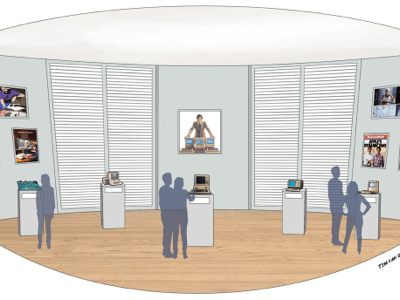
David Greelish, a computer historian and president of the Atlanta Historical Computing Society, proposes a public visitor‘s center, with a space that tells Apple‘s story. A gallery for Apple‘s story, where the history of the people that started it, grew it, perhaps even failed it is told. Not a big collection to be managed.

Why Apple Should Take a Look Back, though Steve Jobs Didn’t.

Walter Isaacson: The Real Leadership Lessons of Steve Jobs

Steve Jobs was a product of the two great social movements that emanated from the San Francisco Bay Area in the late 1960s. The first was the counterculture of hippies and antiwar activists, which was marked by psychedelic drugs, rock music, and antiauthoritarianism. The second was the high-tech and hacker culture of Silicon Valley, filled with engineers, geeks, wireheads, phreakers, cyberpunks, hobbyists, and garage entrepreneurs. Overlying both were various paths to personal enlightenment—Zen and Hinduism, meditation and yoga, primal scream therapy and sensory deprivation, Esalen and est.

The Real Leadership Lessons of Steve Jobs – Harvard Business Review.

Apple Company Store – Cupertino

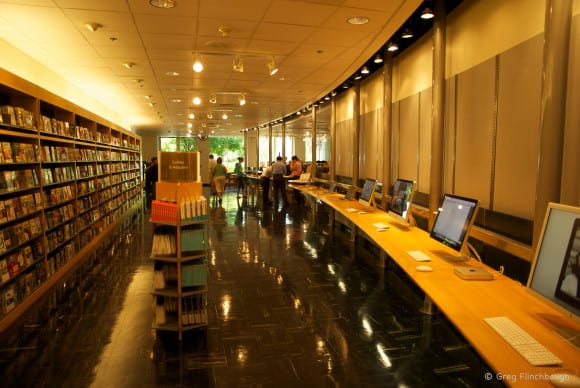
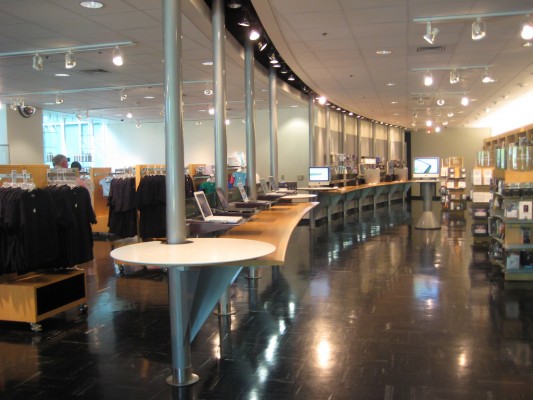
The Apple Company Store is found on the Apple Campus in One Infinite Loop. This store is the original Apple Employee store, and is open to the public. The store does not sell any of Apple’s computer or iPod lineups, and it does not provide on-site support or repairs. However, it is the only place where Apple T-Shirts, hats, and other such merchandise can be purchased. Apple products are on display here, and various software and accessories can be purchased as well.

Apple Company Store - Cupertino

Apple Company Store - Cupertino

Apple Company Store - Photo: gflinch

Apple Company Store: Photo: Andy on Flickr

[mapsmarker marker=”2″]