
Apple I: The Spark That Ignited the Digital Revolution
In the dimly lit meetings of the Homebrew Computer Club in Palo Alto during the spring of 1976, world history was being written—though few realized it at the time. While most hobbyists were wrestling with the complex toggle switches and blinking LEDs of the Altair 8800, a young engineer named Steve Wozniak arrived with a wooden-cased prototype that would change everything. As we approach the 50th anniversary of Apple Computer, we look back at the machine that started it all: the Apple I.
Apple I – A Masterclass in Minimalism
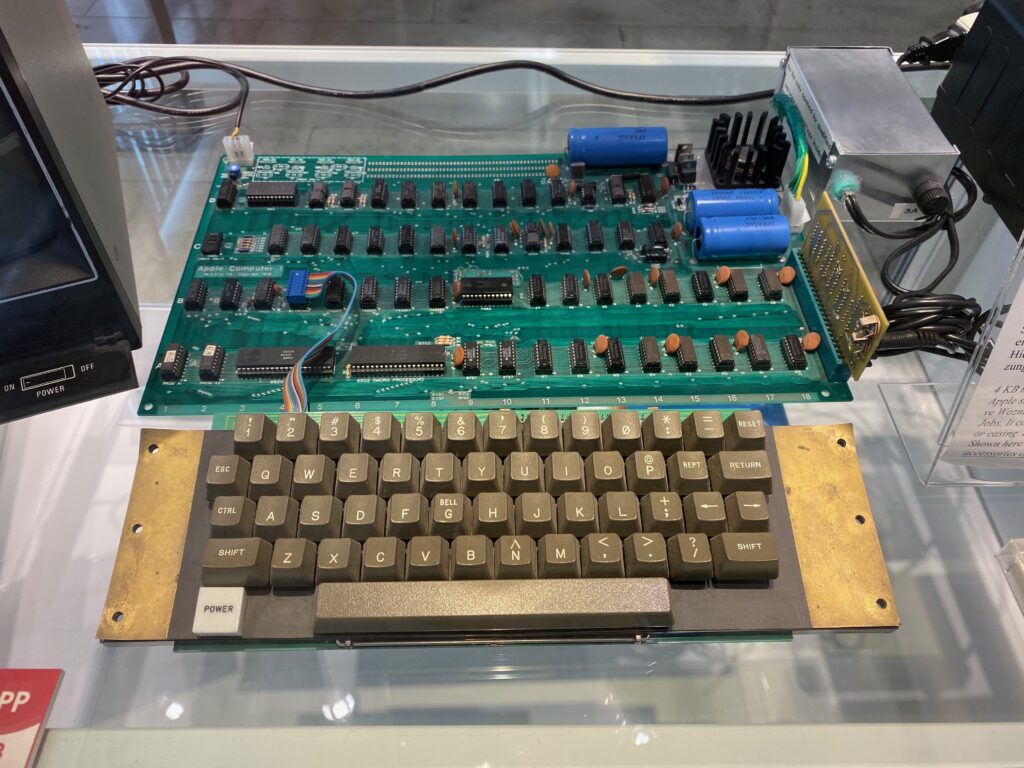
The Apple I was not a computer in the modern sense; it arrived as a naked circuit board consisting of about 60 chips. However, beneath its modest exterior lay a technical revelation. Steve Wozniak, known affectionately in engineering circles as “The Woz,” had crafted a design that was unparalleled in its efficiency.
While contemporary machines required hundreds of chips just to function, Wozniak utilized the then-affordable MOS 6502 processor (clocked at a modest 1 MHz) and combined it with a groundbreaking video terminal. This was the defining breakthrough: the Apple I was the first affordable computer that allowed a user to type on a keyboard and see the characters appear instantly on a regular television screen. It marked the shift from the cryptic language of machines to a more intuitive human interaction.
Steve Wozniak: The Reluctant Revolutionary
To understand the Apple I, one must understand Wozniak’s philosophy. He was not a businessman; he was a “hacker” in the original, purest sense of the word—a person who creates for the joy of discovery and the benefit of his peers. Wozniak famously offered his design to his employer, Hewlett-Packard, five times, only to be rejected each time.
His brilliance lay in hardware optimization. He wrote the system monitor and the BASIC interpreter by hand in machine code, often without a physical prototype to test his logic. Wozniak’s focus on accessibility—at least by 1976 standards—laid the foundation for the core Apple philosophy: technology should serve the person, not the other way around. Without Wozniak’s specific brand of engineering genius, the personal computer might have remained a niche tool for scientists for another decade.
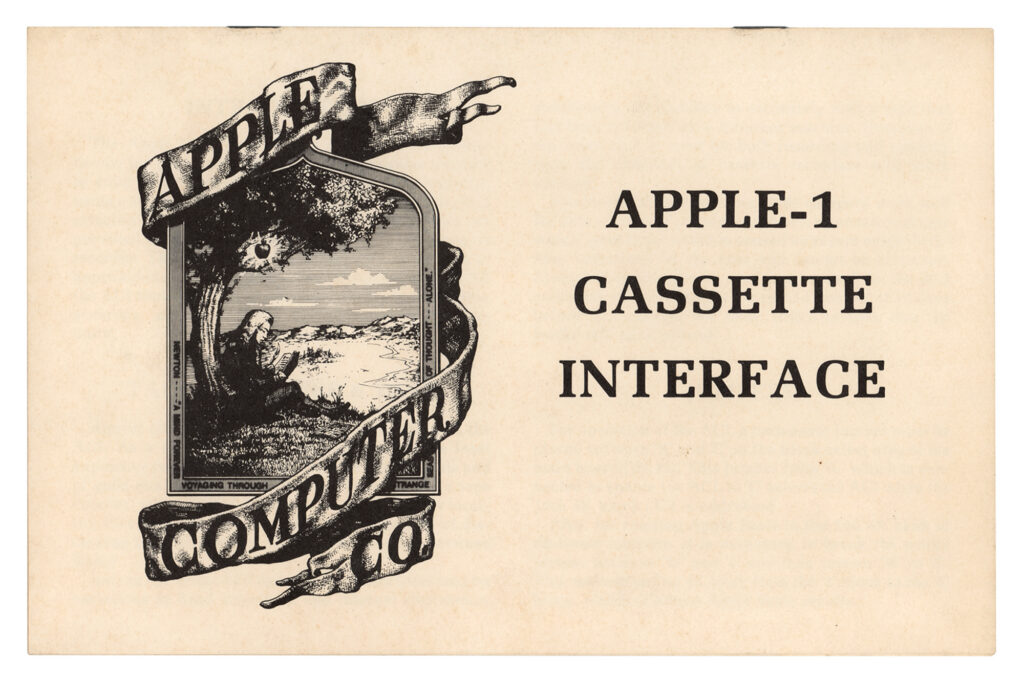
Despite its minimalist design, Wozniak had the foresight to include a single expansion slot on the Apple I motherboard, which proved to be a critical architectural decision. The most significant accessory for this slot was the Apple Cassette Interface (ACI). In an era before affordable floppy disks or hard drives, users were forced to manually type in hundreds of lines of code every time they powered on the machine. The ACI card changed everything by allowing users to save and load programs using a standard, inexpensive audio cassette recorder. Wozniak’s interface was a marvel of engineering, capable of transferring data at 1,200 bits per second—roughly four times faster than the competing Altair interface. This expansion capability not only made the Apple I more practical for actual work but also foreshadowed the massive expandability that would eventually make the Apple II a global sensation.
Apple I – From the Garage to the “Byte Shop”
While Wozniak provided the soul of the machine, it was Steve Jobs who provided the ambition. Wozniak was prepared to give his circuit diagrams away for free, but Jobs saw the commercial potential. To fund the production of the first 200 units, Jobs sold his VW bus and Wozniak sold his prized HP-65 calculator.
The manufacturing of the Apple I was a far cry from the automated assembly lines of today’s Silicon Valley. It was a true “cottage industry” operation, centered in the Jobs family home on Crist Drive. Before the move to the legendary garage, many of the boards were actually assembled and tested in the spare bedroom of Steve Jobs’ sister. Steve Wozniak and Jobs, occasionally assisted by friends like Daniel Kottke and family members, hand-soldered the components onto the printed circuit boards. Each unit was a labor-intensive project; Wozniak himself performed the final quality control, meticulously checking for solder bridges and faulty chips. This artisanal approach meant that production was slow—often limited to just a few units a day—reflecting the transition from a hobbyist’s workbench to a fledgling commercial enterprise.
The legendary retail price of $666.66—chosen by Wozniak because he liked repeating digits and was oblivious to any occult connotations—marked the beginning of a new industry. Paul Terrell, owner of the “Byte Shop,” ordered the first 50 units but insisted they come fully assembled. This was a pivotal moment: the Apple I was still a “kit” in that it lacked a case, power supply, and monitor, but it was no longer a bag of loose parts. It was a product.
Historical Assessment: Apple I – The Bedrock of the Modern Era
Looking back half a century later, what is the true legacy of the Apple I? While it wasn’t the first personal computer in existence, it was the first modern PC.
- The Interface Revolution: By integrating a video terminal directly onto the motherboard, the Apple I established the keyboard-and-screen paradigm that we still use today.
- The Economic Blueprint: It proved that a small group of visionaries with minimal capital could disrupt established industry giants. It was the birth of the “garage startup” mythos.
- The Bridge to Greatness: The Apple I served as the essential prototype for the Apple II. Every lesson Wozniak learned—from memory management to color graphics—was refined in the 1977 successor, which truly launched the mass-market computer age.
Today, fewer than 70 Apple I computers are estimated to exist worldwide. They are traded at auctions for hundreds of thousands of dollars, not merely as electronic antiques, but as relics of a moment when two young men decided to put a “dent in the universe.” Fifty years later, that dent has reshaped every aspect of human life.
| Date | Auction House | Item & Key Features | Closing Price (USD) |
|---|---|---|---|
| January 2026 | RR Auction | Apple-1 “Prototype Board #0”: The legendary “Celebration” board used by Steve Jobs for demonstrations. | $2,750,000 |
| September 2024 | Christie’s | Fully functional Apple-1 from original owner; includes manual and rare ACI cassette interface. | $945,000 |
| March 2023 | RR Auction | “Data Domain” Exemplar: A previously unlisted model used as a store demonstrator in 1977. | $223,520 |
| August 2022 | RR Auction | Steve Jobs’ Personal Prototype: Heavily modified and used to secure the first major Byte Shop order. | $677,196 |
| November 2021 | John Moran | “Chaffey College” Model: One of the few surviving units featuring an original Koa wood case. | $400,000 |